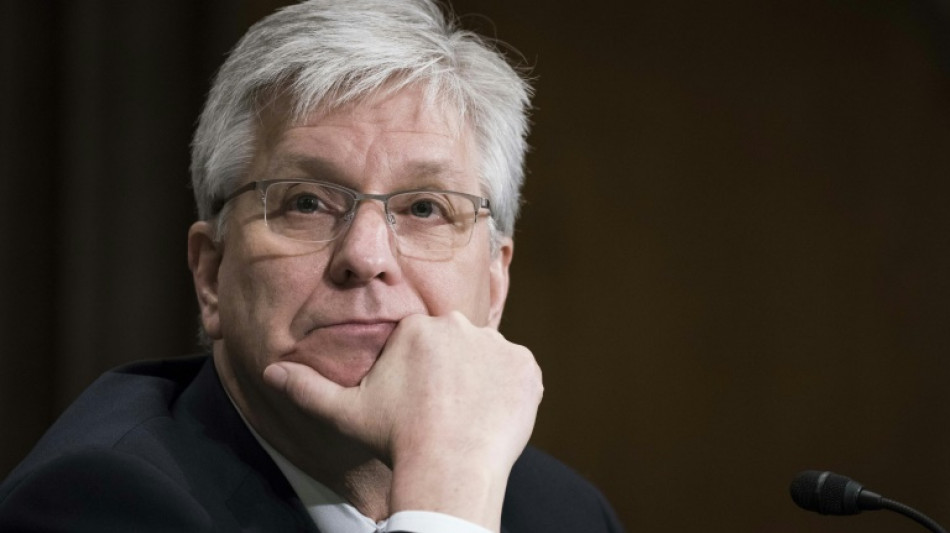
US Fed official favors smaller rate hike in February / Photo: Sarah Silbiger - GETTY IMAGES NORTH AMERICA/AFP/File

 ANC’s Renewal Rhetoric Fades as Voters Reject Party in 2026 Local Elections

 Foreign Investors Return to Indian Markets After 10-Month Selloff

 Honda CR-V and Toyota RAV4 Lead Canada’s Most Stolen Vehicles List for 2025

 China Extends Tariff Suspension on US Imports to Stabilize Trade Ties

 JR East Launches 'teppay' to Integrate Suica Balance with Mobile Payments
There is ample evidence that a steep climb in interest rates has dampened demand and economic activity, suggesting the US central bank can further slow its rate hikes, Federal Reserve Governor Christopher Waller said Friday.
Nearly a year since the Fed started tightening monetary policy to curb surging inflation, industrial production has fallen and the construction and real estate sectors have slowed, while consumer spending growth has started to ease.
Inflation has been moderating as well, coming down from a blistering 40-year high last June to 6.5 percent in December.
"Based on the data in hand at this moment, there appears to be little turbulence ahead, so I currently favor a 25-basis point increase at the (Fed's) next meeting," Waller said in prepared remarks for an event in New York.
Over the past year, the Fed has raised rates seven times including four steep 75-basis point jumps before slowing to 50 basis points in December.
But Waller warned that policymakers have "a considerable way to go" towards their two percent inflation goal.
"I expect to support continued tightening of monetary policy," he said.
While inflation has cooled, a major reason recently has been a significant drop in energy prices.
Stripping out the volatile food and energy segments, core inflation ticked up from November to December, signaling cause for caution, Waller noted.
"While it is possible to take a month or three months of data and paint a rosy picture, I caution against doing so," he said.
But the labor market remains robust, showing that jobs and income can hold up despite rising interest rates.
The United States has so far managed to make progress on lowering inflation without seriously hurting the labor market, Waller said.
"I remain optimistic that this progress can continue," he said.
Ferreira--PC

