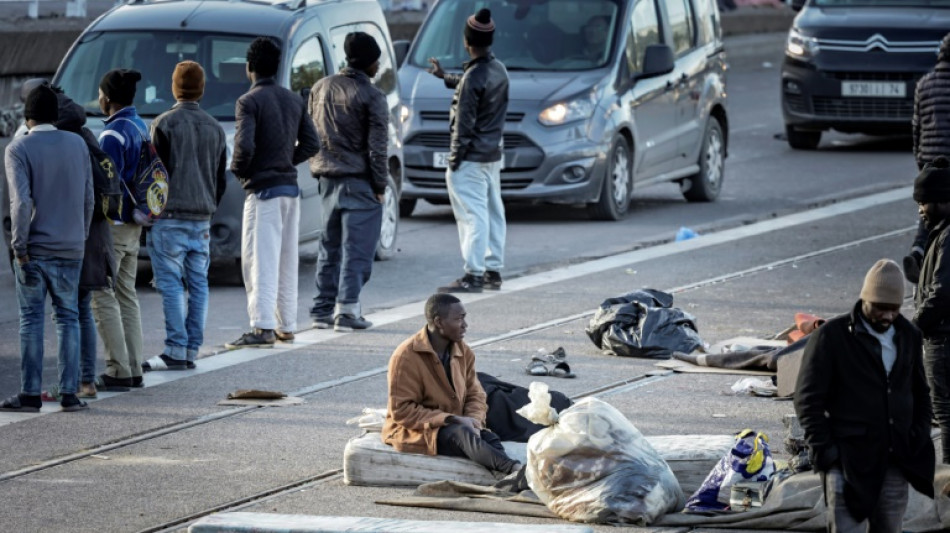
Migrants in Morocco limbo as they cling to Europe dreams / Photo: FADEL SENNA - AFP

 US defends Trump's Venezuela oil deal

 OpenAI to launch new model with 'stronger safeguards' after hack

 Fans mourn 'bittersweet' final Ariana Grande gig in London

 Norway's King Haakon VIII swears allegiance to constitution

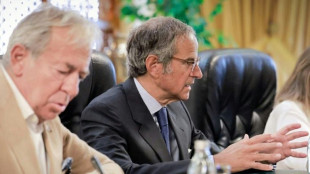 Syria site infrastructure 'consistent with nuclear reactor': IAEA

 Juventus sign Woltemade, Sarr on loan from Premier League
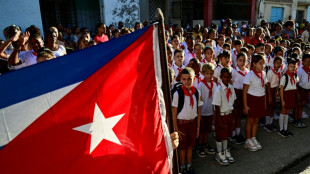
 US strikes Iran in latest tit-for-tat attacks

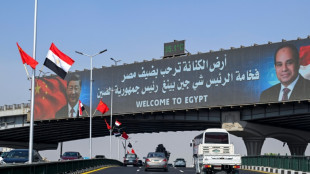 China's Xi arrives in Egypt as US sanctions threat looms over Iran links
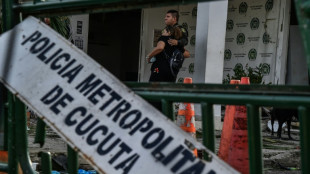 Car bomb at Colombian police station kills one, injures 11
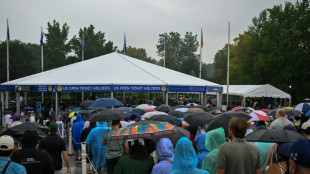 Rain delays start of play on US Open

 Man City agree blockbuster deal to sign Chelsea star Fernandez: reports
 Alkemya Metacore Secures $50M via Tokenised Equity to Scale Nickel Energy and Security Tech
 Man City chase Fernandez, Arsenal sell Jesus on deadline day

 EU says Russian 'hybrid attacks' won't halt aid to Ukraine

 Explosives used in sabotage attack on German power lines
 Nepali families hold symbolic funerals for missing after floods

 Newcastle sign Lille forward Fernandez-Pardo

 Even at Elysee, phones are handed in, Macron tells French pupils
 Chelsea agree to sign Atalanta's Ahanor, with Palace loan for this season

 Chelsea sign Atalanta's Ahanor and loan him to Palace

 UK chalks up hottest summer on record for second year running

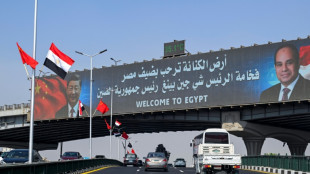 China's Xi visits Egypt as US sanctions threat looms over Iran links

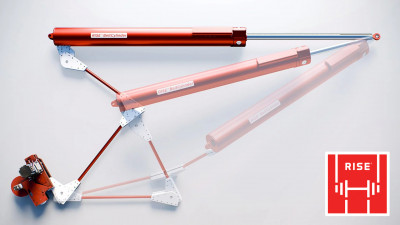 RISE Robotics Awarded $100,000 MassVentures Grant to Accelerate Commercialization of Beltdraulic Technology

 Global bond sell-off deepens on inflation concerns
 Germany's far-right AfD promises 'boom' but economists fear worst
Oumar left home in Guinea five years ago in search of a better life in Europe, but today he inhabits a daily purgatory of hunger, cold and police violence in Morocco.
"Just surviving every day is a battle," said the 25-year-old.
"It's exhausting not eating enough, not sleeping under a roof, not feeling safe, experiencing racism."
He spends his nights camped out on the pavement outside a Casablanca bus station, the makeshift home of hundreds of sub-Saharan Africans whose dreams of reaching Europe are on hold in Morocco.
"We get chased away early in the morning by the police. Then we wander around and come back to the same place at the end of the day," said Oumar.
Like the other migrants interviewed in this report, Oumar's name has been changed.
He has tried several times to reach Spanish territory from Morocco but has so far been unsuccessful.
Oumar sits killing time opposite the Oulad Ziane bus station with a few dozen, mostly Guinean migrants.
Some cook in a makeshift kitchen while others lie exhausted on the pavement.
Someone has hung clothes and blankets on a nearby wall to dry.
Bakary, also from Guinea, said he had been living here for three years.
"This is our sad reality but nobody wants to see it," the 18-year-old said.
The migrants set up this makeshift camp on the edge of the coastal port city of 4.2 million people because of its proximity to the bus station, a major transport hub.
Today, the down-at-heel neighbourhood sees repeated flare-ups with the authorities.
This month, six migrants were arrested following clashes during a police operation to evict people camping on the site of a tramway extension.
Today, they're back on the same site, divided into groups by country of origin with everyone pitching in to survive.
"Wherever we set up camp, they chase us away," said Boubacar, 27, from Mali. "It's not as if we want to sleep on the tram tracks, but they don't offer us any alternative."
- 'Europe or death' -
Most residents were reluctant to speak to a journalist, but one Moroccan sweets vendor said the migrants were "part of the landscape now, they don't bother anyone".
The station toilets are the only place the migrants have to wash.
"Sometimes they let us in, sometimes no," said Boubacar, accusing residents of the neighbourhood of racism.
Catholic charity Caritas provides migrants with basic medicines and healthcare.
The Moroccan press regularly voices opposition to the migrants.
"End clandestine immigration!" said a recent headline in weekly newspaper Maroc Hebdo, calling it "a social, security and political problem that the state is struggling to manage".
Noureddine Riadi of Morocco's main human rights group, the AMDH, said the migrants were facing "difficult conditions" and called on authorities to do more to help.
"The most vulnerable should be housed in temporary residential centres," he said.
Lamine, a 20-year-old who has tried five times to penetrate the heavily secured Spanish enclave of Melilla on Morocco's northern coast, said he has almost given up.
"We're struggling to keep believing, but my optimism is fading every day," he said.
Morocco has taken periodic steps to regularise the status of migrants on its territory, many of whom arrive via the country's desert border with Algeria, which is officially closed.
But it is under growing European pressure to strengthen border controls and restrict the movement of migrants within its territory.
Spanish newspaper El Pais has reported that the EU is considering a 500 million euro grant for Rabat to tackle clandestine migration.
In 2022, Moroccan police detained more than 32,000 migrants and arrested 566 people suspected of involvement in people trafficking, according to official figures.
But migrants in Casablanca say they are not giving up on the dream of reaching Europe.
Bakary said going home would mean "admitting defeat".
"For me, it's Europe or death," he said.
M.Gameiro--PC