
Rich EU consumers 'outsource' environmental impact to poorer neighbours / Photo: HERBERT PFARRHOFER - APA/AFP/File

 US defends Trump's Venezuela oil deal

 OpenAI to launch new model with 'stronger safeguards' after hack
 Fans mourn 'bittersweet' final Ariana Grande gig in London
 Norway's King Haakon VIII swears allegiance to constitution
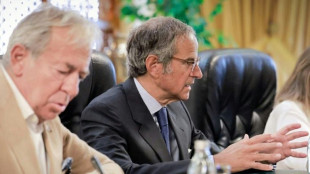 Syria site infrastructure 'consistent with nuclear reactor': IAEA

 Juventus sign Woltemade, Sarr on loan from Premier League

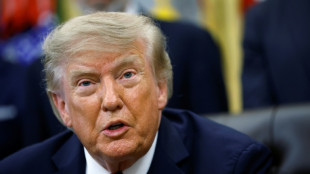 US strikes Iran in latest tit-for-tat attacks
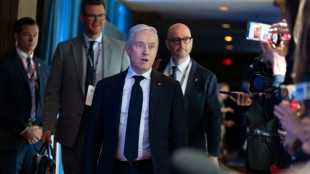
 China's Xi arrives in Egypt as US sanctions threat looms over Iran links
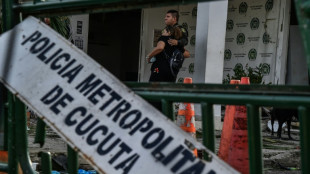 Car bomb at Colombian police station kills one, injures 11
 Rain delays start of play on US Open
 Man City agree blockbuster deal to sign Chelsea star Fernandez: reports
 Alkemya Metacore Secures $50M via Tokenised Equity to Scale Nickel Energy and Security Tech

 Man City chase Fernandez, Arsenal sell Jesus on deadline day

 EU says Russian 'hybrid attacks' won't halt aid to Ukraine
 Explosives used in sabotage attack on German power lines
 Nepali families hold symbolic funerals for missing after floods
 Newcastle sign Lille forward Fernandez-Pardo

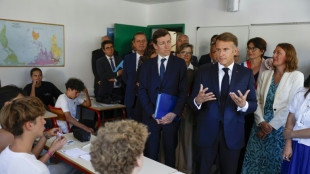 Even at Elysee, phones are handed in, Macron tells French pupils
 Chelsea agree to sign Atalanta's Ahanor, with Palace loan for this season

 Chelsea sign Atalanta's Ahanor and loan him to Palace

 UK chalks up hottest summer on record for second year running
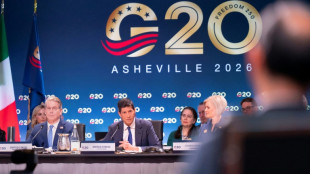
 China's Xi visits Egypt as US sanctions threat looms over Iran links

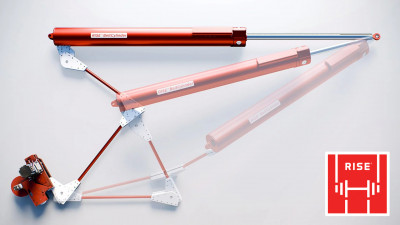 RISE Robotics Awarded $100,000 MassVentures Grant to Accelerate Commercialization of Beltdraulic Technology

 Global bond sell-off deepens on inflation concerns
 Germany's far-right AfD promises 'boom' but economists fear worst

Consumption patterns in wealthy European Union countries are having detrimental environmental impacts in poorer EU nations, a study Thursday found, exposing harmful inequalities on the continent.
The study looked at 10 key environmental impacts -- including greenhouse gas emissions, toxins in water and soil, air pollution and land use -- in supply chain countries and stacked them up against GDP levels in EU nations.
The negative impacts went beyond Europe -- Brazil, China, India and Japan were included -- but the most striking findings were on the continent.
"There are huge inequalities between the EU, and that was the surprising thing," said the study's co-author Klaus Hubacek from the University of Groningen in the Netherlands.
Poorer countries within the EU were affected, but also non-EU countries like Albania, Montenegro, Serbia, Ukraine and Moldova, said the study, published Thursday in Nature Sustainability.
"Eastern Europe consistently ranked as the region receiving the lowest share of economic value added compared to environmental pressures and impacts associated with EU consumption," the press release said.
The researchers studied a "giant matrix" of data from 1995 to 2019, Hubacek said, examining GDP growth related to consumption of things like food, clothing, manufactured products and services, compared to environmental impact.
They found that wealthier European nations saw a positive GDP impact, while "outsourcing" environmental impact to places providing consumer goods.
The impacts "increased notably outside the EU, while decreasing within the bloc," the study said.
Some of the environmental impacts come down to lax environmental laws in poorer countries, or reliance on older technologies and equipment that could be harmful or more polluting -- some of which would not be allowed in EU countries.
The impact was also seen within the EU.
Agricultural producers Spain and Greece, for example, saw disproportionate impacts on water, biodiversity and land use compared to the economic benefits from producing goods largely exported beyond their borders.
"It's a fascinating part of the picture that we have rich and poor, and winners and losers, within countries and regions," Hubacek told AFP.
He said consumers could shift consumption patterns -- eating less inexpensive meat from countries with lax environmental laws, for example -- but also called on the EU to roll out tougher import rules.
The research was initiated by Greenpeace, which wanted to examine the impact of the EU's Green Deal climate plan.
X.Matos--PC