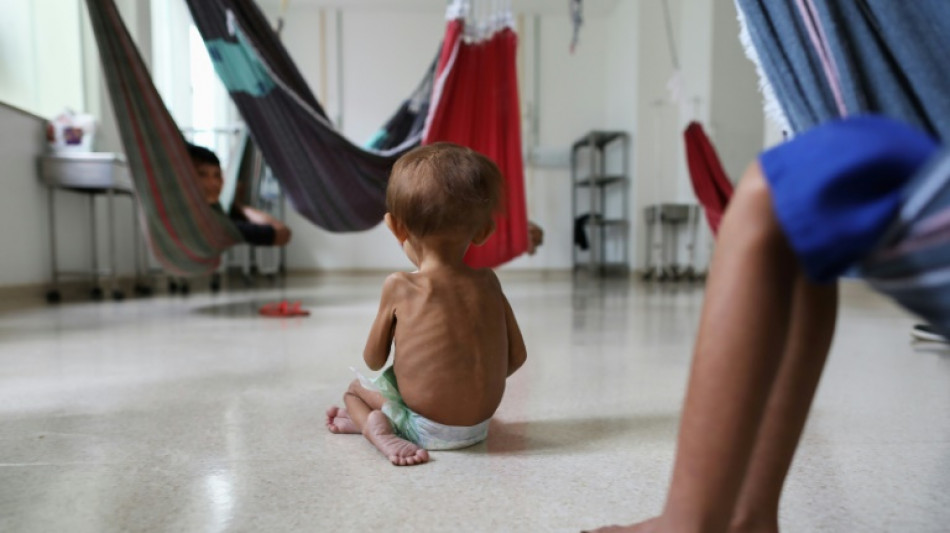
In Brazil's Amazon, malnourished Yanomami children get needed care / Photo: MICHAEL DANTAS - STR/AFP

 Grattan Institute Releases Blueprint to Target Specialists Over Excessive Fees

 Arizona Science Center Hosts Girls in STEM Astro Adventures for Students

 New Turkish Cafe, Japanese BBQ, and Korean Restaurants Open Across East Bay

 Knowle Move Four Points Clear at Top After Histon Victory

 Physicians Urge Arizona to Ban Medical Gag Clauses and Enable Private Lawsuits

 New Campaign Highlights Knowledge Gaps on Carbon Monoxide Safety Among Americans

In a hospital in Brazil's Amazon, half a dozen Yanomami children are dozing in blue hammocks. Some are suffering from pneumonia, others from malaria. Some even have snake bites. All of them are underfed.
Cases of malnutrition and malaria in the region have skyrocketed in recent weeks, prompting the new leftist government of President Lula Inacio Lula da Silva to declare a health emergency.
Of the nearly 60 Indigenous children being treated at the San Antonio children's hospital in Boa Vista, in the northern state of Roraima, three-quarters of them are Yanomami, and eight of those are in intensive care, according to official data.
The vast majority of children are suffering from "moderate to severe malnutrition," complicated by other ailments including pneumonia, malaria and the stomach flu, pediatrician Eugenio Patricio tells AFP.
"These patients, due to malnutrition, don't have enough in the tank to fight infections. So the consequences are far more serious, and some end up in intensive care," he adds.
The San Antonio hospital is the only one in the state -- located on the country's northern border with Venezuela and Guyana -- that can treat children under the age of 12.
To get there, many of the Indigenous patients must be flown in from their remote jungle villages.
Most of the Yanomami children, who are generally eight years old or younger, are about half the normal weight for their age -- and sometimes even less, Patricio explains.
"They are extremely weak when they arrive here," he says.
While the San Antonio hospital handles the most serious cases, other Indigenous youth and adults are treated at another facility in Boa Vista.
And a field hospital built by the Brazilian air force opened its doors Friday in the courtyard of the Indigenous health center to help handle the crisis.
- Illegal mining -
Last week, Lula's government said that 99 Yanomami children under the age of five had died in 2022 on Brazil's largest Indigenous reservation, mainly due to malnutrition, pneumonia and malaria.
Federal police are investigating possible acts of "genocide" against the Yanomami people, to determine whether the neglect and lack of health access was intentional on the part of public officials in the administration of far-right ex-leader Jair Bolsonaro.
Conditions on the Yanomami reservation have become increasingly violent, with illegal miners regularly killing Indigenous residents, sexually abusing women and children and contaminating the area's rivers with the mercury used to separate gold from sediment, according to complaints from Indigenous organizations.
And the increase of illegal mining in the Amazon has driven the spread of diseases such as malaria, tuberculosis and Covid-19, according to experts.
The country's Supreme Court had ordered the removal of gold miners in the area, but the Bolsonaro government, which encouraged mining and agribusiness activities on Indigenous lands, never complied.
M.Gameiro--PC

