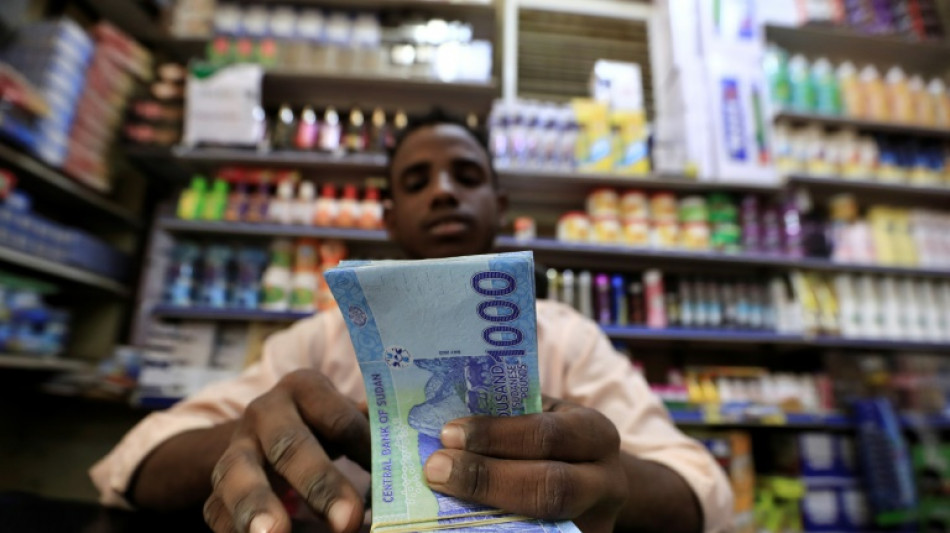
Sudanese tighten belts as economic crisis grinds on / Photo: ASHRAF SHAZLY - AFP

 Back-to-school in Cuba a grim day with shortages of everything

 Canadian minister says Russia's G20 presence sparked 'discomfort'

 IMF reaches agreement with Senegal on new $2.2 bn loan programme
 Germany blames Russia for airport drone incident, hits back with sanctions

 Iran president urges return to truce, hails Russian support

 Aster and World Liberty Financial Launch USD1 RWA Boost: Phase 1, Offering 125M $WLFI + 6.25M USD1 in Rewards

 Tronchon sprints to Vuelta stage 10 win, Mas keeps red jersey

 Germany defender Rudiger announces international retirement
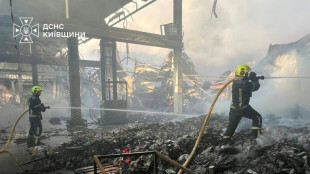
 Musk defends AI data centers, slams EU rules at G20
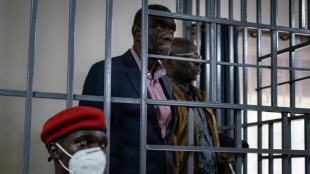 Activists blame Kenya for Ugandan opposition figure's plight
 Iran president offers US olive branch, hails Russian support

 TrustFinance Community Choice Awards 2026 Opens Global Voting

 Nepal disaster a climate 'warning signal': foreign minister

 France winger Diaby returns to Leverkusen until 2031

 Barcelona confirm Jesus arrival from Arsenal

 EU official says it's not time to 'normalize' Russia at G20 finance talks

 RedHill Announces Transformational Acquisition of Commercialization Rights to Ferring’s Rebyota® and Clenpiq®
 TrendEadvisor Launches Global Multi-Asset Platform Combining Online Investing with Social Trading

 India's top court drops criminal cases against protesters

 Philippine couple married in hip-deep floodwaters

 Villa sign Senegal winger Mbaye from PSG

 Former Peru minister last-minute contender for UN labour agency helm

 Messi legacy will 'live forever', says Beckham
 'Literally tasting the smoke': Malaysians suffer as haze worsens

 Kyiv's defences, 'hybrid' threat from Moscow headline EU talks
As Sudan's economic crisis drags on, grocer Hassan Omar keeps busy cleaning packaged food items that have been gathering dust for months as his dwindling customer base make fewer purchases.
"People can no longer afford to buy all their needs," Omar, 43, told AFP at his grocery store in the capital Khartoum.
"Purchasing power has significantly declined over the past six months," he said, noting that his sales had plummeted from 500,000 Sudanese pounds ($877) to 200,000 pounds ($350) per day over that period.
His plight reflects Sudan's spiralling economic crisis which has forced many households to tighten their belts as nearly one third of the 45 million population face acute hunger.
Some 65 percent of the population live below the poverty line, according to a 2020 report by the United Nations.
The country's economic troubles stem from decades of government mismanagement, armed conflict and international sanctions against the government of president Omar al-Bashir, who was ousted in April 2019 following mass protests against his rule triggered by biting hardship.
The crisis further deepened following a 2021 military coup led by army chief Abdel Fattah al-Burhan, which upended a transition to civilian rule and triggered cuts to crucial international aid.
"We are trying to find cheaper alternatives to the food we normally consume," said Soaad Bashir, a government employee and mother of four.
"My income is very low and expenses are too high," said the 43-year-old who makes less than 200,000 Sudanese pounds per month.
- 'Complete recession' -
North Khartoum vegetable seller Al-Nour Adam says he has suffered heavy losses over the past nine months.
"Much of the produce spoilt because no one was buying it," said Adam, who now offers a smaller range of vegetables in an attempt to cut his losses.
"It can't go on like this or I will have to find another job."
Inflation in Sudan has eased over the past year, falling to 87 percent in December from 318 percent in the same month of 2021 but analysts say that is not a sign of the economy improving.
"Inflation has simply declined because market activity has for months been at a standstill," said Abdalla al-Ramady, economics professor at Al-Nilin University.
"There is no demand, so prices of commodities are not going up. It's a complete recession."
Grocer Omar confirmed he had not raised his prices in months.
The economic crisis has hit wide sections of Sudanese society not just the poor.
In recent weeks, hundreds of students staged protests over increases to university fees.
"I was asked to pay 550,000 pounds ($964) and my family cannot afford to pay," said Mohamed Hussein, a first-year engineering student, noting that fees had last year stood at around 50,000 pounds ($87).
Meanwhile, hundreds of Sudanese professors have been on an open-ended strike since January 10 to protest low salaries.
- Hopes for stability -
Fees for other government services from issuing passports to road tolls have also gone up.
"Road toll fees increased by five times at least compared to last year," said freight haulier Tigani Omar.
"It will increase the cost of transport and will eventually reflect on all products."
Despite scepticism about the prospects for a political breakthrough, some still hope that a deal between Sudan's military rulers and civilian leaders could turn the economy around.
In December, the two sides signed a preliminary deal aimed at restoring the transition to civilian rule interrupted by Burhan's coup. Critics have said the accord is "vague" and "opaque".
But Abdelhalim Hafez, a private sector employee and breadwinner for his family of six, hopes the deal could see the resumption of a family support programme which was suspended after the coup.
"I lost the little help that programme provided me,” said Hafez who was haggling with a fruit vendor in Khartoum.
"It may all improve if this deal manages to bring political stability.”
Bashir agrees but does not expect it to happen soon.
"It will take years for the situation to improve," she said.
R.Veloso--PC