Renault-Nissan: key moments in a rocky alliance / Photo: Kazuhiro NOGI - AFP/File

 Back-to-school in Cuba a grim day with shortages of everything
 Canadian minister says Russia's G20 presence sparked 'discomfort'
 IMF reaches agreement with Senegal on new $2.2 bn loan programme

 Germany blames Russia for airport drone incident, hits back with sanctions
 Iran president urges return to truce, hails Russian support
 Aster and World Liberty Financial Launch USD1 RWA Boost: Phase 1, Offering 125M $WLFI + 6.25M USD1 in Rewards

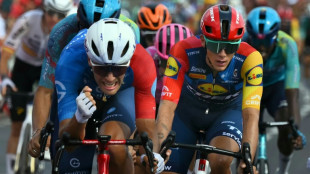 Tronchon sprints to Vuelta stage 10 win, Mas keeps red jersey
 Germany defender Rudiger announces international retirement
 Musk defends AI data centers, slams EU rules at G20
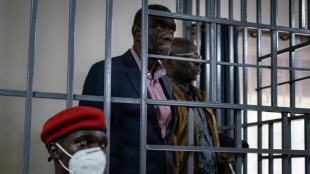 Activists blame Kenya for Ugandan opposition figure's plight
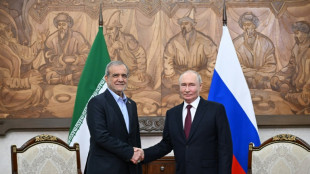 Iran president offers US olive branch, hails Russian support

 TrustFinance Community Choice Awards 2026 Opens Global Voting
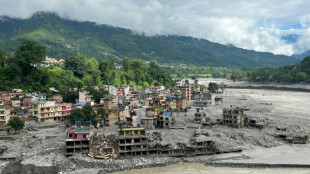
 Nepal disaster a climate 'warning signal': foreign minister
 France winger Diaby returns to Leverkusen until 2031
 Barcelona confirm Jesus arrival from Arsenal
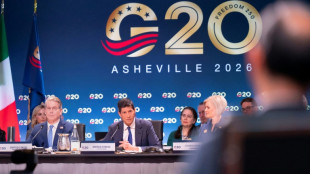 EU official says it's not time to 'normalize' Russia at G20 finance talks
 RedHill Announces Transformational Acquisition of Commercialization Rights to Ferring’s Rebyota® and Clenpiq®
 TrendEadvisor Launches Global Multi-Asset Platform Combining Online Investing with Social Trading
 India's top court drops criminal cases against protesters
 Philippine couple married in hip-deep floodwaters
 Villa sign Senegal winger Mbaye from PSG
 Former Peru minister last-minute contender for UN labour agency helm
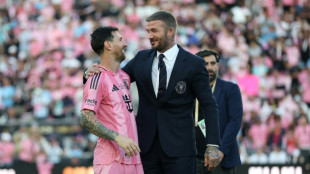 Messi legacy will 'live forever', says Beckham
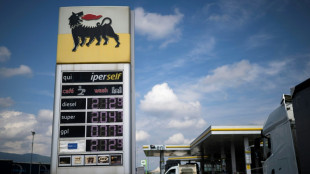
 'Literally tasting the smoke': Malaysians suffer as haze worsens
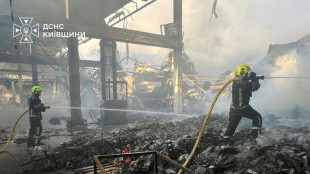 Kyiv's defences, 'hybrid' threat from Moscow headline EU talks
In the decades since Renault rescued Nissan from bankruptcy, their union has brought strength but also friction, heightened by the 2018 arrest of alliance head Carlos Ghosn.
As the French and Japanese auto giants announce a major reshaping of their partnership, here is a recap of key events:
- 1999: Franco-Japan union -
In March 1999, Renault comes to the rescue of heavily indebted Nissan, which needs a partner in order to survive.
Under a deal signed in Tokyo, the French firm takes nearly 37 percent of its Japanese rival.
Later that year, Renault number two Ghosn unveils a recovery plan for Nissan, including 21,000 job losses.
- 2002: Cross-shareholding -
As the two companies cooperate on distribution, purchasing and manufacturing, their alliance starts to bear fruit.
A recovering Nissan takes a 15 percent share in Renault in 2002, and the pair set up a joint management structure.
Renault ups its stake in Nissan to more than 44 percent, which is later trimmed to around 43 percent.
By 2003, Nissan has become the world's second-biggest carmaker by market capitalisation, and in 2005 Ghosn takes the reins of both firms.
- 2015-16: Tensions erupt, alliance expands -
Tensions erupt in 2015. Nissan is angry that the French state's stake in Renault's capital has been increased to nearly 20 percent (it has since dropped back to 15 percent).
But they reach an accord that caps the French government's ability to interfere in the alliance's affairs.
The group expands in 2016 to include struggling carmaker Mitsubishi Motors, with Nissan acquiring around a third of its Japanese rival.
In 2017, Ghosn cedes the post of Nissan CEO to Hiroto Saikawa, but remains chief of Renault and the three-way partnership.
That year, the alliance claims the title of the world's top-selling auto company -- ahead of Toyota and neck-and-neck with Volkswagen.
- 2018: Ghosn arrested -
Ghosn is arrested in November 2018 on financial misconduct charges.
He is held in custody in Tokyo, and replaced at all three companies as the alliance reels.
In July 2019, crisis-hit Nissan says quarterly net profit plunged nearly 95 percent and announces 12,500 job cuts.
That September, the Japanese firm announces Saikawa's departure after he admitted to receiving excess pay by altering the terms of a bonus. The next month Nissan names a new CEO, Makoto Uchida, who is seen as more pro-alliance.
- 2019-20: Ghosn escape, Covid-19 -
In the last days of 2019, Ghosn jumps bail and escapes from Japan hidden in an audio-equipment box, landing in Beirut.
Soon, the Covid-19 pandemic pushes the Ghosn controversy off centre stage and brings fresh economic mayhem to the alliance, paralysing production lines.
In May 2020, Renault-Nissan-Mitsubishi unveil a plan to deepen their cooperation, planning to develop nearly half of cars jointly.
- 2022: Focus on electric vehicles -
In January 2022, the alliance announces it will invest 23 billion euros ($22 billion) into electric vehicles over five years, working together on manufacturing platforms.
Just weeks later, it emerges that Renault wants to split its electric vehicle and combustion engine businesses -- kicking off negotiations about the union's future.
In May, with war raging in Ukraine, Renault quits the Russian market, pushing the French carmaker deep into the red after the woes of Covid-19.
- 2023: Alliance rebalanced -
The companies announce in January that Renault will slash its stake in partner Nissan as part of a deal to rebalance their alliance.
Renault will reduce its share in Nissan to 15 percent, the same size as Nissan's stake in its French counterpart, and the Japanese company will also invest in Renault's new EV business Ampere.
The agreement, which follows months of painstaking negotiations, is expected to be signed later in the month, following board approval on both sides.
burs-kaf/sah/aha
S.Pimentel--PC