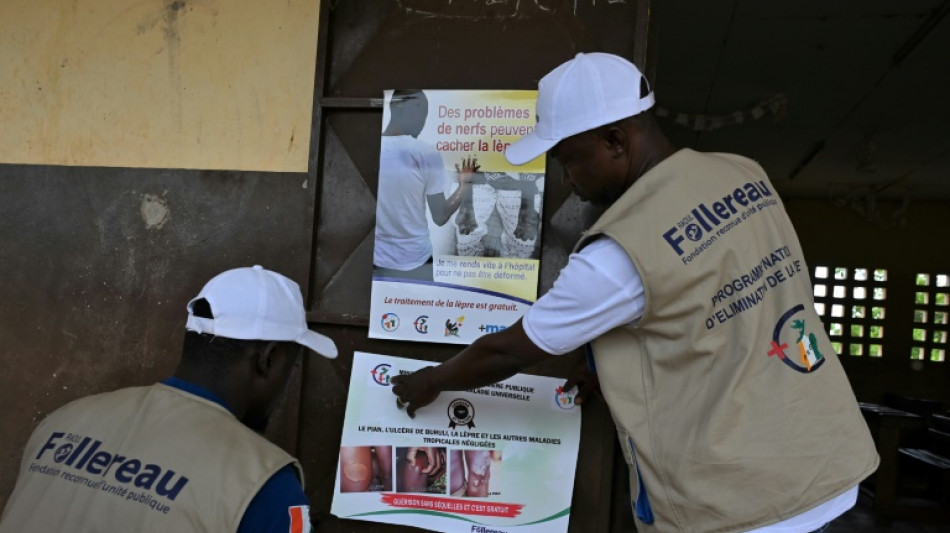
WHO urges investment in neglected tropical diseases / Photo: Issouf SANOGO - AFP

 Back-to-school in Cuba a grim day with shortages of everything
 Canadian minister says Russia's G20 presence sparked 'discomfort'

 IMF reaches agreement with Senegal on new $2.2 bn loan programme
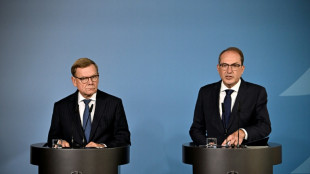 Germany blames Russia for airport drone incident, hits back with sanctions

 Iran president urges return to truce, hails Russian support

 Aster and World Liberty Financial Launch USD1 RWA Boost: Phase 1, Offering 125M $WLFI + 6.25M USD1 in Rewards

 Tronchon sprints to Vuelta stage 10 win, Mas keeps red jersey

 Germany defender Rudiger announces international retirement

 Musk defends AI data centers, slams EU rules at G20
 Activists blame Kenya for Ugandan opposition figure's plight
 Iran president offers US olive branch, hails Russian support

 TrustFinance Community Choice Awards 2026 Opens Global Voting

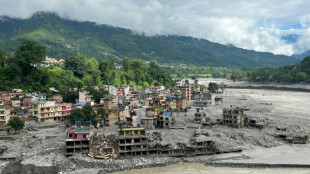
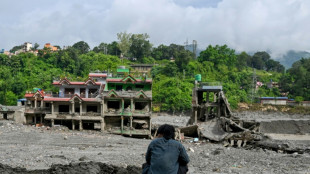 Nepal disaster a climate 'warning signal': foreign minister

 France winger Diaby returns to Leverkusen until 2031

 Barcelona confirm Jesus arrival from Arsenal

 EU official says it's not time to 'normalize' Russia at G20 finance talks

 RedHill Announces Transformational Acquisition of Commercialization Rights to Ferring’s Rebyota® and Clenpiq®

 TrendEadvisor Launches Global Multi-Asset Platform Combining Online Investing with Social Trading

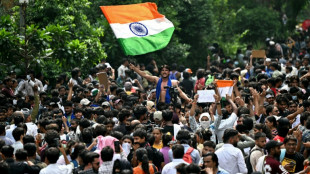 India's top court drops criminal cases against protesters

 Philippine couple married in hip-deep floodwaters

 Villa sign Senegal winger Mbaye from PSG

 Former Peru minister last-minute contender for UN labour agency helm

 Messi legacy will 'live forever', says Beckham

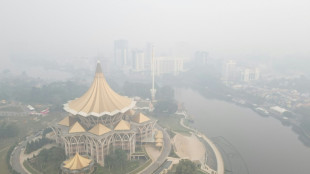 'Literally tasting the smoke': Malaysians suffer as haze worsens

 Kyiv's defences, 'hybrid' threat from Moscow headline EU talks
The World Health Organization on Monday called for greater investment in combating neglected tropical diseases, which left more than 1.6 billion people, often in least-developed countries, requiring treatment in 2021.
NTDs are a diverse group of conditions, found mainly in tropical regions, that include dengue, leprosy and rabies.
They are deemed neglected diseases because they are largely overlooked and benefit from only limited funding.
The WHO said NTDs disproportionately affect the poorest, primarily in areas where water safety, sanitation and access to health care are inadequate.
Soce Fall, director of the WHO's NTDs department, said they had been neglected precisely because they did not affect developed countries.
By comparison, he cited the funding plunged into Mpox last year once it began spreading outside Africa.
"The level of investment needed -- we are far from reaching it," he told a press briefing.
"We need to protect people wherever they are, and whatever their social condition."
- Millions 'liberated' -
In 2021, around 1.65 billion people were estimated to require treatment for at least one NTD, of which 857 million were in southeast Asia and 584 million in Africa.
The figure was down by 80 million from 2020 and has fallen consistently from 2.19 billion in 2010, the WHO said in a progress report released on World NTD Day.
But 16 countries account for 80 percent of the global NTD burden. They include the Democratic Republic of Congo, Egypt, Ethiopia, India, Nigeria, Pakistan, the Philippines, and Tanzania.
As of December, 47 countries had eradicated at least one NTD, with eight certified as having eliminated one in 2022 alone.
"Around the world, millions of people have been liberated from the burden of neglected tropical diseases," said WHO director-general Tedros Adhanom Ghebreyesus.
"We still have a lot of work to do. The good news is, we have the tools and the know-how not just to save lives and prevent suffering, but to free entire communities and countries of these diseases."
- Guinea worm almost eradicated -
NTDs are caused by a variety of pathogens including viruses, bacteria, parasites, fungi and toxins.
They include bilharzia, Chagas disease, dengue, Guinea worm, sleeping sickness, leishmaniasis, leprosy, river blindness, rabies, scabies, snakebite envenoming and trachoma.
"These diseases cause devastating health, social and economic consequences, and when they aren't deadly, they very often cause life-long social stigma and consequent economic hardship," the WHO said.
Fall said leprosy persisted in 139 countries and dengue in 129, "so we are far from elimination".
Formerly endemic, Guinea worm is poised to become the second human disease in history to be eradicated, following smallpox, and the first without a medicine or vaccine.
About 3.5 million human cases occurred in 1986 -- but just 13 were recorded in 2022.
Ghanaian President Nana Akufo-Addo said the west African country had eliminated trachoma and Guinea worm, and was on the brink of doing likewise with sleeping sickness and leprosy.
"Investing in NTD elimination programmes creates a ripple effect in society. It leads to better education, health and employment outcomes. It transforms lives and our communities," he said in a statement.
"An Africa free from NTDs is possible."
T.Resende--PC