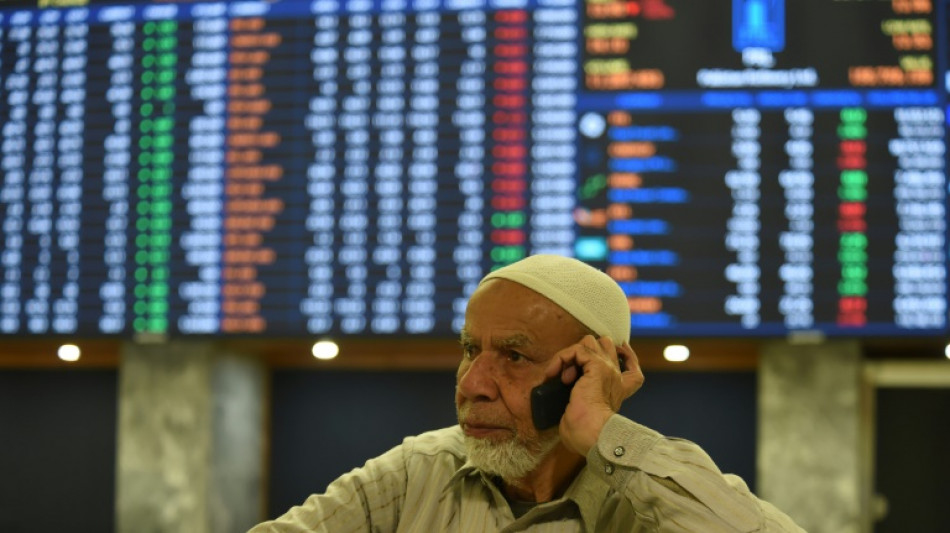
Pakistan's economy in 'collapse' as IMF visits / Photo: Asif HASSAN - AFP

 Back-to-school in Cuba a grim day with shortages of everything
 Canadian minister says Russia's G20 presence sparked 'discomfort'
 IMF reaches agreement with Senegal on new $2.2 bn loan programme
 Germany blames Russia for airport drone incident, hits back with sanctions

 Iran president urges return to truce, hails Russian support

 Aster and World Liberty Financial Launch USD1 RWA Boost: Phase 1, Offering 125M $WLFI + 6.25M USD1 in Rewards

 Tronchon sprints to Vuelta stage 10 win, Mas keeps red jersey

 Germany defender Rudiger announces international retirement
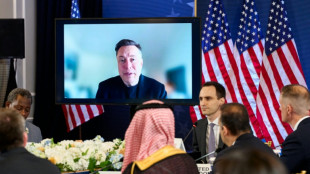 Musk defends AI data centers, slams EU rules at G20
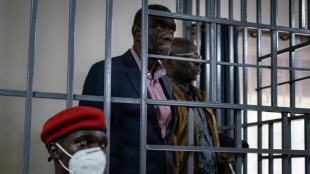 Activists blame Kenya for Ugandan opposition figure's plight
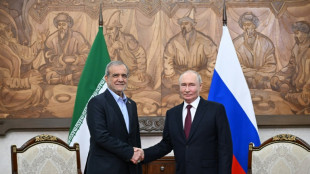 Iran president offers US olive branch, hails Russian support

 TrustFinance Community Choice Awards 2026 Opens Global Voting

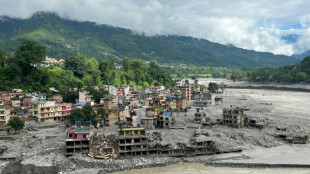
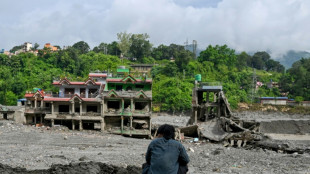 Nepal disaster a climate 'warning signal': foreign minister

 France winger Diaby returns to Leverkusen until 2031

 Barcelona confirm Jesus arrival from Arsenal

 EU official says it's not time to 'normalize' Russia at G20 finance talks
 RedHill Announces Transformational Acquisition of Commercialization Rights to Ferring’s Rebyota® and Clenpiq®

 TrendEadvisor Launches Global Multi-Asset Platform Combining Online Investing with Social Trading

 India's top court drops criminal cases against protesters

 Philippine couple married in hip-deep floodwaters

 Villa sign Senegal winger Mbaye from PSG
 Former Peru minister last-minute contender for UN labour agency helm

 Messi legacy will 'live forever', says Beckham
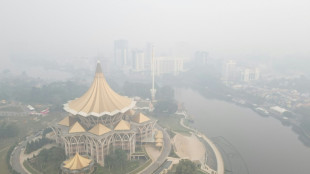 'Literally tasting the smoke': Malaysians suffer as haze worsens

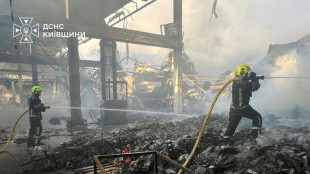 Kyiv's defences, 'hybrid' threat from Moscow headline EU talks
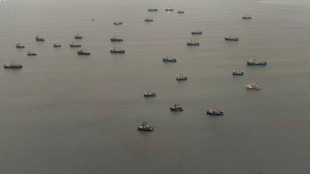
Pakistan is gripped by a major economic crisis, with the rupee plummeting, inflation soaring and energy in short supply as IMF officials visit to discuss a vital cash injection.
Prime Minister Shehbaz Sharif for months held out against the tax rises and subsidy slashing demanded by the International Monetary Fund, fearful of backlash ahead of elections due in October.
But in recent days, with the prospect of national bankruptcy looming and no friendly countries willing to offer less painful bailouts, Islamabad has started to bow to pressure.
The government loosened controls on the rupee to rein in a rampant black market in US dollars, a step that caused the currency to plunge to a record low. Artificially cheap petrol prices have also been hiked.
"We're at the end of the road. The government has to make the political case to the public for meeting these (IMF) demands," former World Bank economist Abid Hasan told AFP.
"If they don't, the country will certainly default and we'll end up like Sri Lanka, which will be even worse."
Sri Lanka defaulted on its debt last year and endured months of food and fuel shortages that sparked protests, ultimately forcing the country's leader to flee overseas and resign.
In Pakistan, time is of the essence, with Nasir Iqbal from the Pakistan Institute of Development Economics warning the economy had already "virtually collapsed" due to mismanagement and political turmoil.
- Cost-of-living crisis -
The IMF delegation will arrive on Tuesday to a nation in panic, still reeling from unprecedented floods that submerged a third of its territory.
The world's fifth-biggest population has less than $3.7 billion in the state bank -- enough to cover just three weeks of imports.
It is no longer issuing letters of credit, except for essential food and medicines, causing a backlog of thousands of shipping containers at Karachi port stuffed with stock the country can no longer afford.
Industry has been hammered by the imports block and massive rupee devaluation. Public construction projects have halted, textiles factories have partially shut down and domestic investment has slowed.
In downtown Karachi, dozens of day labourers including carpenters and painters wait with their tools on display for work that never comes.
"The number of beggars has increased and the number of labourers has decreased," said 55-year-old mason Zafar Iqbal, who was eating biriyani from a plastic bag donated by a passerby.
"Inflation is so high that one cannot earn enough."
At the petrol pump, a widow with her son said every few hundred rupees (75 cents) of fuel for their motorcycle was precious, with the pair only eating two meals a day.
"The cost is so high that we eat our breakfast late and the second meal at around seven, with nothing in between," said Ulfat, who declined to give her second name.
- Political mayhem -
Pakistan is locked in an endless cycle of servicing external debt.
State Bank governor Jamil Ahmed last month said the country owed $33 billion in loans and other foreign payments before the end of the fiscal year in June.
A diplomatic offensive has seen $4 billion rolled over by lending nations, with $8.3 billion still on the negotiating table.
Meanwhile, Pakistan is battling severe energy shortages -- with capacity drained by poor infrastructure and mismanagement -- compounding the misery of businesses and citizens.
Last week the whole country was plunged into a day-long blackout because of a fault in the national grid that followed a cost-cutting measure.
State petroleum minister Musadik Malik told reporters in Islamabad that imports of Russian oil would start in April, paid for in currencies of "friendly countries" in a mutually beneficial deal.
The tumbling economy mirrors the country's political chaos, with former prime minister Imran Khan heaping pressure on the ruling coalition in his bid for early elections while his popularity remains high.
Khan, who was ousted last year in a no-confidence motion, negotiated a multi-billion-dollar loan package from the IMF in 2019.
But he reneged on promises to cut subsidies and market interventions that had cushioned the cost-of-living crisis, causing the programme to stall.
It is a common pattern in Pakistan, where most people live in rural poverty, with more than two dozen IMF deals brokered and then broken over the decades.
"Even if Pakistan avoids default, the underlying structural factors that triggered the current crisis -- one exacerbated by poor leadership and external global shocks -- will still be in place," tweeted political analyst Michael Kugelman, the director of the South Asia Institute at the Wilson Center in Washington.
"Barring difficult, large-scale reforms, the next crisis could be just around the corner."
F.Moura--PC