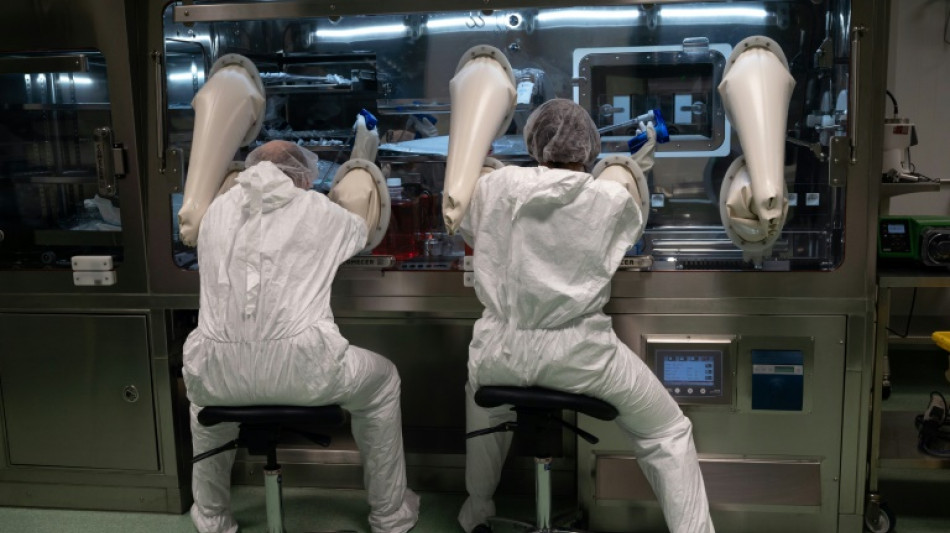
From vaccines to AI: New weapons in the fight against cancer / Photo: PATRICK HERTZOG - AFP/File

 Germany blames Russia for airport drone incident, hits back with sanctions
 Iran president urges return to truce, hails Russian support

 Aster and World Liberty Financial Launch USD1 RWA Boost: Phase 1, Offering 125M $WLFI + 6.25M USD1 in Rewards

 Tronchon sprints to Vuelta stage 10 win, Mas keeps red jersey

 Germany defender Rudiger announces international retirement
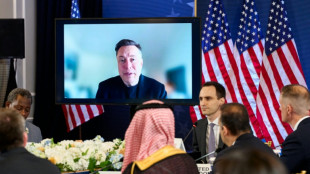 Musk defends AI data centers, slams EU rules at G20

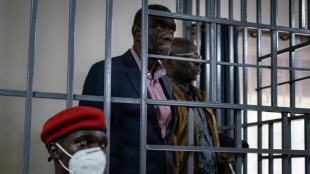 Activists blame Kenya for Ugandan opposition figure's plight

 Iran president offers US olive branch, hails Russian support

 TrustFinance Community Choice Awards 2026 Opens Global Voting
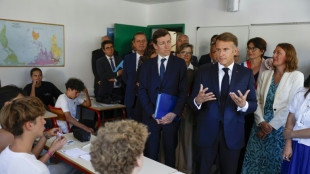
 Nepal disaster a climate 'warning signal': foreign minister

 France winger Diaby returns to Leverkusen until 2031

 Barcelona confirm Jesus arrival from Arsenal

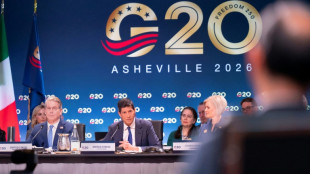 EU official says it's not time to 'normalize' Russia at G20 finance talks

 RedHill Announces Transformational Acquisition of Commercialization Rights to Ferring’s Rebyota® and Clenpiq®

 TrendEadvisor Launches Global Multi-Asset Platform Combining Online Investing with Social Trading
 India's top court drops criminal cases against protesters
 Philippine couple married in hip-deep floodwaters

 Villa sign Senegal winger Mbaye from PSG

 Former Peru minister last-minute contender for UN labour agency helm

 Messi legacy will 'live forever', says Beckham

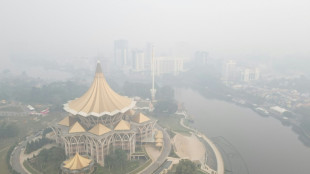 'Literally tasting the smoke': Malaysians suffer as haze worsens

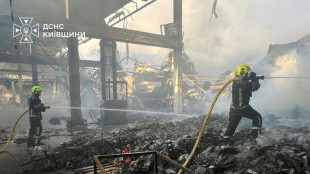 Kyiv's defences, 'hybrid' threat from Moscow headline EU talks

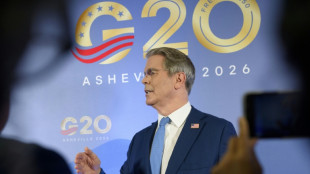 Oil extends gains, stocks mostly down as Trump issues fresh Iran warning

 ThinkMarkets Expands Weekend Trading Offering, Launches Weekend League Competition

 Tibet activists accuse China of downplaying floods

Could humanity finally be gaining the upper hand in our age-old fight against cancer?
Recent scientific and medical advances have added several new weapons to our arsenal, including personalised gene therapy, artificial intelligence screening, simple blood tests -- and potentially soon vaccines.
Cancer accounted for nearly 10 million deaths -- almost one in six of the global total -- in 2020, according to the World Health Organization.
Ahead of World Cancer Day on Saturday, here are some of the promising recent developments in diagnosing and treating the disease.
- Immunotherapy -
Immunotherapy drugs, which stimulate the immune system to track down and kill cancerous cells, have been one the biggest advances in cancer treatment over the last decade.
With fewer severe side effects than chemotherapy, immunotherapy has had a profound effect on the treatment of several types of cancer.
Before 2010, the survival rate for people with severe cases of the skin cancer melanoma was very low. But thanks to immunotherapy drugs, some patients can now live for 10 years or more.
However not all tumours respond to immunotherapy, which has its own side effects.
"We are only at the beginning of immunotherapy," said Bruno Quesnel, research director at France's National Cancer Institute.
Pierre Saintigny, an oncologist at France's Leon Berard cancer centre, said that different kinds of immunotherapy treatments will need to be combined "as intelligently as possible."
"With immunotherapy, we have moved up a level in cancer treatment, but steps still need to be taken for all the patients who do not benefit from it," he added.
- CAR-T therapy -
CAR-T therapy involves taking the T-cells from the blood of an individual patient and modifying them in a laboratory.
Then the T-cells, which are part of the immune system, are injected back into the patient, newly trained to target cancerous cells.
Another technique called Allogeneic CAR-T involves getting the cells from a different, healthy person.
So far, CAR-T therapies have mainly been effective against some kinds of leukaemia, and the process remains very expensive.
- Artificial intelligence -
Computer programmes using artificial intelligence (AI) have been shown to identify brain and breast cancer from routine scans with more accuracy than humans.
With AI research booming across a range of fields, it is expected to play an increasing role in other ways to diagnose cancer.
"Thanks to artificial intelligence, we will be able to identify which patients can benefit from shorter treatment," said Fabrice Andre, an oncologist France's Gustave Roussy cancer institute.
This would mean fewer side effects for patients, and a lower burden on the health system.
- Liquid biopsy testing -
Liquid biopsies are able to detect cancer in DNA from a simple blood test, which is easier and less invasive than traditional biopsies which require a tissue simple.
Quicker and easier testing would help doctors detect and act against cancer before it has the chance to spread.
The new technique is now being used in the United States, "but there are still a lot of false positives," Andre said.
- Vaccines -
There have long been vaccines available to protect against the human papillomavirus (HPV), which causes cervical cancer, and hepatitis B which can lead to liver cancer.
But after decades of failed efforts towards a cancer vaccine, hopes have risen that the mRNA technology pioneered for Covid-19 vaccines could also lead to a breakthrough in cancer.
Vaccines that treat -- rather than prevent -- cancer have been the most promising in development.
In December, the drugmakers Moderna and Merck announced positive early trial results for their personalised mRNA vaccine to treat skin cancer patients.
And last month, German pharmaceutical BioNTech said that 10,000 people in Britain would be part of a trial for a mRNA cancer vaccine that would be tailored to individual tumours.
- A personal combination -
Steven Le Gouill, the head of the hospital group at France's Curie Institute, said he was optimistic for the future of cancer treatment.
"We have passed a milestone in our understanding of the tumour cell," he said.
"Cancer remains an ordeal, but progress has been made -- exponentially."
A.Santos--PC