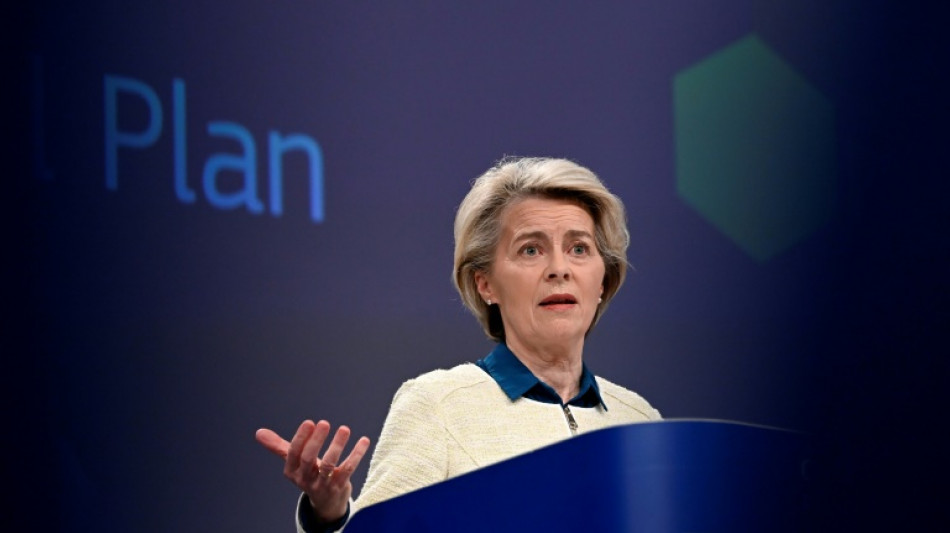
EU prepares response to new US green subsidy plan / Photo: JOHN THYS - AFP

 Former Peru minister last-minute contender for UN labour agency helm
 Messi legacy will 'live forever', says Beckham
 'Literally tasting the smoke': Malaysians suffer as haze worsens
 Kyiv's defences, 'hybrid' threat from Moscow headline EU talks
 Oil extends gains, stocks mostly down as Trump issues fresh Iran warning

 ThinkMarkets Expands Weekend Trading Offering, Launches Weekend League Competition

 Tibet activists accuse China of downplaying floods
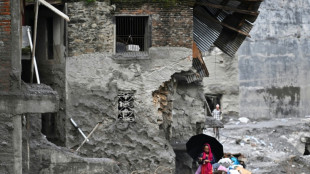
 Afghanistan war victims left 'without justice', UN says
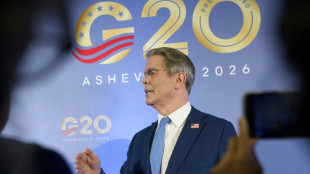
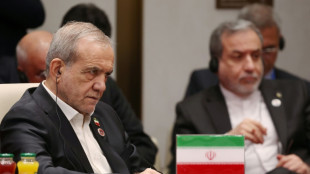 Iran president offers US olive branch before Putin meeting

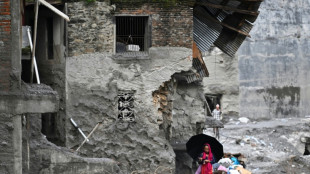 China-Nepal flood toll tops 1,000 as tunnel rescue offers last hope

 Japan to relax overtime regulation under workaholic PM

 Thwarted Niger mutiny exposes junta's Russia dependence
 Illegal mining ravages S.Africa's economic hub
 Nepal's wall of missing offers last hope after Himalayan flood

 US to press G20 on light-touch AI regulation
 2 die in Grand Canyon flash flood, only 1 person unaccounted for
 US Army Secretary Driscoll submits resignation: White House
 Oil extends gains, stocks drop as Trump issues fresh Iran warning

 Tsitsipas says Kyrgios's positive cocaine test 'kind of expected'
 In Japan's mountains, a different way to manage bears

 Middle East war a boon for UAE defence giant with global ambitions

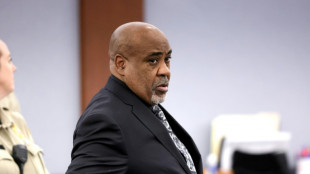 Former gang member found guilty of murdering Tupac Shakur
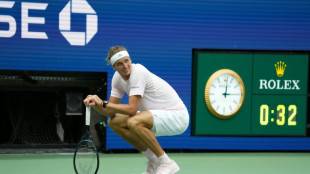 Top-seeded Zverev opens US Open campaign

 US regulator, 22 states accuse Amazon of 'manipulating' ad auctions: lawsuit

 TRON Founder Justin Sun Shares Outlook on Bitcoin, Stablecoins and Global Finance at Bitcoin Asia 2026
Confronted by competition from Washington's vast green tech investment plan, European leaders opened the way Friday towards a relaxation of their own restrictions on state aid.
Meeting at their summit in Brussels, the 27 leaders agreed that a response was necessary to counter rising energy bills and the threat of unfair American competition.
But member states were divided on how far to go without risking a subsidy race with Washington or causing damage to the level playing field within their own single market.
The language adopted by the leaders in their summit statement said any reforms to state subsidy rules should be "targeted, temporary and proportionate".
But they said state aid "procedures need to be made simpler, faster and more predictable, and allow for targeted, temporary and proportionate support to be deployed speedily".
Tax credits, for example, would be focused on supporting Europe's already planned green transition to low or zero-carbon technology -- and maintaining competitiveness.
At the EU leaders' next summit at the end of March, European Commission president Ursula von der Leyen will have to present a reform package that member states can agree on.
"We want to be pragmatic, it means that we are using the means that are available," said European Council president Charles Michel, who represents the leaders in Brussels.
"It means that we need to adapt the state aid regime but in a way that makes sure that we defend the integrity of the single market ... and take into account global competitiveness."
This balancing act will have to be performed by the Commission, which is seeking to loosen the straitjacket of anti-subsidy rules to allow states to back EU-based businesses.
This, like the feared US Inflation Reduction Act (IRA), will focus on green tech like solar and wind power or efforts to cut emissions and boost efficiency in industry.
But the idea has received a cool reception among the partisans of free markets and fans of state intervention -- and between large states with budgets to spare and smaller rivals.
- 'Too much?' -
The summit statement stresses that, while competing with foreign rivals is important, "The integrity of and the level playing field in the Single Market must be maintained."
The Netherlands' Premier Mark Rutte is among those sceptical of going too far.
"We were worried that on state aid, you would open up too much," Rutte said.
"And that would mean that you would basically threaten to undercut one of the things which is really working in the EU, which is the internal markets.
"But I think it is now temporarily targeted, very much focused on the on innovation, clean technology, the clean economy, precisely the issues where we have to compete with US because of the inflation Reduction Act in Washington."
European capitals fear the US subsidies for clean tech will lure investment across the Atlantic, and torpedo the bloc's recovery plans.
But some members fear abandoning controls on subsidy will allow big players like France and Germany -- already stepping up their own state aid -- to overwhelm smaller economies.
Subsidy controls were already loosened as part of the response to the Covid pandemic, and countries such as Italy, Austria, Denmark and Finland oppose making it meaningless.
"On this topic, there'll always be two for and 25 against," one European diplomat joked -- referring to Germany and France's ability to back their own firms.
France and Germany are not in agreement, however, about new joint financing schemes.
Here, Paris sides with Rome and others in promoting new shared investment funds to pool European investment to boost industry and fight off US and Chinese competitors.
- Fund only 'noted' -
Von der Leyen has promised to draw up a blueprint within the next five months for a so-called "Sovereignty Fund" to fund joint investment in strategic businesses.
But Germany and other net contributors to EU funds -- such as Sweden or Austria -- oppose joint borrowing or increased EU membership contributions to pay for it.
In the statement, agreed after a summit that went late into the night and on into the early hours of Friday, the members agreed to only to "take note" of the idea.
And even France's President Emmanuel Macron, the Sovereignty Fund's great champion, admitted that Europe could find enough funding to respond to the US plan within the existing pool.
T.Vitorino--PC