
-
 Former Peru minister last-minute contender for UN labour agency helm
-
Shein flattens on Hong Kong debut facing global headwinds

-
 Messi legacy will 'live forever', says Beckham
-
Eurozone inflation hits three-year high at 3.3% in August
-
 'Literally tasting the smoke': Malaysians suffer as haze worsens
-
Man City chase Fernandez, Arsenal eye Alvarez on deadline day

-
 Kyiv's defences, 'hybrid' threat from Moscow headline EU talks
-
El Nino hammering Peru anchovy fishing: industry officials
-
 Oil extends gains, stocks mostly down as Trump issues fresh Iran warning
-
Mass Russian barrage kills 12 in Kyiv

-
 ThinkMarkets Expands Weekend Trading Offering, Launches Weekend League Competition
-
PineX Capital Launches MetaTrader 5 as Prop Firm Expands Trading Platform Offering

-
 Tibet activists accuse China of downplaying floods
-
Women survivors face sanitation woes in Nepal relief camp
-
 Afghanistan war victims left 'without justice', UN says
-
Oil extends gains, stocks mixed as Trump issues fresh Iran warning
-
 Iran president offers US olive branch before Putin meeting
-
Thai resort readies for US carrier's 5,000 sailors

-
 China-Nepal flood toll tops 1,000 as tunnel rescue offers last hope
-
AI startup Manus says resumes independent operations

-
 Japan to relax overtime regulation under workaholic PM
-
'Massive' Russian missile, drone attack on Kyiv kills 8

-
 Thwarted Niger mutiny exposes junta's Russia dependence
-
Defence tech hub Munich booms as Europe rearms

-
 Illegal mining ravages S.Africa's economic hub
-
Nigeria rethinks criminalisation of suicide
-
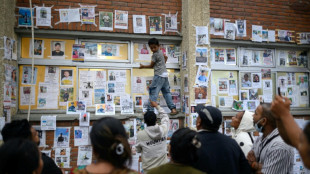 Nepal's wall of missing offers last hope after Himalayan flood
-
Osaka channels NBA icon Iverson to reach US Open second round

-
 US to press G20 on light-touch AI regulation
-
Fast-fashion giant Shein plunges 10% on Hong Kong debut

-
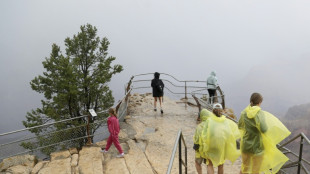 2 die in Grand Canyon flash flood, only 1 person unaccounted for
-
South Korea hire former Spain boss Moreno as interim coach
-
 US Army Secretary Driscoll submits resignation: White House
-
China-Taiwan friction clouds Pacific summit
-
 Oil extends gains, stocks drop as Trump issues fresh Iran warning
-
Two dead after stabbing in New York's Times Square

-
 Tsitsipas says Kyrgios's positive cocaine test 'kind of expected'
-
Anthropic signs $35B computing deal with startup backed by Nvidia

-
 In Japan's mountains, a different way to manage bears
-
Drones in Ithaca: Azov's Odyssey turns Ukraine war into modern myth

-
 Middle East war a boon for UAE defence giant with global ambitions
-
Boat builders keep Pakistan's fishing heritage afloat

-
 Former gang member found guilty of murdering Tupac Shakur
-
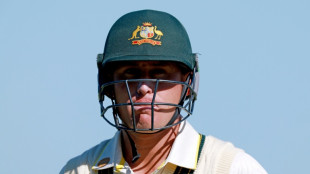
Australia axe Labuschagne for Zimbabwe, South Africa ODI series
-
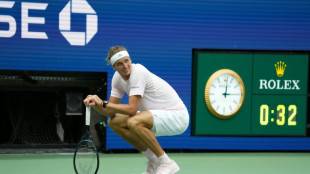 Top-seeded Zverev opens US Open campaign
-
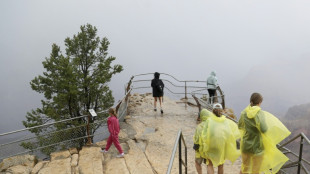
Heavy rain at Grand Canyon after flood kills 2, dozen missing
-
 US regulator, 22 states accuse Amazon of 'manipulating' ad auctions: lawsuit
-
Kushner blames soccer power struggle for World Cup plan collapse

-
 TRON Founder Justin Sun Shares Outlook on Bitcoin, Stablecoins and Global Finance at Bitcoin Asia 2026
-
Buoyant Alcaraz shakes off nerves to advance at US Open

'Cautious' Ueda nominated next Bank of Japan governor
Economics professor Kazuo Ueda was nominated Tuesday as the Bank of Japan's next governor, tasked with navigating a way forward after a decade of extraordinary monetary easing.
The respected economist, described as careful and cautious, was a surprise pick for the change of guard after the outgoing governor's deputy reportedly turned down the job.
The position will likely be tough going, with Ueda facing pressure to join international peers in tightening while avoiding panic by suddenly unwinding the bank's longstanding ultra-loose policies.
In an example of the economic headwinds facing Japan, data released Tuesday showed that GDP expanded just 0.2 percent in the last quarter of 2022, a smaller rebound than expected despite a long-awaited reopening to tourists.
"We sought someone who would manage monetary policy appropriately while considering the status of the economy, prices and financial trends," Chief Cabinet Secretary Hirokazu Matsuno told reporters after Ueda's nomination.
The government's decision will likely be easily approved in parliament, where the ruling coalition commands a healthy majority.
Matsuno described Ueda as "an internationally acclaimed economist with profound insight in the field of finance", emphasising the need for a good communicator in the job.
BoJ official Shinichi Uchida and former bureaucrat Ryozo Himino were nominated as deputy governors, completing another all-male line-up at the top of the institution.
Ueda, a former BoJ policy board member, will take the reins from Haruhiko Kuroda -- the central bank's longest-serving leader and the architect of its easing policies.
Since Kuroda became governor in 2013, his attempts to boost Japan's moribund economy have ranged from a negative interest rate to spending vast sums on government bonds.
In the past year, he has held firm, even as other central banks hiked rates to tackle inflation, with the resulting policy gap causing the yen to slump against the dollar.
- 'Very brave to accept' -
Kuroda, 78, is due to step down on April 8 when his second term ends.
He leaves 71-year-old Ueda the challenge of working out the bank's next steps, said Saori N. Katada, an international relations professor at the University of Southern California.
"This is probably the hardest job at the worst time to take up. Professor Ueda is very brave to accept it," she told AFP, describing him as "relatively cautious".
Japan's easy money policies have become "extreme... and no one knows how to get out", as sudden pivots could "jeopardise fiscal sustainability", Katada said.
"In the next five years, though, the BoJ has to change course" as inflation, the weak yen and high government spending make easing unsustainable, she said.
The yen tumbled from around 115 against the dollar in February 2022 to a three-decade low of 151 yen in October.
It has since recovered to about 132 yen, and briefly strengthened when Japanese media first reported Ueda would be nominated instead of Kuroda's dovish deputy Masayoshi Amamiya.
Amamiya had been seen as a continuity candidate likely to keep the BoJ's stimulus policies.
But that does not mean Ueda -- who has a PhD in economics from the Massachusetts Institute of Technology and served on the BoJ's policy board between 1998 and 2005 -- should be viewed as a hawk, analysts said.
"The current BoJ policy is appropriate, and I think it's important to maintain monetary easing policy for now," Ueda told reporters on Friday.
The bank's approach dates to the era of former prime minister Shinzo Abe, whose "Abenomics" plan aimed to stimulate growth and banish the deflation that plagued Japan from the end of the 1980s boom.
Inflation hit a multi-decade high of four percent in Japan in December -- above the BoJ's longstanding two-percent target -- fuelled partly by soaring energy bills.
But because the trend is not driven by demand or steady wage increases, the BoJ has said it sees no reason to abandon its policies.
Kazuo Momma, executive economist at Mizuho Research and Technologies, told AFP that Ueda had "never been hawkish with regard to the BoJ's monetary policy".
So he "will assess very carefully whether the two-percent inflation target will be achieved in any reasonable time horizon, and take a cautious position in terms of possible policy changes," Momma said.
G.Teles--PC