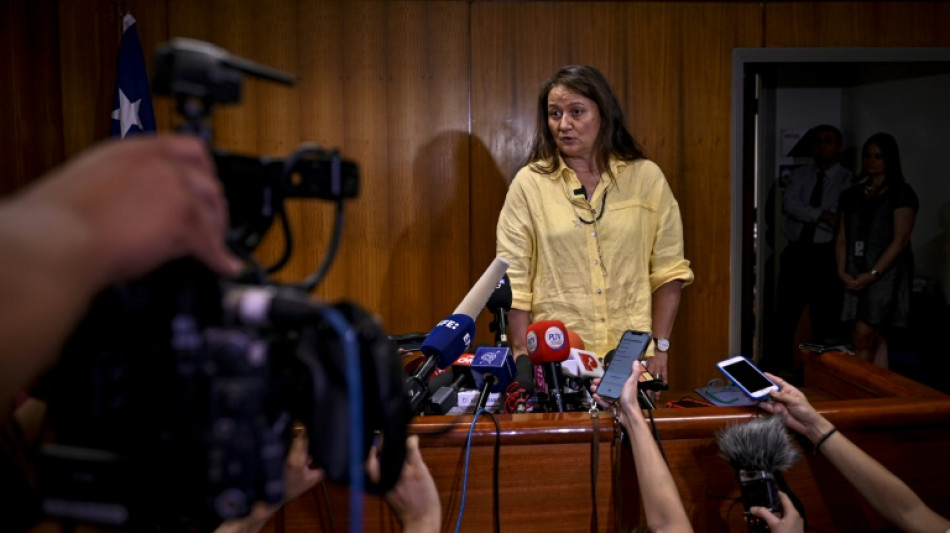
Experts deliver report into Pablo Neruda's mysterious death to Chile judge / Photo: Martin BERNETTI - AFP

 Best Pet Advent Calendars for Christmas 2026: Dog Treats and Cat Toys

 Grattan Institute Releases Blueprint to Target Specialists Over Excessive Fees

 Arizona Science Center Hosts Girls in STEM Astro Adventures for Students

 New Turkish Cafe, Japanese BBQ, and Korean Restaurants Open Across East Bay

 Knowle Move Four Points Clear at Top After Histon Victory

 Physicians Urge Arizona to Ban Medical Gag Clauses and Enable Private Lawsuits

 New Campaign Highlights Knowledge Gaps on Carbon Monoxide Safety Among Americans

A panel of scientific experts investigating the mysterious death of Nobel laureate poet Pablo Neruda delivered a report to a Chilean judge on Wednesday.
Judge Paola Plaza will study the report in a bid to determine whether Neruda was poisoned by the regime of former military dictator Augusto Pinochet.
Reports in the press this week claimed the report found he had been injected with a deadly substance, and did not die from prostate cancer, as the government had claimed upon his death in 1973, aged 69.
Neruda was a celebrated poet, politician, diplomat and bohemian figure, and also a prominent member of the Chilean communist party.
When he died in a hospital he had been preparing to flee into exile in Mexico to lead the resistance against the Pinochet regime.
"The court had no knowledge of the content of this report until today," Plaza said in a press conference, distancing herself from press reports that claimed Neruda was killed by a highly toxic bacteria.
"I cannot take responsibility for what is circulating in the press," said Plaza, who is heading an investigation that began more than a decade ago.
Last month, experts from Chile and abroad began meetings to discuss the results of previous studies carried out on the remains of Neruda, who won the Nobel prize for literature in 1971.
Neruda died 12 days after the violent military coup in which General Pinochet, then the commander of the army, ousted socialist President Salvador Allende on September 11, 1973 with help from the United States.
In 2017 a group of Chilean and international experts concluded that Neruda did not in fact die of cancer but said it could not determine what did kill him.
Then a probe was launched into a toxic bacterium called Clostridium botulinum that was found in Neruda's body.
Rodolfo Reyes, a lawyer and nephew of Neruda's, claimed earlier this week that he had had access to the report and that its results were sufficient to confirm his uncle was poisoned.
"Of course this bacteria is a biological weapon that was injected into Pablo Neruda, and he died a few hours later," Reyes told AFP.
But Bernardo Reyes, a grand nephew, dismissed this theory, telling AFP that "the scientific conclusion will not be able to" determine a murder.
"Notwithstanding that in 1973 there was still not, in the dictatorship, a development of assassinations using chemical methods."
He said those relatives claiming otherwise "do not represent the family."
An investigation into the cause of Neruda's death first began in 2011 when Manuel Araya, who had been his driver and personal assistant, asserted that the poet was given a mysterious injection in his chest just before he died.
Pinochet, who ruled Chile for 17 years, oversaw a regime that killed some 3,200 leftist activists and other suspected opponents.
The dictator died in 2006 at age 91 without ever being convicted for crimes committed by his regime.
Neruda is remembered especially for sensual poems about love.
L.Henrique--PC

