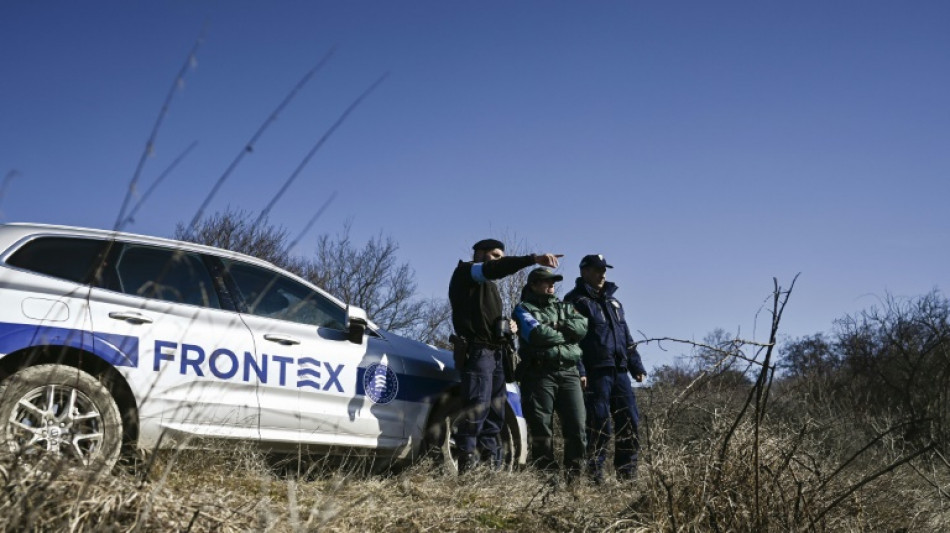
EU states call for stronger borders, migrant return deals / Photo: Nikolay DOYCHINOV - AFP

 Best Pet Advent Calendars for Christmas 2026: Dog Treats and Cat Toys

 Grattan Institute Releases Blueprint to Target Specialists Over Excessive Fees

 Arizona Science Center Hosts Girls in STEM Astro Adventures for Students

 New Turkish Cafe, Japanese BBQ, and Korean Restaurants Open Across East Bay

 Knowle Move Four Points Clear at Top After Histon Victory

 Physicians Urge Arizona to Ban Medical Gag Clauses and Enable Private Lawsuits

 New Campaign Highlights Knowledge Gaps on Carbon Monoxide Safety Among Americans

Fifteen EU states on the migration front line on Friday called for stronger borders and agreements to be struck with third-party countries to accept migrants.
"It is worthwhile exploring the possibility of, and where relevant legally enabling, safe third country arrangements with relevant countries along the EU's external borders and beyond," the states said after a two-day conference in Athens on border management.
The EU is currently exploring ways for its border agency, Frontex, to operate in third-party states to dissuade migration.
"We commit to enhancing activities with a view to finding solutions for international protection to be provided in third countries," the fifteen EU states said Friday.
The overall tone on migration has hardened in Europe since 2015-2016, when it took in over a million asylum-seekers, most of them Syrians fleeing the war in their country.
"For the first time in history...the EU plans to conclude these agreements with non-European countries," Tineke Strik, a European Parliament lawmaker for the Greens, tweeted over the weekend.
The agreements would allow Frontex to deploy border guards and perform border management tasks, Strik said.
Mauritania and Senegal are two states in relevant talks with the EU, she said.
The conference participants -- Austria, Bulgaria, Croatia, Cyprus, the Czech Republic, Denmark, Estonia, Greece, Hungary, Latvia, Lithuania, Malta, Poland, Romania and Slovakia -- on Friday also called on the European Commission to commit "adequate financial support" to frontline member states "for all types of border protection infrastructure including physical barriers and other related reception costs".
"The support of Frontex should also be increased and fully deployed in the most affected member states," they said.
They also demanded "more possibilities for accelerated procedures followed by rejections in case of unfounded asylum applications".
Several countries, including Austria and Greece, have called for EU funding to strengthen fences along the bloc's external borders to reduce the flow of asylum-seekers.
But the commission has so far been reluctant, saying that "building walls and barbed wire" is not the right solution.
R.Veloso--PC

