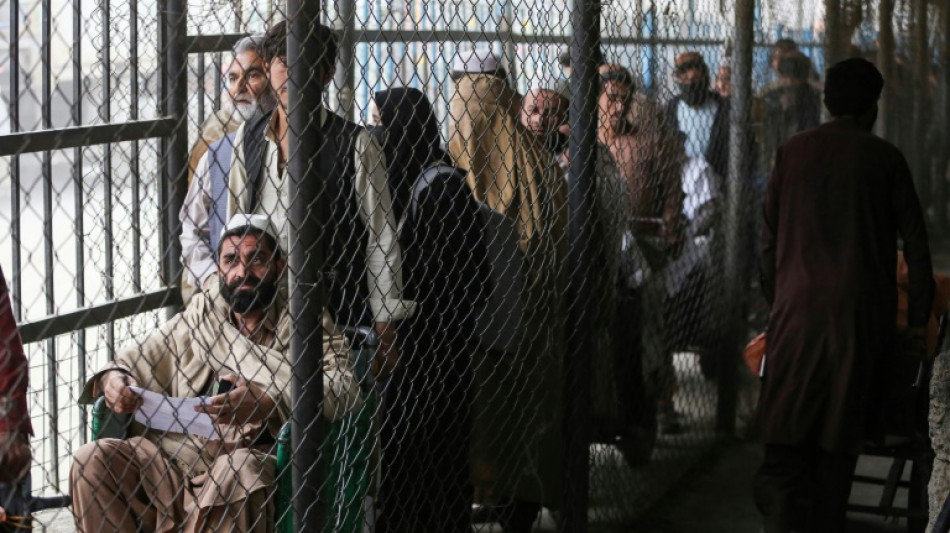
Trade resumes as key Afghan border crossing with Pakistan reopens / Photo: Shafiullah KAKAR - AFP

 Best Pet Advent Calendars for Christmas 2026: Dog Treats and Cat Toys

 Grattan Institute Releases Blueprint to Target Specialists Over Excessive Fees

 Arizona Science Center Hosts Girls in STEM Astro Adventures for Students

 New Turkish Cafe, Japanese BBQ, and Korean Restaurants Open Across East Bay

 Knowle Move Four Points Clear at Top After Histon Victory

 Physicians Urge Arizona to Ban Medical Gag Clauses and Enable Private Lawsuits

 New Campaign Highlights Knowledge Gaps on Carbon Monoxide Safety Among Americans

Vital trade resumed at a key border crossing between Afghanistan and Pakistan on Saturday as their busiest trading waypoint reopened almost a week after being shut by Taliban authorities.
Relations between the countries have soured since the Taliban took power in Afghanistan in 2021, with Islamabad accusing its neighbour of harbouring militants that have carried out strikes on its soil -- a charge Kabul denies.
There have been frequent checkpoint closures and flare-ups of violence along the mostly mountainous dividing line splitting the two nations, which no Afghan government has ever recognised.
The Torkham border crossing was reopened at 6 am (0130 GMT) on Saturday, Afghan customs official Muslim Khaksar said at the site in Afghanistan's eastern Nangarhar province.
"The border is now open from both sides for civilians as well as for traders," he said.
"Trucks carrying rice, cement, construction material, medicines and other edibles were sent to Afghanistan," a Pakistani customs official said, adding that lorries loaded with coal, vegetables and fruit had travelled the other way.
But around 1,400 trucks on the Pakistan side were still waiting to cross into Afghanistan as a backlog is cleared, he added.
Hundreds of people from both countries passed through the crossing on Saturday after being stranded for days, an AFP correspondent reported from the frontier.
"I was stranded here for five to six days with my sick mother," Haroon, a resident of the Afghan city of Kunduz, told AFP before entering Pakistan with his ailing parent.
"There are thousands of patients like my mother waiting to go to Pakistan for treatment. The border must always remain open, it will help patients and also boost trade."
The crossing was closed last Sunday by Afghan authorities, who objected to what they said were new documentation rules restricting people assisting medical patients from entering Pakistan.
Pakistani officials never confirmed or denied any rule change.
It was the first time the Torkham boundary had been officially closed since the Taliban returned to power in Afghanistan 18 months ago.
On Saturday, people attending to patients were allowed to enter Pakistan after showing their Afghan identity cards, the Pakistani customs official said.
Several patients in wheelchairs were escorted through the gates after border guards checked their documents.
A gunfight had erupted at the crossing between border guards from the two countries on Monday morning, with both sides blaming each other for initiating the violence.
Both nations are in economic turmoil, with Afghanistan reeling from a drop-off in aid after the fall of the US-backed government in 2021, and Pakistan hammered by ballooning energy prices and a foreign exchange crisis.
Since the Taliban's return, there has been a rise in attacks on Pakistani soil blamed on the Pakistani Taliban, which has deep ties with its Afghan namesake.
On Wednesday, a high-level delegation from Pakistan visited Kabul to discuss ways to counter the threat of militant attacks.
str-qb-la-zz-jd/axn
F.Carias--PC

