-
 Anthropic signs $35B computing deal with startup backed by Nvidia
-
In Japan's mountains, a different way to manage bears

-
 Drones in Ithaca: Azov's Odyssey turns Ukraine war into modern myth
-
Middle East war a boon for UAE defence giant with global ambitions
-
 Boat builders keep Pakistan's fishing heritage afloat
-
Former gang member found guilty of murdering Tupac Shakur

-
 Australia axe Labuschagne for Zimbabwe, South Africa ODI series
-
Top-seeded Zverev opens US Open campaign

-
 Heavy rain at Grand Canyon after flood kills 2, dozen missing
-
US regulator, 22 states accuse Amazon of 'manipulating' ad auctions: lawsuit
-
 Kushner blames soccer power struggle for World Cup plan collapse
-
TRON Founder Justin Sun Shares Outlook on Bitcoin, Stablecoins and Global Finance at Bitcoin Asia 2026

-
 Buoyant Alcaraz shakes off nerves to advance at US Open
-
Tributes to 'eternal' Messi on Argentina retirement

-
 US draws European pushback with Russia G20 finance invite
-
Arteta hails Arsenal's 'finishers' after Saka kills off Villa

-
 Jury begins deliberations in Tupac Shakur murder trial
-
Yamal, Raphinha bag braces as Barcelona rout Rayo

-
 US Supreme Court allows Trump ballroom project to proceed
-
Alcaraz makes winning return at US Open, Sabalenka safely through

-
 Trump says US reviewing position on Falkland Islands
-
Everton agree to sign Monaco's Balogun: reports

-
 Saka strikes as flawless Arsenal punish troubled Villa
-
Milei calls for F1 to return to Argentina

-
 Oil prices surge on renewed fighting in US-Iran war
-
Alcaraz wins US Open first-round match after injury layoff

-
 Cycling superstar Pogacar has surgery after Vuelta crash
-
Kyiv orders heightened security amid intense Russian drone strikes
-
 Man City agree deal for Everton's Ndiaye
-
Sabalenka kickstarts US Open three-peat bid as Fils crashes out

-
 Apple CEO Tim Cook gives nod to founder Steve Jobs in final memo
-
Fils upset by resurgent Tsitsipas at US Open

-
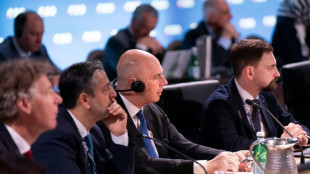 Russian finance minister makes unexpected appearance at G20
-
Trump says AI data center opponents want to be 'backwards and poor'
-
 Happy to be back in NY, Sabalenka advances
-
Pakistan ditch coaches, send seven players home after England defeats

-
 Naomi Watts to receive lifetime award at top Spain film fest
-
Galliano pulls Met Gala exhibit after antisemitism backlash

-
 Jury hears closing arguments in Tupac Shakur murder trial
-
Afghan people should 'not be abandoned': top Red Cross official

-
 Pakistan sack coach, send seven players home after England defeats
-
Six defining moments of Lionel Messi's Argentina career

-
 New storms threaten Grand Canyon flood search, 2 bodies recovered
-
Trump blasts US backlash against data centers
-
 France takes aim at ultra-fast fashion with new levy
-
It 'hurts' says Messi of decision to retire from international football

-
 Tribunal says India cannot withdraw from water treaty with Pakistan
-
Benzema ends brief stint with Al Hilal in Saudi league

-
 John Galliano pulls US exhibition after antisemitism backlash
-
Djokovic's Grand Slam future uncertain after brutal US Open defeat
Far-reaching UN treaty a must to cut global plastic use: experts
Only a bold and ambitious UN treaty with sweeping reforms of the entire plastic life cycle can stem the world's waste crisis, experts said Monday.
Even if measures thought to have the greatest potential for reducing plastic consumption are implemented, they would still fail to prevent a substantial rise in plastics production and use, they warned in a report.
A year ago 175 nations agreed to end plastic pollution by crafting a binding UN treaty, which could come into being as soon as the end of 2024.
Among the key actions under negotiation are a global ban on single-use plastic items, a "polluter pays" scheme, and a tax on new plastic production.
But even with these policies there is a "considerable" possibility the treaty "will be too weak to bend the consumption curve downward", the authors said in a statement.
On current trends, plastic use will nearly double from 2019 across G20 countries by 2050, reaching 451 million tonnes each year, according to the report, jointly produced by Economist Impact and The Nippon Foundation.
In 1950, only two million tonnes of plastic were produced worldwide.
"The findings highlight the level of ambition and the sense of urgency needed at the negotiation table," co-author Gillian Parker told AFP.
- 'Not an impossible problem' -
The report modelled the three policy approaches -- all under discussion at the UN talks -- covering the entire life cycle of plastic, from production to disposal.
A global ban on unnecessary single-use plastics, including plastic sachets, cotton buds and balloon sticks, would by 2050 slow the growth in plastics consumption by only 14 percent.
So-called extended producer responsibility schemes, which put the onus on industry, would barely dent the projected increase in plastic use, reducing it from 451 to 433 million tonnes.
And even a substantial tax on "virgin" plastic resin, the raw material for making plastics, would only shave 10 percent off the baseline projection out to 2050.
Combined implementation of all three measures would still allow plastic consumption to grow by a quarter.
Even these inadequate measures face stiff headwinds: producers, retailers, industry bodies and consumer groups are likely to oppose some or all of them, according to the report.
"Industry has been very clear in saying they do not think taxes are productive," said Parker. Manufacturers are even less enthusiastic about production cuts.
Recycling, the report showed, has not lived up to expectations, even if it remains part of the solution. It's like "closing the door after the horses bolted", said Parker.
It is more efficient to intervene at the beginning of the plastics pipeline than at the end, when we're throwing everything away, she suggested.
Many countries lack the infrastructure to handle the scale of plastic waste generated and it remains cheaper to produce virgin plastic than recycle it.
Parker and her team, however, are still optimistic. "This is not an impossible problem," she told AFP.
With the right binding and enforceable interventions and economic incentives, plastic pollution is "solvable", she said.
E.Ramalho--PC