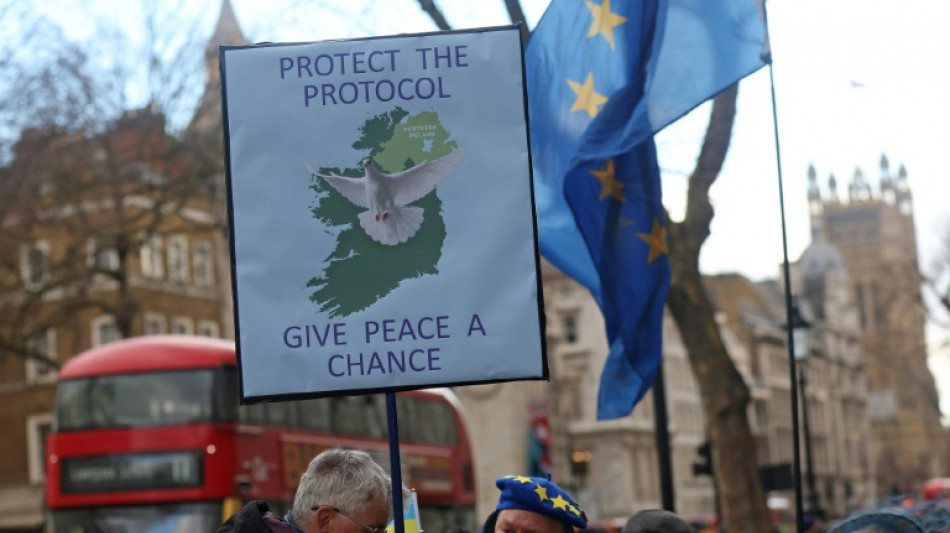
Northern Ireland Protocol: why the changes? / Photo: ISABEL INFANTES - AFP

 Anthropic signs $35B computing deal with startup backed by Nvidia
 Drones in Ithaca: Azov's Odyssey turns Ukraine war into modern myth
 Boat builders keep Pakistan's fishing heritage afloat
 Australia axe Labuschagne for Zimbabwe, South Africa ODI series
 Heavy rain at Grand Canyon after flood kills 2, dozen missing
 Kushner blames soccer power struggle for World Cup plan collapse
 Buoyant Alcaraz shakes off nerves to advance at US Open
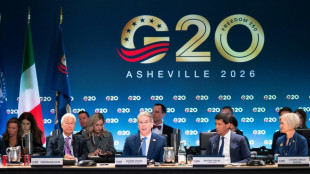 US draws European pushback with Russia G20 finance invite
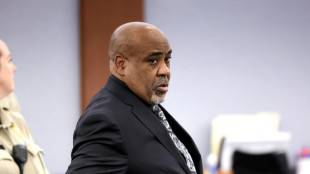 Jury begins deliberations in Tupac Shakur murder trial
 US Supreme Court allows Trump ballroom project to proceed
 Trump says US reviewing position on Falkland Islands
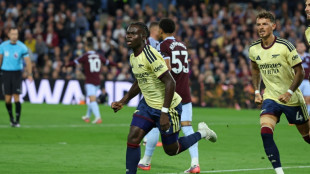 Saka strikes as flawless Arsenal punish troubled Villa
 Oil prices surge on renewed fighting in US-Iran war
 Cycling superstar Pogacar has surgery after Vuelta crash
 Man City agree deal for Everton's Ndiaye
 Apple CEO Tim Cook gives nod to founder Steve Jobs in final memo
 Russian finance minister makes unexpected appearance at G20
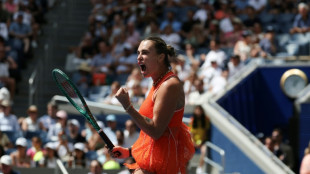 Happy to be back in NY, Sabalenka advances
 Naomi Watts to receive lifetime award at top Spain film fest
 Jury hears closing arguments in Tupac Shakur murder trial
 Pakistan sack coach, send seven players home after England defeats
 New storms threaten Grand Canyon flood search, 2 bodies recovered
 France takes aim at ultra-fast fashion with new levy
 Tribunal says India cannot withdraw from water treaty with Pakistan
 John Galliano pulls US exhibition after antisemitism backlash
Britain and the EU struck a deal Monday to re-fashion a post-Brexit trade agreement with Northern Ireland that has become a significant political problem.
The original "Northern Ireland Protocol" was crafted so as to not have physical border checks between the province, which is part of the United Kingdom, and neighbouring Ireland, which remains in the European Union.
The border is a delicate issue that was part of a 1998 peace deal to end decades of armed conflict in Northern Ireland.
However, the trade deal reached in 2020 ultimately led to political troubles in Northern Ireland and threats from London to unilaterally overhaul it.
Here are some of the key issues on the protocol:
- Why no checks? -
The UK and EU agreed that despite Brexit, a vital plank of the Good Friday Agreement had to be preserved -- the elimination of physical border infrastructure on the island of Ireland.
But checks had to happen somewhere -- so the UK agreed a de facto trade border in the Irish Sea to ensure goods coming from England, Scotland and Wales did not enter the EU free market unchecked via Northern Ireland.
That infuriated unionists, fearing a weakening of their ties to the rest of Britain, and led to certain foods being unavailable in the province.
- What's in the protocol? -
To keep the border open, Northern Ireland effectively remained in the EU's single market for goods.
That meant it had to stay in line with certain EU rules on tax and product standards, unlike the rest of the UK.
Supporters have said that gives Northern Ireland the best of both worlds, with access also to the UK's single market.
But the UK accused Brussels of applying the protocol too zealously and said the deal should be renegotiated.
- What have the EU and UK agreed? -
Relations between London and Brussels have improved drastically in recent months with the UK government putting on ice legislation to drastically overhaul the protocol unilaterally.
The new agreement will create "green lanes" for goods destined for Northern Ireland, and "red lanes" for goods at risk of moving on to the EU via Ireland.
Goods, including food and parcels sent to households, can travel through the green lane "without red tape or unnecessary checks", said the UK government.
"This means if food is available on supermarket shelves in Great Britain, then it will be available on supermarket shelves in Northern Ireland," said British Prime Minister Rishi Sunak.
"We have removed any sense of a border in the Irish Sea," he added.
Paving the way for such a scheme, London agreed in January to share UK data with Brussels on the flow of goods.
Sunak also announced a new settlement on medicines, so any drugs approved for use by the UK regulator will automatically be available in Northern Ireland.
- Will power-sharing resume?
Sunak faces a tough sell in getting unionists to agree to the deal and reform the executive, with DUP leader Jeffrey Donaldson warning there were still "key issues of concern".
Sunak announced that the new agreement would provide an "emergency brake" that, if agreed by both sides of the power-sharing executive, would give London a veto over the application of new laws in Northern Ireland.
But Donaldson highlighted the continuing role, under the new deal, of the EU's European Court of Justice (ECJ) in policing any trade disputes involving Northern Ireland.
European Commission president Ursula von der Leyen confirmed that the ECJ will still have the "final say on EU law and single market issues" under the new deal, branded the Windsor Framework.
Sunak promised a UK parliamentary vote in due course on the new deal, with Brexit hardliners in his Conservative party threatening a revolt over the ECJ's role.
- What about the US? -
The United States has been watching closely. It helped broker the Good Friday Agreement and is one of its guarantors.
The administration of Irish-American President Joe Biden had warned that London could forget about a post-Brexit trade deal with the US if its actions in Northern Ireland threatened the still-fragile peace.
T.Resende--PC