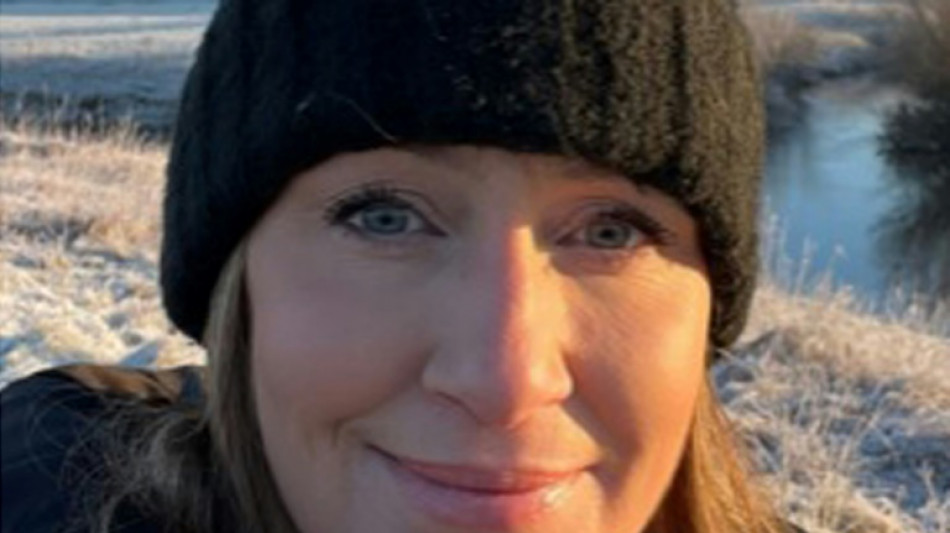
UK missing person case highlights rise of TikTok amateur sleuths / Photo: - - Lancashire Police/AFP

 Best Pet Advent Calendars for Christmas 2026: Dog Treats and Cat Toys

 Grattan Institute Releases Blueprint to Target Specialists Over Excessive Fees

 Arizona Science Center Hosts Girls in STEM Astro Adventures for Students

 New Turkish Cafe, Japanese BBQ, and Korean Restaurants Open Across East Bay

 Knowle Move Four Points Clear at Top After Histon Victory

 Physicians Urge Arizona to Ban Medical Gag Clauses and Enable Private Lawsuits

 New Campaign Highlights Knowledge Gaps on Carbon Monoxide Safety Among Americans

The tragic case of a British woman's disappearance and death has shone a disturbing light on the rise of so-called online sleuths and amateur detectives who believe they can do the police's job.
When mortgage advisor Nicola Bulley, 45, went missing in late January -- apparently vanishing "into thin air", leaving her phone on a bench still dialled into a work call -- the initial news coverage was low-key.
By the time her body was found just over three weeks later, the case was generating saturation coverage and had descended into a ghoulish social media free-for-all.
Detectives had focused on the theory that Bulley, a married mother of two young daughters, had fallen into a nearby river and drowned.
But with officers and other specialist divers initially failing to find her body, the online true crime world quickly became awash with speculation about what might have happened to her, to the distress of her family.
The coverage reached its nadir when one TikTok user had himself filmed digging up potential burial sites and then captured the moment the woman's body was pulled from reeds in the river.
David Schmid, associate professor of English at the US's University of Buffalo, said the Nicola Bulley investigation had attracted the sort of attention from would-be detectives that is now common in US cases.
"People are trying to become more invested in these cases, becoming these amateur sleuths and trying to investigate and provide different takes and lenses on the crime," he told AFP.
- 'In the gutter' -
The amateur interest has spawned from the true crime phenomenon of the past decade that included the 2014 podcast "Serial" and the 2015 documentary series "Making a Murderer" about wrongful convictions, according to Schmid.
Both "signalled a new kind of public interest in crime that's specifically directed towards either working on cold cases or intervening in cases where people feel there has been a miscarriage of justice," he noted.
Other films, documentaries and television dramas have helped fuel the trend.
A judge last year ordered the immediate release of Adnan Syed, who had spent 23 years behind bars for the murder of his ex-girlfriend, after "Serial" drew worldwide attention to his case.
Much true crime output had dealt with their subjects sensitively and ethically by avoiding the temptation to sensationalise, Schmid said.
It had also avoided over-focussing on or mythologising the perpetrator and acknowledged the impact on the victims, their families and the wider community.
But he warned that the true crime world is now moving into uncharted waters.
"I think people recognise that the era of ethical true crime is going to come to an end and that people want their true crime in the gutter," he said.
Last year's Netflix crime drama "Dahmer-Monster: The Jeffrey Dahmer Story" turned his crimes into a massively successful series but also sparked an angry backlash.
"We're all one traumatic event away from the worst day of your life being reduced to your neighbour's favourite binge show," commented Eric Perry, a relative of Errol Lindsey, one of Dahmer's victims.
- 'Disappointed not a murder' -
The involvement of amateurs -- aided by new technology, online databases and operating outside mainstream media norms -- has also raised concerns about the potential destruction of evidence and harm caused to people wrongly highlighted as suspects.
Amanda Keeler, who teaches digital media at Marquette University in the US state of Wisconsin, said the dangers were clear to see in the notorious case of the four University of Idaho students murdered last November.
"We watch a lot of crime fiction, we get really wrapped up in it, and part of the pleasure of it is thinking about the cases and solving it," she said.
"But there's this real disconnect between a television show and real people. It's just not the same."
As Bulley's family and the small northern English village of St Michael's on Wyre where she first disappeared come to terms with the traumatic events, Schmid said "exploitative" crime coverage is likely here to stay.
The most worrying aspect of her case, he added, was the "almost palpable sense of disappointment" that in the end it appears to have been a tragic accident.
"Where are we as a society that we are so desperate for that kind of trauma and the desire to consume other people's trauma that we are almost disappointed by the fact that it wasn't a murder."
H.Portela--PC

