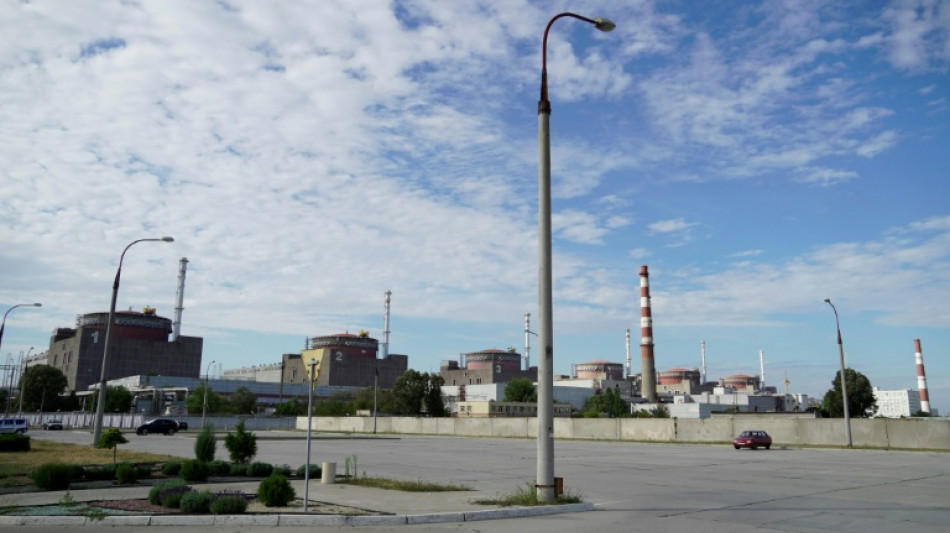
A year on, Ukraine's embattled nuclear plant turned Russian 'military base' / Photo: STRINGER - AFP/File

 TRON Founder Justin Sun Shares Outlook on Bitcoin, Stablecoins and Global Finance at Bitcoin Asia 2026

 Tributes to 'eternal' Messi on Argentina retirement

 Arteta hails Arsenal's 'finishers' after Saka kills off Villa

 Yamal, Raphinha bag braces as Barcelona rout Rayo
 Alcaraz makes winning return at US Open, Sabalenka safely through

 Everton agree to sign Monaco's Balogun: reports

 Milei calls for F1 to return to Argentina
 Alcaraz wins US Open first-round match after injury layoff

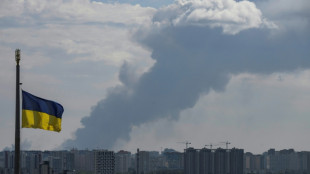 Kyiv orders heightened security amid intense Russian drone strikes

 Sabalenka kickstarts US Open three-peat bid as Fils crashes out

 Fils upset by resurgent Tsitsipas at US Open
 Trump says AI data center opponents want to be 'backwards and poor'

 Pakistan ditch coaches, send seven players home after England defeats

 Galliano pulls Met Gala exhibit after antisemitism backlash

 Afghan people should 'not be abandoned': top Red Cross official

 Six defining moments of Lionel Messi's Argentina career

 Trump blasts US backlash against data centers
 It 'hurts' says Messi of decision to retire from international football
 Benzema ends brief stint with Al Hilal in Saudi league

 Djokovic's Grand Slam future uncertain after brutal US Open defeat

 Turkey says regional defence pact not against any country

 US vows to keep economic pressure on Iran as G20 finance talks begin

 Shein valued at $26.3 bn in Hong Kong market debut
 Crude prices rise above $90 per barrel on US-Iran strikes

 Liverpool sign Barcola from PSG for reported £124 million

Ukraine's Zaporizhzhia nuclear power plant no longer produces electricity and serves solely as a military base for Moscow's troops, the exiled mayor of the city of Energodar, which houses the facility, told AFP.
Moscow's troops seized the plant in the southern Zaporizhzhia region on March 4 last year, just days after the start of Russia's invasion.
The International Atomic Energy Agency (IAEA) has raised concerns about shelling near the plant, calling for a demilitarised zone around it.
"During a year under occupation, (Russians) have turned Europe's largest nuclear power plant into a military base," 37-year-old Energodar mayor Dmytro Orlov said in an interview to AFP.
The plant has repeatedly made headlines and revived fears of nuclear catastrophies similar to the deadly Chernobyl disaster that shook Ukraine in 1986.
Orlov said Russian troops take advantage of the fact that Ukraine "will not fire" at the site to avoid such an incident.
Kyiv and Moscow have blamed each other for shelling around the plant.
This means that Russia uses the plant as a "nuclear shield" to keep its military equipment, ammunition and personnel safe, he said.
According to Orlov, at least 1,000 Russian soldiers are currently stationed at the power plant and in Energodar.
The city on the banks of the Dnipro river saw its population drop from 53,000 to about 15,000 following the invasion.
- Dangerously low staffing -
"Most of the occupation troops are based at the power plant because they are safer there," said the mayor, who in April 2022 moved to the Ukrainian-controlled city of Zaporizhzhia.
Zaporizhzhia is some 120 kilometres (75 miles) from Energodar, but Orlov said he maintains regular contacts with the residents who stayed behind in the city he governed.
The exodus from Energodar after Russia's occupation affected not only the city, but also the staffing of the plant.
According to Ukraine's nuclear operator Energoatom, close to half of the facility's workforce is gone.
Around 6,500 workers remaining compared to 11,000 before the war.
Thousands of professionals left for territories controlled by Kyiv and of those who remained, some 2,600 agreed to "cooperate" with Russia, Energoatom told AFP.
"There is a real staffing problem, which has an impact on safety," mayor Orlov said.
According to him, the remaining employees are overworked, forced to work with low staffing and without holidays.
The plant, which previously produced 20 percent of Ukraine's electricity, continued to operate in the first months of the invasion, despite frequent shelling.
Now, its six Soviet-era reactors are in shutdown and no longer produce electricity.
The facility remains connected to Ukraine's energy grid but only consumes electricity for its own needs.
- No military solution -
Moscow "for several months tried to connect it to the Russian electricity network but they did no succeed," Orlov said.
Russia is unable to put any reactor into operation because the power transmission lines are damaged, except for the one that feeds it from Ukraine, Energoatom said.
Even if Moscow sends its own specialists, "their skills are not enough to organise the full-fledged work" of the plant, according to Energoatom.
The issue is that the shutdown of the plant leads to a "gradual degradation of its systems and equipment".
The operator also warned of the "risk of a nuclear or radiation accident" if the last power line connecting the plant to Ukrainian energy grid is cut.
The US-based Institute for the Study of War said Wednesday that Moscow may be "attempting to deter a possible future Ukrainian counteroffensive" in the south by "escalating threats" to the plant.
The UN's nuclear agency IAEA deployed observers to the plant in September and is seeking to negotiate a demilitarised zone near the facility, but talks appear to have stalled.
IAEA chief Rafael Grossi said on Twitter Thursday that a new rotation of experts had been completed, posting a video of observers in helmets and bulletproof vests walking around a destroyed bridge to reach the power plant.
"The fact that they are there is already a plus," Orlov added, who says there can only be a diplomatic solution.
"For obvious reasons, nobody will de-militarise and de-occupy Europe's largest nuclear power plant by military means."
Ferreira--PC