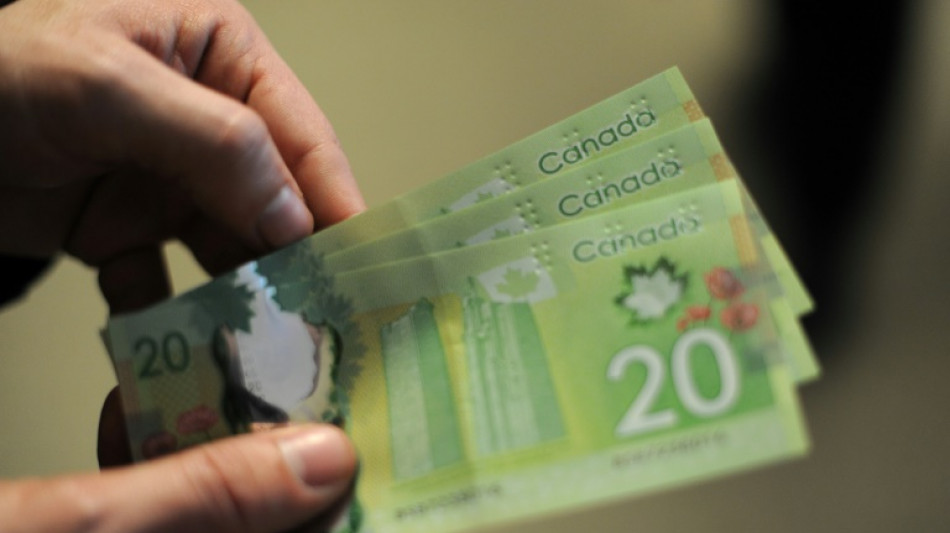
Canada central bank pauses rate hikes, holds at 4.5% / Photo: Nicholas KAMM - AFP/File

 Best Pet Advent Calendars for Christmas 2026: Dog Treats and Cat Toys

 Grattan Institute Releases Blueprint to Target Specialists Over Excessive Fees

 Arizona Science Center Hosts Girls in STEM Astro Adventures for Students

 New Turkish Cafe, Japanese BBQ, and Korean Restaurants Open Across East Bay

 Knowle Move Four Points Clear at Top After Histon Victory

 Physicians Urge Arizona to Ban Medical Gag Clauses and Enable Private Lawsuits

 New Campaign Highlights Knowledge Gaps on Carbon Monoxide Safety Among Americans

The Bank of Canada on Wednesday became the first major central bank to pause its aggressive monetary policy in recent months, holding its key lending rate at 4.5 percent as inflation eased, after eight consecutive rate increases.
The anticipated move puts the central bank at odds with the Federal Reserve in the United States, which has indicated that more rate hikes will be needed to cool its overheated economy and rein in inflation.
In a statement, the bank noted that the Canadian economy has slowed, as hoped -- marked by unexpected zero growth last quarter -- but said it was prepared to resume increasing costs of borrowing if needed to reach its 2.0 percent inflation target.
The current rate is at its highest level since 2007.
In a research note, Desjardins analyst Royce Mendes said the bank's "conditional commitment to keep rates on hold will place a magnifying glass on the divergence in monetary policy with the US Federal Reserve."
"The ability to chart a different course than the Fed comes down to the exchange rate," he said, noting that the Canadian dollar has depreciated three percent since the beginning of February, which "could eventually push inflation higher."
But, he added, the bank's "relatively neutral language in the statement is seeing markets marginally reduce bets for further rate increases."
The Bank of Canada started raising rates from a record low in March 2022 in what its governor Tiff Macklem has described as "unusually large steps" -- increments of mostly 50 to 75 basis points.
He'd signaled last month that a pause was coming, after pointing out that inflation was "turning the corner" and recent higher interest rates were "beginning to rebalance the economy."
On Wednesday, the bank said economic growth was a bit lower than it expected, while household spending and business investment weakened alongside slowing domestic and foreign demand.
The labor market remains "very tight," but lower price increases for energy, durable goods and some services have helped to tame inflation, it said.
"With weak economic growth for the next couple of quarters, pressures in product and labor markets are expected to ease," the bank said.
"This should moderate wage growth and also increase competitive pressures, making it more difficult for businesses to pass on higher costs to consumers."
It also noted, however, stronger outlooks for growth and inflation in the United States and Europe, and upside risks to commodity prices related to the reopening of China's economy and the war in Ukraine. These have contributed to tightening global financial conditions and a stronger US dollar.
Inflation slowed to 5.9 percent in January, from a peak of 8.1 percent last June. The bank has forecast it to land at around 3.0 percent by mid-year and hit 2.0 percent in 2024.
It also projected GDP growth of about one percent in 2023 and two percent in 2024.
T.Resende--PC

