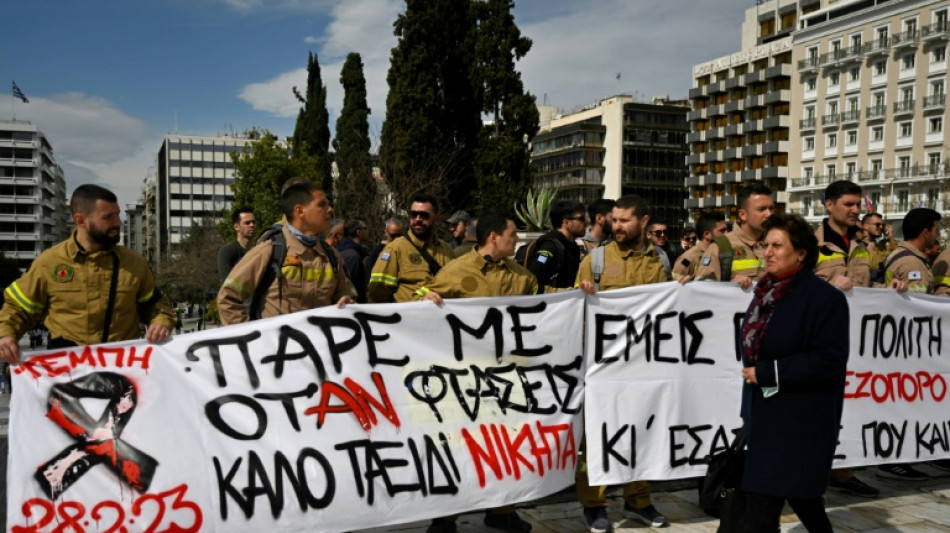
'Call me when you get there': Greek protest rallying cry / Photo: Louisa GOULIAMAKI - AFP

 Best Pet Advent Calendars for Christmas 2026: Dog Treats and Cat Toys

 Grattan Institute Releases Blueprint to Target Specialists Over Excessive Fees

 Arizona Science Center Hosts Girls in STEM Astro Adventures for Students

 New Turkish Cafe, Japanese BBQ, and Korean Restaurants Open Across East Bay

 Knowle Move Four Points Clear at Top After Histon Victory

 Physicians Urge Arizona to Ban Medical Gag Clauses and Enable Private Lawsuits

 New Campaign Highlights Knowledge Gaps on Carbon Monoxide Safety Among Americans

Emblazoned on banners and spreading like wildfire on social media, the slogan "call me when you get there" has become a rallying cry for Greeks protesting against last week's deadly train crash.
Tens of thousands took to the streets nationwide Wednesday, as public anger mounts at long-running mismanagement of the rail network following Greece's worst train tragedy that killed 57.
Many of the victims in the February 28 crash were students returning to Thessaloniki, a major university city in northern Greece, after a long holiday weekend.
The slogan "pare me otan phtasis" -- "call me when you get there" -- reportedly has its origins in a phone call between a 23-year-old man on the Athens-Thessaloniki train and his mother.
"Mum, there are too many people on the train. I've never seen a train so crowded. I'll call you when we get there, come and get me," he said before the head-on collision with a freight train, according to news website LiFO.
Protesters have seized on and adapted the words to express their grief at young lives being cut short, and anger at the perceived shortcomings of authorities.
While a station master has been charged after admitting to accidentally rerouting a train, leading to the crash, critics point to broader failures to implement much-needed safety measures on the network.
In a society where family life remains of central importance, the phrase sums up "the mentality of parents in Greece," said Pinelopi Horianopoulou, a civil servant and mother of two, who was striking Wednesday and joined the protests.
"Especially of the mother, who worries about whether her child is doing well," she added.
The slogan has been "adopted everywhere because it is significant -- these children will not see their families again because (authorities), companies have not" properly maintained the railway safety systems, said Giota Tavoulari, 58, of the pharmacists' union.
Some have taken a more creative approach, with students in some schools placing their backpacks on the ground to form the words.
In the western university town of Patras, demonstrators placed black balloons on top of a mocked-up coffin, and a placard reading: "Mum, I've arrived."
M.Carneiro--PC

