Senegalese recyclers seek solutions in fight against plastic / Photo: SEYLLOU - AFP

 Oil prices surge on renewed fighting in US-Iran war

 Cycling superstar Pogacar has surgery after Vuelta crash

 Man City agree deal for Everton's Ndiaye

 Apple CEO Tim Cook gives nod to founder Steve Jobs in final memo

 Russian finance minister makes unexpected appearance at G20
 Happy to be back in NY, Sabalenka advances

 Naomi Watts to receive lifetime award at top Spain film fest

 Jury hears closing arguments in Tupac Shakur murder trial
 Pakistan sack coach, send seven players home after England defeats

 New storms threaten Grand Canyon flood search, 2 bodies recovered
 France takes aim at ultra-fast fashion with new levy

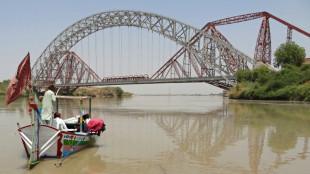 Tribunal says India cannot withdraw from water treaty with Pakistan

 John Galliano pulls US exhibition after antisemitism backlash
 French Top 14 boss offers 'no guarantees' for first Club World Cup
 Munoz reunites with Glasner after joining Forest from Palace
 Liverpool sign Barcola from PSG for £124 million

 Putin, Xi hold talks in Kyrgyzstan as regional summit begins
 ChatGPT becomes first AI chatbot to face tougher EU rules

 Man City sign Palmeiras winger Allan on five-year deal
 More flooding feared at Grand Canyon after storm leaves 15 missing

 RedHill Divests Talicia® to Apotex for $18 Million Cash Upfront Plus Milestones to Fuel Strategic Growth Opportunities

 MEXC Data: BTC Breaks $80,000, Major-Asset Spot Trading Volume Surges 300%

 G20 finance talks open as US seeks to ramp up pressure on Iran

 Solving Agent Sprawl: The Case for Enterprise Orchestration

 Springboks switch Kolbe to full-back for third All Blacks Test
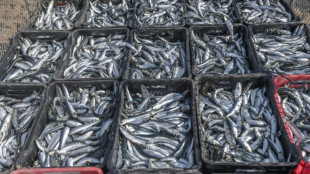
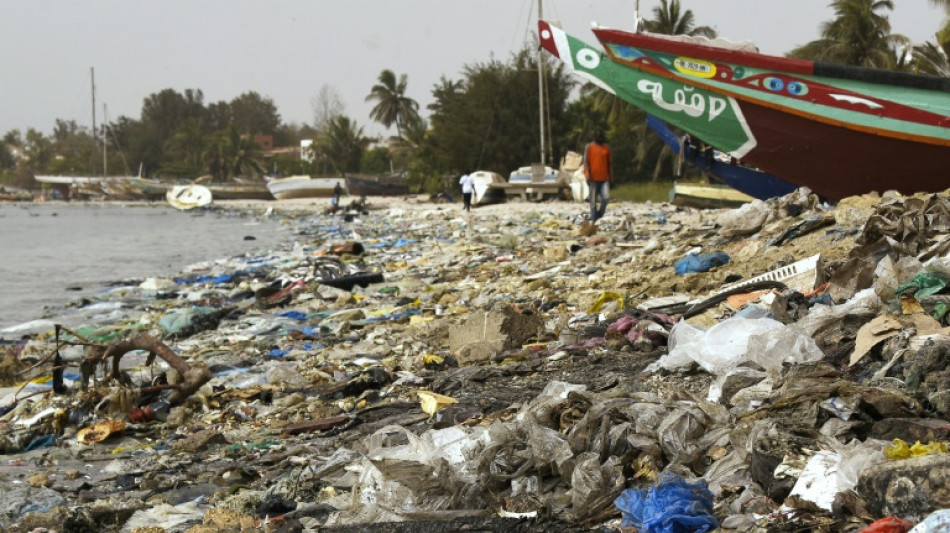
Discarded containers and bags are an eyesore in many towns, while beaches are covered by debris -- Senegal's notorious problem of plastic pollution is not going away.
Fly-tipping is a scourge and landfills like the sprawling Mbeubeuss site near the capital Dakar are overstretched, with several thousand tonnes of detritus dumped daily, polluting the ground and water.
For young Senegalese entrepreneurs keen on cleaning up their country and turning a profit in the process, enthusiasm is not lacking -- but technology, funding and public awareness are.
President Macky Sall has proposed turning Senegal into a "zero waste" nation and banned single-use plastics in 2020.
But after decades of chaotic management in dealing with the problems, activists see negligible progress.
"The law is still not applied and alternative solutions are not put forward," said Aisha Conte, head of the country's zero-waste association.
- Recycling up close -
Onboard a ship that recently docked at Dakar, Baptiste Lomenech walked a group of entrepreneurs through some basics in plastic recycling.
He's a crewmember with Plastic Odyssey, a three-year around-the-world floating initiative that showcases expertise and equipment to would-be recyclers living in countries struggling with major plastic pollution.
The Senegalese visitors were given a tour of the recycling process from start to finish -- from shredding and washing old plastic, drying it in a centrifuge and finally heating it to a molten state and extruding it, so that it can then be moulded into into a new product.
The idea is to introduce machinery that is simple to use, easy to acquire and unhindered by patent protection.
The 20-odd crew members demonstrate the techniques and share their knowledge and experience with the visitors, who are all involved in local waste projects.
The questions flowed. How long is the cooling process? How much does it cost? Can you increase the density?
- Lacking state help -
"I've broadened my scope and my thinking by coming here. I've seen that it's doable to instal recycling machines that don't cost a lot," said Boubacar Diakhite from a company called Defaratt, based in the northern city of Gandiol.
"We knew we had the ability to do it but we didn't know how to do it," he told AFP.
Twenty-nine-year-old Lenora Hamon said she was planning to launch a plastic recycling site in southern Casamance with the Nio Far association.
"Ideas? It's given me about 100 a minute," she raved.
Every minute, nearly 20 tonnes of plastic waste ends up in the world's oceans, where it breaks down and enters the food chain.
Larger pieces are swallowed by mammals or birds or broken down, while tiny specks can affect plankton, a building block of marine life.
Plastic Odyssey's co-founder Simon Bernard said countries needed a two-pronged approach towards the plastic peril -- to drastically reduce the amount of waste and recycle what was collected.
Young Senegalese entrepreneur Abdoul Bakhy Mbacke said there were hurdles, but also opportunities, in his country.
He noted how garbage lorries in his neighbourhood only served the big streets, which meant that piles of rubbish built up in narrow streets and alleys.
That opened up a business opportunity.
"We thought of using tricycles to creep through the narrow streets and provide local rubbish collection," he said.
Businesses and households pay a subscription for his service. He said he collects 15 tonnes of waste every day, about 20 percent of which is plastic.
He said he had business partners who recycled the waste but saw a chance to develop a pilot project with Plastic Odyssey to set up his own recycling site.
The fledgling industry really needs state help to get off the ground, for instance in encouraging people to sort out their rubbish, he said.
"In a way, we are substituting for the state at the moment but we're not discouraged... If the state decides to come in with us, we'd be pleased but we're not going to be waiting around," he said.
L.Henrique--PC