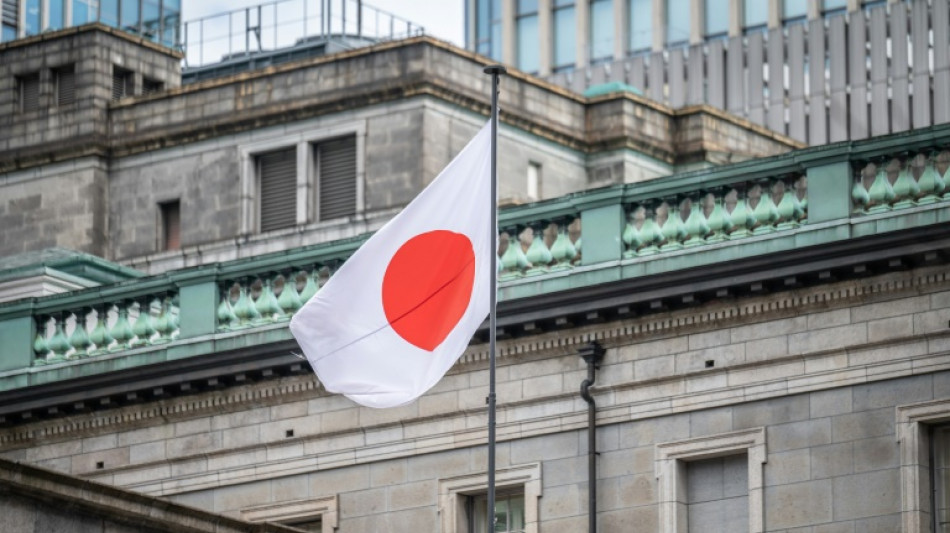
Bank of Japan leaves policy unchanged as Kuroda bows out / Photo: Yuichi YAMAZAKI - AFP/File

 Best Pet Advent Calendars for Christmas 2026: Dog Treats and Cat Toys

 Grattan Institute Releases Blueprint to Target Specialists Over Excessive Fees

 Arizona Science Center Hosts Girls in STEM Astro Adventures for Students

 New Turkish Cafe, Japanese BBQ, and Korean Restaurants Open Across East Bay

 Knowle Move Four Points Clear at Top After Histon Victory

 Physicians Urge Arizona to Ban Medical Gag Clauses and Enable Private Lawsuits

 New Campaign Highlights Knowledge Gaps on Carbon Monoxide Safety Among Americans

Japan's central bank left its ultra-easy monetary policy unchanged in its last meeting before Governor Haruhiko Kuroda steps down and is replaced by economics professor Kazuo Ueda.
While most analysts expected the Bank of Japan to stay the course in Kuroda's final policy decision, some had speculated about a surprise tweak.
The bank left its longstanding negative interest rate in place and made no further adjustments to the band in which rates for 10-year government bonds fluctuate.
The decision came shortly after Japan's parliament approved Ueda as the BoJ's next governor, paving the way for the 71-year-old to take over next month.
In recent months, the BoJ has steadfastly resisted tightening, even as peers in other developed economies have hiked rates to tackle inflation.
Kuroda has insisted that the bank's longstanding goal of sustained two percent inflation -- considered necessary to turbocharge the world's third-largest economy -- has not yet been achieved.
Inflation hit 4.2 percent in January, driven by factors including higher fuel costs, but Kuroda has argued the price rises were the result of temporary factors like the war in Ukraine.
He wants to see evidence of more sustained rises, including salary increases, before adjusting policy.
Ueda told lawmakers last month that he saw the "continuation of monetary easing as appropriate", warning of uncertainty in financial markets and the global economy.
Current factors driving higher prices "will likely ebb in the future, and inflation in consumer prices will likely drop below two percent", he added.
Ueda has a PhD in economics from the Massachusetts Institute of Technology and is seen as a good communicator who prefers cautious reflection over abrupt action.
Kuroda, 78, will step down at the end of his second term on April 8, after a tenure -- the longest-ever for a Bank of Japan chief -- defined by his signature "bazooka" easy-money policies.
Since he took charge, the central bank's assets have quadrupled, surpassing gross domestic product, in a first for a Group of Seven nation.
L.Henrique--PC

