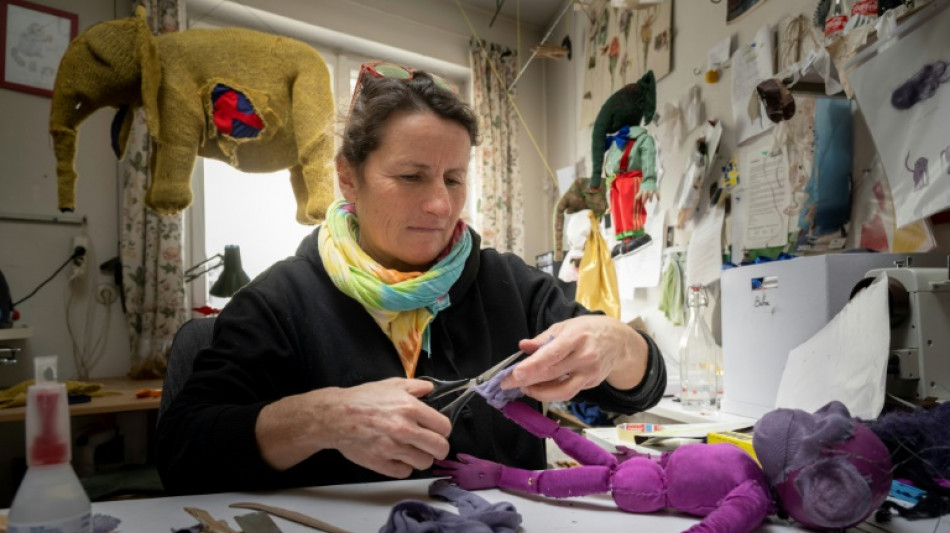
'True artistry': Austria puppets charm with age-old craft / Photo: JOE KLAMAR - AFP

 Best Pet Advent Calendars for Christmas 2026: Dog Treats and Cat Toys

 Grattan Institute Releases Blueprint to Target Specialists Over Excessive Fees

 Arizona Science Center Hosts Girls in STEM Astro Adventures for Students

 New Turkish Cafe, Japanese BBQ, and Korean Restaurants Open Across East Bay

 Knowle Move Four Points Clear at Top After Histon Victory

 Physicians Urge Arizona to Ban Medical Gag Clauses and Enable Private Lawsuits

 New Campaign Highlights Knowledge Gaps on Carbon Monoxide Safety Among Americans

It takes as long to train to be a puppeteer at the world-famous Salzburg Marionette Theatre as it does to become a doctor.
The puppets and their startlingly lifelike movements take years to master, which is why the Austrian theatre's work has UNESCO World Heritage status.
"It's like playing an instrument. You can't think about which string to pull during the show," said Edouard Funck, a puppeteer and costume designer.
Most puppets have at least 11 strings, so the puppeteer can make them "kiss each other, hug each other, hit each other, (or) whatever we want."
Some complicated puppets have dozens of strings, requiring up to five people to operate them, said the 34-year-old French-born performer.
Their movements are so subtle that audiences sometimes believe a puppet has "moved her lips", said Funck, when it's just "the illusion that is created on stage".
- Lengthy apprenticeship -
The theatre's founder, Austrian sculptor Anton Aicher, invented a special control bar to manipulate the puppets a century ago.
"Because the control bar is so small, we can make the puppets interact closely," Funck said.
The puppeteers make the puppets themselves, spending their mornings designing, carving and dressing them before returning later to perform.
Despite the lengthy apprenticeship, the theatre has no problem finding recruits, said Funck, who dreamed of being a puppeteer as a child.
Ilse Laubbichler, 79, who has been coming to the theatre since her own childhood, took her four grandchildren to see "Snow White" there for the first time.
"I love the characters, the movement of the puppets -- this is true artistry," she said.
X.M.Francisco--PC

