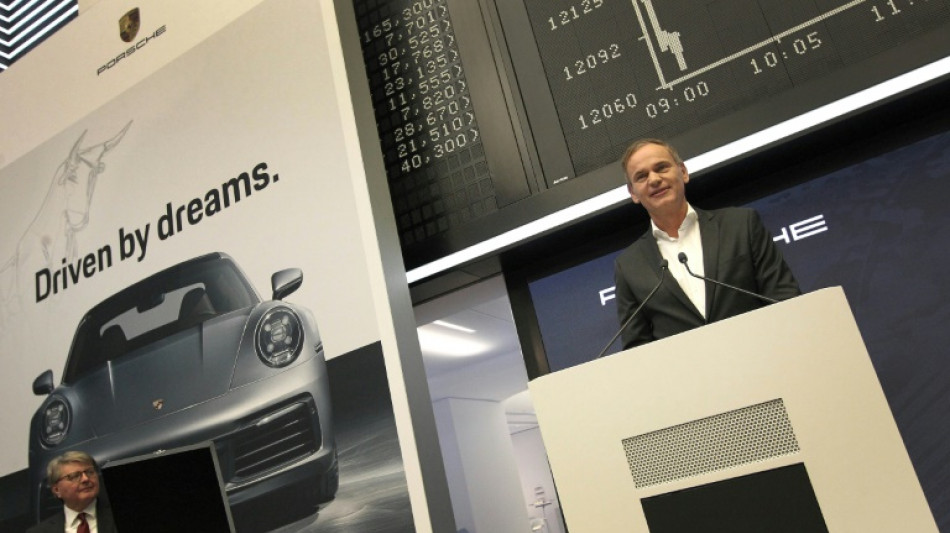
Porsche backs synthetic option in EU fossil fuels row / Photo: Daniel ROLAND - AFP/File

 Best Pet Advent Calendars for Christmas 2026: Dog Treats and Cat Toys

 Grattan Institute Releases Blueprint to Target Specialists Over Excessive Fees

 Arizona Science Center Hosts Girls in STEM Astro Adventures for Students

 New Turkish Cafe, Japanese BBQ, and Korean Restaurants Open Across East Bay

 Knowle Move Four Points Clear at Top After Histon Victory

 Physicians Urge Arizona to Ban Medical Gag Clauses and Enable Private Lawsuits

 New Campaign Highlights Knowledge Gaps on Carbon Monoxide Safety Among Americans

The CEO of German auto giant Volkswagen and its luxury subsidiary Porsche on Monday backed moves by Berlin to block a European ban on new combustion engines from 2035.
"We think e-fuels (synthetic fuels) can play a useful complementary role for a large number of existing cars and niche segments," Oliver Blume said at the presentation of Porsche's annual results for 2023.
Germany upset partners in the European Union last week by blocking a milestone agreement to ban new sales of fossil fuel cars from 2035.
In order to give the green light, Berlin is insisting on further assurances from Brussels that it will still be possible to use synthetic after the proposed end date.
The technology of synthetic fuels, currently under study, consists of producing fuel from CO2 from industrial activities using low-carbon electricity.
Environmental groups however oppose such fuels and argue they are expensive and require huge amounts of electricity to produce.
"We clearly appreciate the fact that the German government is now taking the appropriate steps," Blume said of Berlin's approach to the European legislation.
Blume took over as head of Volkswagen in September, while also staying on as boss of the group's luxury sports brand Porsche, which was independently listed on the Frankfurt Stock Exchange later the same month.
Auto manufacturers, including Volkswagen, have largely anticipated the European regulations and invested massively in electric vehicles.
The shift has however not stopped Porsche and others from investing in synthetic fuels to potentially prolong the lifetime of their luxury models. The sports car maker opened a pilot synthetic fuels plant in Chile in December together with partners, including Siemens Energy.
Behind Germany's block are domestic political imperatives, with the liberal FDP, part of Chancellor Olaf Scholz's ruling coalition, setting themselves against the ban on internal combustion engines.
Germany is not alone in its concerns. Italy, another major car manufacturing nation, already said it was opposed, and Poland and Bulgaria had been expected to vote against.
E.Borba--PC

