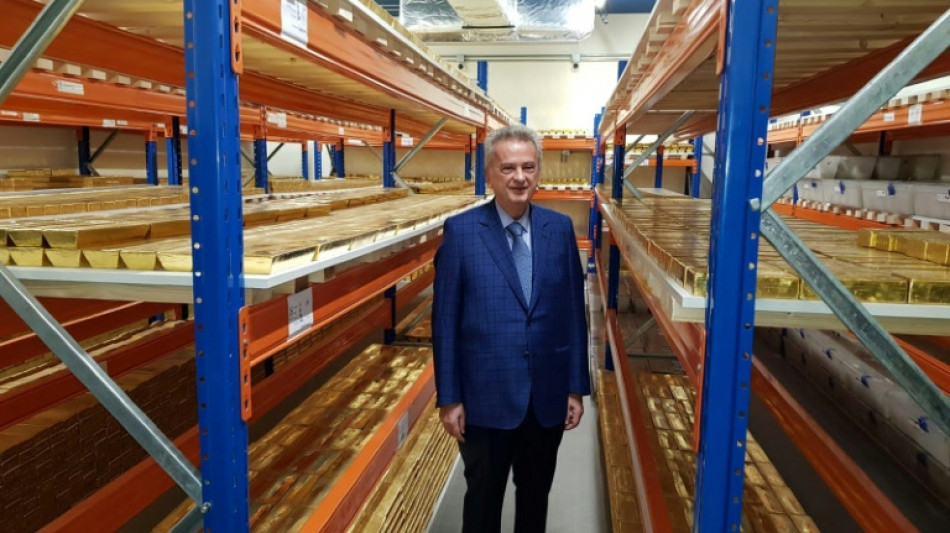
From acclaim to blame: Lebanon's bank chief Riad Salameh / Photo: - - CENTRAL BANK OF LEBANON/AFP

 US vows to keep economic pressure on Iran as G20 finance talks begin

 Shein valued at $26.3 bn in Hong Kong market debut
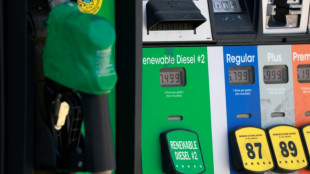 Crude prices rise above $90 per barrel on US-Iran strikes

 Liverpool sign Barcola from PSG for reported £124 million

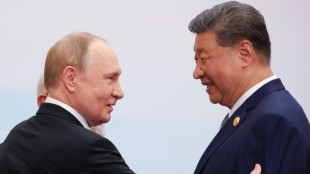 Putin, Xi, Iran's Pezeshkian in Kyrgyzstan for summit
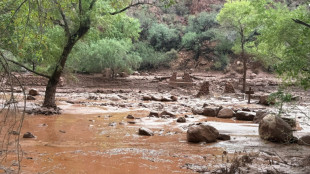
 Fully Permitted Tanzanian Gold Project Clears Path to Construction as Financing, EPCM Fall in Place (LVGLF)

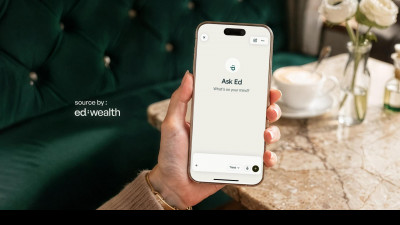 EdWealth Announces MoneyBench Benchmark Comparing AI Money Answers From Ed, ChatGPT and Gemini
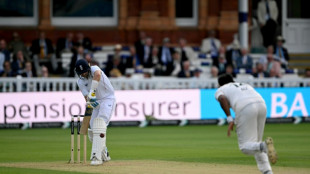 Root says new balls behind batsmen's struggles in England
 Swollen rivers, washed-out roads hamper Nepal rescue effort

 In France's north, winegrowers bet on a warmer future
 Deadly virus stalks South Africa's sardines
 South Korea women's football body probes 'period' insult
 Transitional Fashion Essentials for Autumn: Key Pieces from M&S and Joe Browns

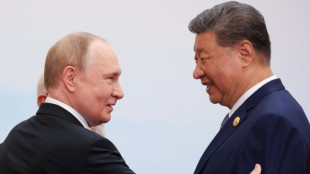 China's Xi and Iran's Pezeshkian in Kyrgyzstan, Putin expected

 Rescuers hunt for missing after deadly N.Cyprus ferry accident
 Ethiopia's Abiy could consolidate power as 'executive president'
 Crude prices rise on US-Iran strikes, equities mixed after Warsh remarks
 South Korea court gives Unification Church leader 2 years prison
 US hosts G20 finance talks with growth, Iran pressure on agenda
 African players in Europe: Wissa flick seals Newcastle victory

 Venice film preview: Clooney, Oasis and Musk

 Poorly Djokovic crashes out of US Open first round
 Djokovic falls in US Open first round, earliest Grand Slam exit in 20 years

 Chinese guitar capital's stairway to export heaven
 Stocks drop as Warsh fans US rate hike bets, crude up on US-Iran strikes
Lebanon's central bank chief Riad Salameh, once lauded for reviving the economy, faces investigations into his personal wealth and is widely viewed as a key culprit in the country's dramatic economic crash.
Salameh, 72, one of the world's longest-serving central bank governors having held the post for three decades, was a previously untouchable figure in Lebanon.
On Thursday, he appeared for the first time before European investigators probing his personal wealth and allegedly suspicious financial transfers abroad.
Now slapped with a travel ban, he faces numerous accusations of financial wrongdoing in Lebanon and abroad. Salameh has repeatedly denied all the accusations.
Salameh was the architect of the financial policy that allowed Lebanon to recover from a grinding 1975-1990 civil war, and was responsible for pegging the Lebanese pound at 1,507 to the dollar.
Known for his calm demeanour, he studied economics at the American University of Beirut and worked for Merrill Lynch in the Lebanese capital before becoming vice-president in France.
"He has been a trader and a broker all his life, that is the problem," said a veteran Lebanese financial expert, speaking on condition of anonymity.
"You need an economist to run a central bank, not somebody too close to the banking system that he wants to protect."
- 'Warning signs' -
In 1993, Salameh was installed as central bank governor, a post in sectarian Lebanon reserved for a Maronite Christian.
He was nominated by then prime minister Rafic Hariri, a wealthy real estate developer whose portfolio Salameh handled at Merrill Lynch.
Salameh received accolades, named as the world's best central bank governor by Euromoney in 2006 and by The Banker magazine in 2009.
"He's the man who knew how to revive the economy and gain the confidence of investors," said economist Nicolas Chikhani.
But after war broke out in neighbouring Syria in 2011, "warning signs started to grow" for the Lebanese economy, Chikhani said.
Successive governments failed to take action to restructure the economy, and public debt piled up.
From 2016, Salameh launched so-called financial engineering aimed at increasing central bank reserves, providing capital to banks and maintaining the value of the pound, in measures that some have compared to a Ponzi scheme.
In late 2019, when Lebanon's economy began to unravel and banks imposed draconian restrictions on withdrawals, he became the main focus of public anger.
In 2020, Lebanon defaulted on its debt for the first time, and this week the local currency sank to a historic low of 100,000 pounds to the dollar on the parallel market.
- 'Ready to cooperate' -
Salameh now faces allegations of crimes including embezzlement, money laundering and tax evasion in separate probes in Lebanon and abroad.
His brother has also been accused of complicity.
France, Germany and Luxembourg in March last year seized assets worth $130 million in a move linked to a French probe into Salameh's personal wealth.
Last month, Swiss media reported that 12 banks in the European country had received a large part of the money Salameh is alleged to have embezzled -- estimated at up to $500 million.
Salameh, who says he amassed his fortune during his two decades at Merrill Lynch, has rarely appeared before the judiciary.
He enjoys strong support from much of Lebanon's political class and some media outlets, and has maintained his innocence while staunchly defending his monetary policy.
"The central bank deals with the outcome of the crisis. It is not the side causing it," he told AFP in a December 2021 interview.
"I am ready to cooperate with all investigations," he said, claiming they were based on "fabricated evidence" that made it seem as though he "took all of Lebanon's money and pocketed it."
Some political circles have suggested Salameh's mandate -- already extended four times -- could be renewed again when it expires in July.
But Western countries have told Lebanese officials that keeping him in his post would be seen "as a negative message for international donors", a diplomatic source told AFP.
P.Serra--PC