US government seeks to avoid 'bailout' label amid banking turmoil / Photo: Stefani Reynolds - AFP/File

 In France's north, winegrowers bet on a warmer future

 Deadly virus stalks South Africa's sardines
 South Korea women's football body probes 'period' insult

 Transitional Fashion Essentials for Autumn: Key Pieces from M&S and Joe Browns

 China's Xi and Iran's Pezeshkian in Kyrgyzstan, Putin expected

 Rescuers hunt for missing after deadly N.Cyprus ferry accident
 Ethiopia's Abiy could consolidate power as 'executive president'
 Crude prices rise on US-Iran strikes, equities mixed after Warsh remarks
 South Korea court gives Unification Church leader 2 years prison
 US hosts G20 finance talks with growth, Iran pressure on agenda

 African players in Europe: Wissa flick seals Newcastle victory

 Venice film preview: Clooney, Oasis and Musk

 Poorly Djokovic crashes out of US Open first round
 Djokovic falls in US Open first round, earliest Grand Slam exit in 20 years

 Chinese guitar capital's stairway to export heaven

 Stocks drop as Warsh fans US rate hike bets, crude up on US-Iran strikes
 Injuries cloud tennis as US Open gets under way
 Iran retaliates after first US strikes in a month
 Itauma says 'I'll be back' after bruising heavyweight title loss
 Brilliant Palou clinches fourth straight IndyCar crown
 US strikes Iran for first time in a month, Tehran retaliates

 Yin holds off Kim to win sixth LPGA title, end title drought

 Top-ranked Scheffler storms to PGA Tour Championship win

 Root urges England to be 'grown-ups' after Pakistan series win

 Google Maps renames Lake Ontario 'Lake America' in US -- but not Canada

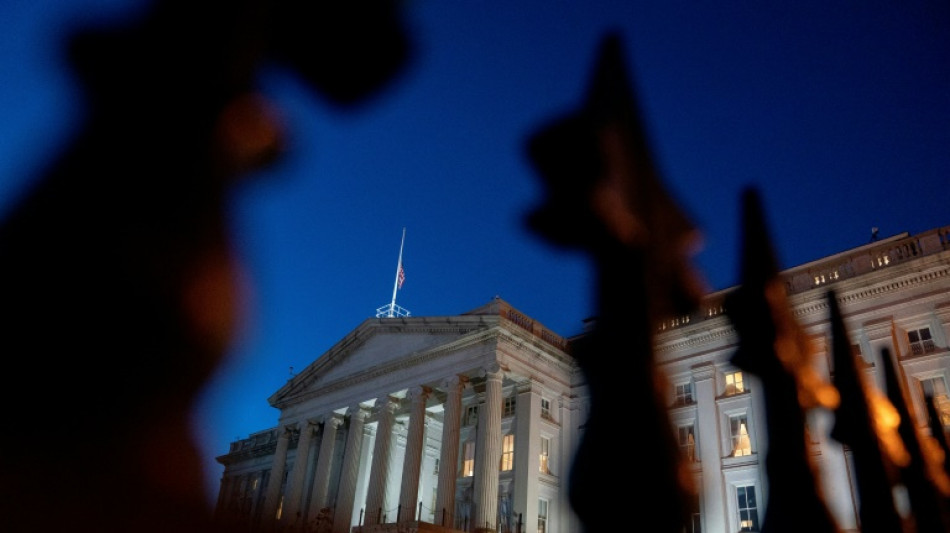
US authorities may have taken extraordinary steps in recent weeks to assure depositors of failed lenders Silicon Valley Bank and Signature Bank, but they are avoiding parallels with bailouts of the 2008 crisis -- which have been criticized.
Days after SVB's collapse this month, the Treasury Department, Federal Reserve and Federal Deposit Insurance Corporation (FDIC) announced that its depositors -- along with those of Signature Bank -- would have access to their money.
But officials were quick to add: "No losses will be borne by the taxpayer."
In the 2008 financial crisis, authorities spared shareholders and bondholders while propping up institutions, said David Smith, professor of commerce at the University of Virginia.
The way the 2008 crisis was managed had provoked criticism, given rise to the Occupy Wall Street movement, and fuelled resentment towards banks.
But "there's no bailout" this time in the sense that officials are protecting depositors rather than shareholders and bondholders, Smith said.
Between the fall of 2008 and late 2009, the US Treasury injected more than $200 billion to recapitalize US banks, without any compensation. It has since recovered more than it invested.
In contrast, the intervention in SVB and Signature Bank this time wiped out the entire market value of the two institutions, led to the dismissal of their executives and is expected to result in significant losses for holders of debt issued by the two banks.
The Justice Department has opened an investigation into SVB's collapse, according to media reports, while President Joe Biden told Congress that it should "act to impose tougher penalties for senior bank executives whose mismanagement contributed to their institutions failing."
- Who will foot the bill? -
While some believe it is wrong to call the government's moves a bailout, Aaron Klein of the Brookings Institution believes that it is one.
"Uninsured depositors like (entrepreneur) Peter Thiel and cryptocurrencies were made whole by the government," when they would otherwise have lost parts of their deposits, Klein said.
Authorities have said the FDIC will use resources from the Deposit Insurance Fund to ensure that depositors are made whole, and this is funded in part by fees assessed on financial institutions.
At the end of 2022, the fund had a balance of $128 billion, or 1.27 per cent of the $10 trillion in insured deposits.
"Depending on how much the FDIC has to drain their deposit insurance reserve to cover depositors now," they might have to charge banks higher fees to replenish that reserve, said David Smith.
"Clearly consumers ultimately will bear the cost, because that has to get passed on somehow," he said.
In an opinion piece for the Daily Mail, former vice president Mike Pence called it "disingenuous" to say that costs will not be borne by taxpayers.
"Every American with a bank account will pay higher fees to replenish the billions spent by the FDIC to backstop failing banks," he wrote.
Republican White House contender Nikki Haley added: "Now depositors at healthy banks are forced to subsidize Silicon Valley Bank's mismanagement."
In the short-term, the government's efforts helped prevent "contagion," said Mark Williams, lecturer at Boston University.
But a longer-term cost is that "moral hazard has been increased," he added.
"How will that impact... bank behavior going forward?" he asked.
H.Portela--PC