
Swiss sweat over size of new superbank / Photo: Bertha WANG - AFP

 In France's north, winegrowers bet on a warmer future

 Deadly virus stalks South Africa's sardines

 South Korea women's football body probes 'period' insult

 Transitional Fashion Essentials for Autumn: Key Pieces from M&S and Joe Browns

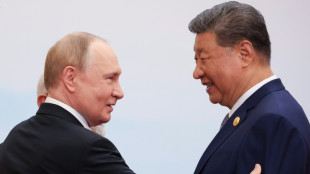
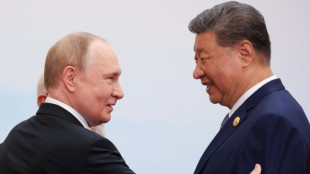 China's Xi and Iran's Pezeshkian in Kyrgyzstan, Putin expected

 Rescuers hunt for missing after deadly N.Cyprus ferry accident

 Ethiopia's Abiy could consolidate power as 'executive president'

 Crude prices rise on US-Iran strikes, equities mixed after Warsh remarks

 South Korea court gives Unification Church leader 2 years prison

 US hosts G20 finance talks with growth, Iran pressure on agenda

 African players in Europe: Wissa flick seals Newcastle victory

 Venice film preview: Clooney, Oasis and Musk

 Poorly Djokovic crashes out of US Open first round

 Djokovic falls in US Open first round, earliest Grand Slam exit in 20 years

 Chinese guitar capital's stairway to export heaven

 Stocks drop as Warsh fans US rate hike bets, crude up on US-Iran strikes

 Injuries cloud tennis as US Open gets under way

 Iran retaliates after first US strikes in a month
 Itauma says 'I'll be back' after bruising heavyweight title loss

 Brilliant Palou clinches fourth straight IndyCar crown
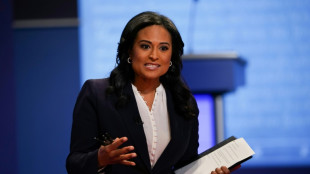
 US strikes Iran for first time in a month, Tehran retaliates

 Yin holds off Kim to win sixth LPGA title, end title drought

 Top-ranked Scheffler storms to PGA Tour Championship win

 Root urges England to be 'grown-ups' after Pakistan series win

 Google Maps renames Lake Ontario 'Lake America' in US -- but not Canada

The arranged marriage of UBS and Credit Suisse will create the biggest bank Switzerland has ever seen, with some wondering if the superbank might be too big for its own good.
The deal struck late Sunday prevented the collapse of the country's second-biggest lender by folding it into the largest.
Even before last week's dramatic events, both firms were already among the 30 around the world deemed of strategic importance to the global banking system and therefore too big to fail.
Some in business, industry and politics are not convinced that one even bigger bank will turn out for the better.
"Credit Suisse was really the bank of the economy and industry," said Philippe Cordonier of Swissmem, the national association representing the engineering industry.
For exporting companies, Credit Suisse offered a range of services essential for international transactions, "payments abroad, credits, leasing or currency hedging", he told AFP.
- Less competition -
"This is where the question arises of what skills will be kept," said Cordonier, as the profiles of the two banks, although close, are not identical.
So far, many questions remain unanswered.
Such a takeover would normally need months of negotiations, but UBS only had a couple of days, under some serious arm-twisting by Swiss authorities.
UBS chief executive Ralph Hamers admitted at an analysts' conference that he did not yet have all the details of the takeover.
Switzerland is a confederation of 26 cantons and Cordonier said the alternative could be to turn from the national banks to the cantonal banks.
However, many do not currently have the skills to help companies export to far-off markets such as Asia, and would have to develop them.
The other option is to turn to foreign banks, although they would not possess "in-depth knowledge" of the Swiss market, Cordonier said.
"If there is only one major bank that has the capacity to work abroad, this will restrict the choice of solutions for companies," said the engineer, who is also concerned about the repercussions on costs "if there is less competition".
- SMEs worried -
Founded in 1856 by Alfred Escher, the godfather of Swiss railways, Credit Suisse was closely linked to the country's economic development.
The bank financed the expansion of the rail network, the construction of the Gotthard Tunnel beneath the Alps, and the start-up of Swiss companies that went on to become leaders in their sector.
"Twenty-five years ago, there were four big Swiss banks," recalled the Swiss Federation of Companies, which represents small and medium enterprises.
The banking sector has already seen major convergence in 1998 when the Swiss Bank Corporation merged with the Union Bank of Switzerland to form the modern UBS.
"The concentration into a smaller number of banks reduces competition and makes it more difficult to obtain good financing conditions for SMEs," the federation said in a statement.
The orchestrated takeover has also triggered virulent criticism among Swiss political circles, of all stripes.
Politicians have called for the further tightening of regulations -- which are already strict in Switzerland -- in the face of this new giant, which will dominate the nation's banking sector.
- Swift solution -
A partial nationalisation could "at least" have been considered, said Tobias Straumann, professor of economic history at the University of Zurich, told the Berner Zeitung newspaper.
Carlo Lombardini, a lawyer and professor of banking law at the University of Lausanne, said the UBS takeover "was surely the only swift and feasible solution".
However, he would have preferred another outcome, such as a takeover "by a foreign bank", he told AFP.
"But a large foreign group doesn't do acquisitions in a weekend," he admitted.
The other solution would have been to nationalise Credit Suisse "to enhance the good bank" and consolidate the poor assets into a "bad bank" to be liquidated, he explained.
However, it is already too late for such what-ifs, Lombardini said.
"It's like wondering what would have happened if Napoleon had not lost at Waterloo," he said.
"The real problem is we are going to have an even more 'too big to fail' bank," he warned.
P.Queiroz--PC