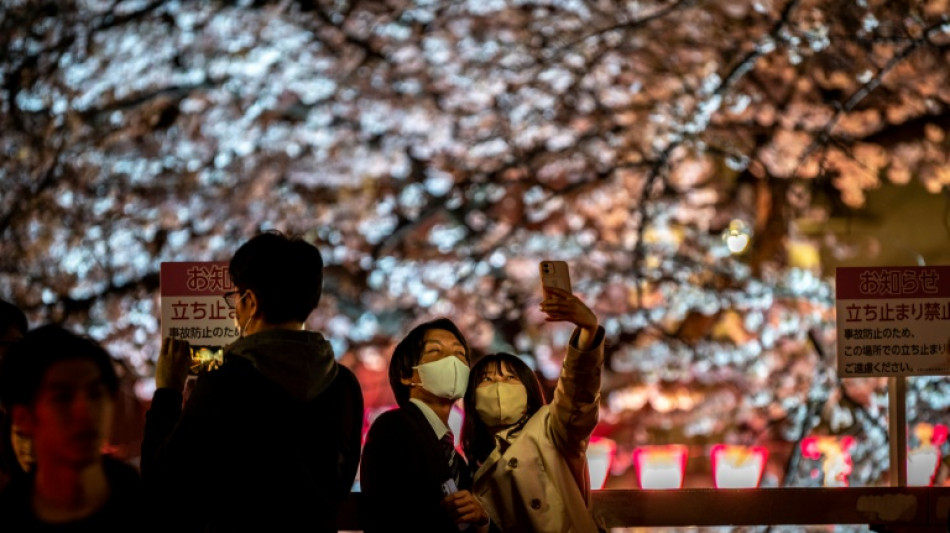
Japan inflation slows to 3.1% in February / Photo: Philip FONG - AFP

 Best Pet Advent Calendars for Christmas 2026: Dog Treats and Cat Toys

 Grattan Institute Releases Blueprint to Target Specialists Over Excessive Fees

 Arizona Science Center Hosts Girls in STEM Astro Adventures for Students

 New Turkish Cafe, Japanese BBQ, and Korean Restaurants Open Across East Bay

 Knowle Move Four Points Clear at Top After Histon Victory

 Physicians Urge Arizona to Ban Medical Gag Clauses and Enable Private Lawsuits

 New Campaign Highlights Knowledge Gaps on Carbon Monoxide Safety Among Americans

Japan's consumer prices rose 3.1 percent in February from a year earlier, slowing from the four-decade highs seen in previous months, government data showed Friday.
The figure, which excludes volatile fresh food, met market expectations and comes after the government introduced relief measures for soaring energy bills.
It is the first deceleration in over a year, marking a fall from January, when prices jumped 4.2 percent on-year -- the highest level since September 1981, fuelled in part by higher energy bills.
UBS economist Masamichi Adachi had said ahead of the data release that he expected lower inflation in February "due to a discount on energy price with the government's subsidies", which were announced in October and came into effect this year.
The drop is also due in part to the comparison with data from February 2022, when prices began to rise in Japan following decades of sluggish inflation or deflation.
The 3.1 percent rise is above the Bank of Japan's longstanding two-percent target, which has been surpassed every month since April last year.
But it remains lower than the sky-high inflation seen in the United States and elsewhere, with central banks worldwide hiking interest rates to tackle rising prices.
When both fresh food and energy prices are excluded, Japan's figure for February is 3.5 percent.
The BoJ views the price increases as the result of temporary factors, including the war in Ukraine, so sees no reason to tweak its monetary easing measures.
Outgoing governor Haruhiko Kuroda left these measures unchanged in his final policy meeting this month before stepping down after a decade at the helm.
Despite pressure to hike interest rates, the BoJ has said it first wants to see evidence of more sustained, demand-driven price rises, supported by salary increases.
Wages have long been stagnant in Japan, although major companies have this year announced substantial salary increases for staff.
Kuroda will be replaced by economics professor Kazuo Ueda next month, but analysts say the new chief faces a tough job navigating a way forward for the bank, whose easy-money policies are viewed as unsustainable in the long term.
Nogueira--PC

