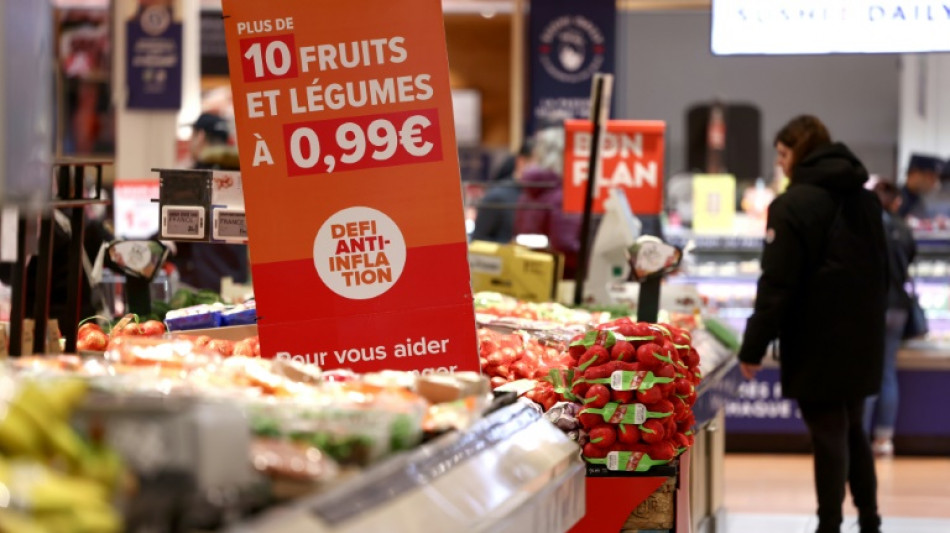
Eurozone inflation falls sharply to 6.9% in March / Photo: Thomas SAMSON - AFP/File

 Best Pet Advent Calendars for Christmas 2026: Dog Treats and Cat Toys

 Grattan Institute Releases Blueprint to Target Specialists Over Excessive Fees

 Arizona Science Center Hosts Girls in STEM Astro Adventures for Students

 New Turkish Cafe, Japanese BBQ, and Korean Restaurants Open Across East Bay

 Knowle Move Four Points Clear at Top After Histon Victory

 Physicians Urge Arizona to Ban Medical Gag Clauses and Enable Private Lawsuits

 New Campaign Highlights Knowledge Gaps on Carbon Monoxide Safety Among Americans
Inflation in the eurozone slowed more sharply than expected in March but food prices jumped even as energy costs eased, official data showed Friday.
Consumer prices rose by 6.9 percent on an annual basis, down from 8.5 percent in February, according to the European Union's statistics agency.
Analysts for Bloomberg and financial data firm FactSet had forecast the inflation rate to reach 7.1 percent in the 20-nation single currency area in March.
Energy prices fell by 0.9 percent after rising by 13.7 percent in February, according to Eurostat.
Russia's invasion of Ukraine sent oil and gas prices soaring last year but they have become more stable in recent months, helped also by mild weather.
Food and drink prices rose, however, by 15.4 percent in March, compared with 15 percent in the previous month, it added.
Despite falling from a peak of 10.6 percent in October, eurozone inflation still remains well above the European Central Bank's two-percent target.
The ECB has raised interest rates repeatedly to tame red-hot inflation but the size of the next rate hike is unclear after recent turbulence in the banking sector.
- Core inflation up -
Fears over price growth remain as the eurozone's core inflation, which excludes volatile food and energy prices, edged up to 5.7 percent in March from 5.6 percent a month earlier.
"Descending headline inflation thanks to cooling energy prices will not be enough for the ECB to stop tightening, as policymakers are looking for clear signs of core inflation easing," said Riccardo Marcelli Fabiani, economist at Oxford Economics.
But inflation also dropped in some of Europe's biggest economies in March, fuelling hopes that the region is past the worst price increases.
In Germany, price growth slowed to 7.4 percent in March from 8.7 percent in the first two months of 2022.
Inflation reached 5.6 percent in France in March, compared to 6.3 percent the previous month.
It plummeted further in Spain to 3.3 percent from six percent in February.
Among the 20 countries that use the euro, Luxembourg had the lowest inflation rate, reaching 3.0 percent in February, Eurostat said.
According to other Eurostat data published Friday, the unemployment rate in the eurozone remained stable in February at 6.6 percent.
A.F.Rosado--PC

