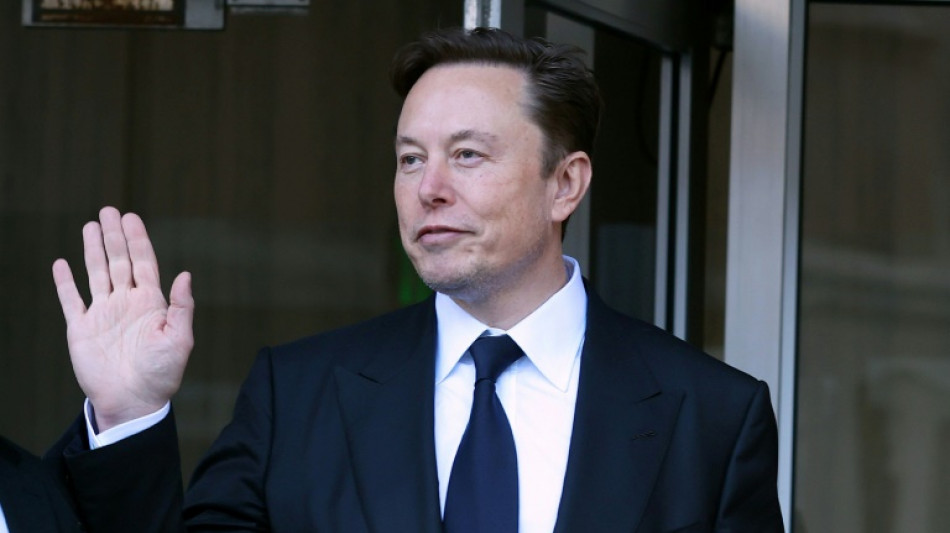
Musk defends paid Twitter as blue tick ultimatum looms / Photo: JUSTIN SULLIVAN - GETTY IMAGES NORTH AMERICA/AFP

 Best Pet Advent Calendars for Christmas 2026: Dog Treats and Cat Toys

 Grattan Institute Releases Blueprint to Target Specialists Over Excessive Fees

 Arizona Science Center Hosts Girls in STEM Astro Adventures for Students

 New Turkish Cafe, Japanese BBQ, and Korean Restaurants Open Across East Bay

 Knowle Move Four Points Clear at Top After Histon Victory

 Physicians Urge Arizona to Ban Medical Gag Clauses and Enable Private Lawsuits

 New Campaign Highlights Knowledge Gaps on Carbon Monoxide Safety Among Americans
Elon Musk on Friday defended his controversial pay model for Twitter, claiming that any social media platform that didn't follow suit would fail because they would be swarmed by bots.
Musk made his prediction on the eve of Twitter's April 1 ultimatum that verified accounts with the cherished blue tick that had not forked over cash would lose it.
"The fundamental challenge here is that it's (easy) to create literally 10,000 or 100,000 fake Twitter accounts using just one computer at home and with modern AI (artificial intelligence)," Musk told a question and answer session on Twitter.
"That's the reason for really pressing hard on verified where the verified requires a number from a reputable phone carrier and a credit card," Musk said.
"My prediction is that any so-called social media network that doesn't do this will fail," Musk added.
The change in system puts pressure on companies, journalists and celebrities who used Twitter as their main channel of communication and relied on the blue tick for credibility.
And it also raises the specter of imposters and jokesters paying for an officially verified, but totally fake account.
In the US, the subscription plan, known as Twitter Blue, costs $8 a month or $84 a year, or $11 a month if bought through Apple’s app store.
Since its creation in 2009, the blue tick or checkmark became a signature element that helped the platform become a trusted forum for news makers and campaigners.
But Musk and his fans said the blue check was decided by fiat in a secretive procedure and called it a symbol of an unfair class system.
Opening the blue tick to paying subscribers was among the first decisions made by Musk when he took ownership of Twitter last year, but his overhaul backfired.
Within hours, Twitter was flooded by fake yet verified accounts impersonating celebrities, major companies and even Musk himself.
Musk swiftly backtracked, but many advertisers fled the site, denying Twitter a major source of income that the CEO is struggling to replace.
For now, blue checks of celebrities -- including Justin Bieber and his 113 million followers or footballer Cristiano Ronaldo and his 108 million -- are tagged on the site as "legacy" accounts.
- 'Will be awful' -
The verified account conundrum also involves officials, charities and news media companies.
Already the White House, which will keep a special designation as a government entity, told employees it would not pay to have its staff's official Twitter profiles keep the blue tick, Axios reported.
News media companies, firms and charities already lost their blue tick and were tagged as verified business accounts under Musk's new system.
According to Twitter's website, these cost a hefty fee of $1,000 a month in the United States, and $50 for each additional affiliated account.
"This will be awful for those who can’t afford the new fees," said Andrew Stroehlein, European Media Director of Human Rights Watch, who said his group would not pay for the privilege.
"It will damage the effectiveness of local activists, including human rights activists, who have long used Twitter for grassroots organizing," he added in a blog post.
The New York Times said it will not pay for a verified business account and that it would only subscribe for a blue tick for journalists when essential for reporting needs.
The "pay to play" verification model is also being tested by Twitter rival Facebook in Australia and New Zealand, which has also drawn major criticism.
Much is riding on Musk's ability to find a business model for Twitter.
Last week Musk put the current value of Twitter at $20 billion, less than half the $44 billion he paid for the social media platform just five months ago.
F.Ferraz--PC

