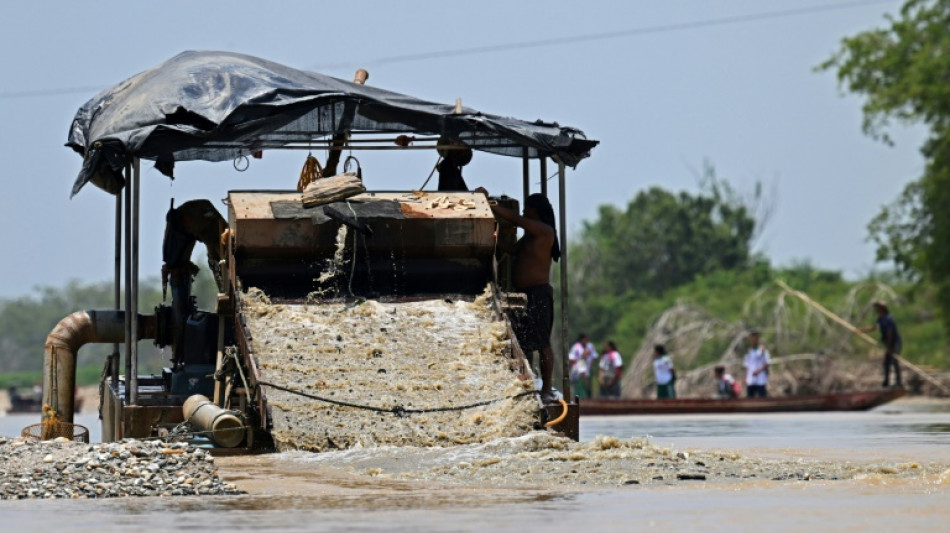
Battle in Colombia over river-wrecking gold 'dragons' / Photo: Raul ARBOLEDA - AFP

 Injuries cloud tennis as US Open gets under way

 Iran retaliates after first US strikes in a month

 Itauma says 'I'll be back' after bruising heavyweight title loss

 Brilliant Palou clinches fourth straight IndyCar crown

 US strikes Iran for first time in a month, Tehran retaliates
 Yin holds off Kim to win sixth LPGA title, end title drought

 Top-ranked Scheffler storms to PGA Tour Championship win

 Root urges England to be 'grown-ups' after Pakistan series win

 Google Maps renames Lake Ontario 'Lake America' in US -- but not Canada

 Aaron Donald ends retirement to rejoin Rams: team

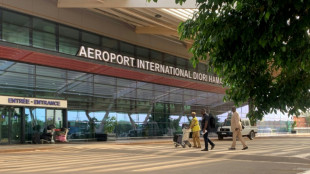 Niamey back to normal after soldiers' mutiny

 Niger mutiny suppressed, but questions remain over junta's cohesion

 Como spoil Allegri's Napoli home debut

 Cruz Beckham Performs at Leeds Festival Following Family Support at Reading

 Fernandes hat-trick inspires Man Utd rout of Ipswich

 Suzuki sends 'perfect' Freiburg past Bremen, Schalke lose

 Instagram offers three routes to two-factor authentication

 September smartphone calendar spans Apple, Poco, Vivo and Xiaomi

 Forest defender Tyler Bindon joins Charlton on loan

 Google Maps adopts Lake America label for US users

 WIRED tests label makers for home organisation

 CERN creates quark-gluon plasma with smaller atomic nuclei
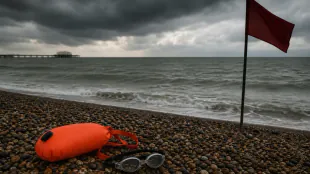
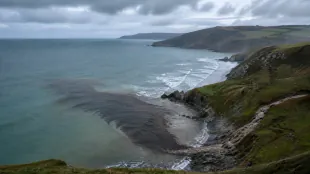 South West Water ranks worst in environmental comparison

 Russell Hobbs dual air fryer discounted to £99

 UK clocks return to GMT on October 25

The giant skeletons of burnt and dismantled gold dredgers litter the rivers of northwest Colombia, where the government is waging a full-out war on illegal mining.
Nicknamed "dragons" by locals, the massive machines used to suck gold from riverbeds are blamed for destroying the environment and financing organized crime.
But their dismantling in a massive army operation has been met with hostility by communities who depend on mining for their daily survival.
Around El Bagre in the gold-rich Bajo Cauca region, a protest by miners that started early this month has been marked by acts of vandalism the government blamed on the Gulf Clan drug cartel for instigating.
But Luis Manuel Campo, 32, one of the miners, insisted to AFP that "we have nothing to do with criminal groups."
Campo co-owns a dredger with three other people.
"We are not hiding. We just want the persecution to stop," he said.
"We want to be formally recognized as miners so that we can work in peace, without stigma."
- New gold rush -
The names of the villages in this region such as Zaragoza and Caceres serve as a reminder of the Spanish colonizers who were already extracting gold in Bajo Cauca in the 17th century.
It became a bastion of rightwing paramilitary fighters in the 1990s, and is now a stronghold of the Gulf Clan, Colombia's most powerful cartel.
President Gustavo Petro this month called off a ceasefire with the Clan, accusing it of being behind attacks on civilians committed by protesting miners.
Criminal groups in Colombia make almost as much money from illegal mining as they do from trafficking cocaine, authorities say.
With a recent rise in gold prices, Bajo Cauca has been gripped by a new type of gold rush, with poor communities scouring the gravelly river beds with shovels, bulldozers and dredging machines.
"Apart from gold, there is nothing here," said Campo.
Locals say about 350 dredging machines are active in the region -- big and small -- on top of those operated legally by the Mineros Aluvial multinational.
- 'Profitable' -
The illegal dredgers range from simple machines with makeshift conveyer belts to larger mechanical contraptions that require several divers to guide a massive vacuum pipe under the dark water.
Then there are the "dragons" -- three-storey, 20-meter (66-foot) long boats with massive engines.
There are about two dozen of these in the Bajo Cauca region.
One "dragon" costs about half a million dollars, their owners tell AFP.
"At the current (gold) price, it is profitable," said Alex Cossio, 41, who runs one of these monsters.
One "dragon" can extract up to two kilograms (4.4 pounds) of gold per day -- worth more than $50,000, according to a police official who did not want to be named.
AFP visited a number of these beasts, including one named "Native" that has been operational for only two months in a branch of the Nechi river.
"The (army) helicopters fly over us every day, we are afraid," said Cossio, who insisted there was no link to organized crime.
"Diesel, food, logistics... We buy everything in the neighborhood, a large number of families live from our activity," he added.
AFP observed at least six "dragons" lying mutilated and burnt by the riverside, some already being repaired by their owners.
There is no official data on how many dredgers have been destroyed.
"We tried to stop them, it was terrible," said Julia Tatis, who owns a small eatery, of a raid this month on three of the machines in Nueva Esperanza, a poor hamlet on the water's edge.
"The military just arrived saying we are the Gulf Clan. And they burned everything," added dredge owner Juan Manuel Carcamo.
- Damage 'already done' -
Campo insists the dredges are working river beds "that were already exploited by Mineros 40 years ago... The damage has already been done."
Lawyer Francisco Arrieta Franco is an advocate for the miners who he describes as victims.
"It is false to say the dredges belong to the Clan," he told AFP.
"It's complicated and expensive to operate a dredger. Criminals are more interested in extortion, which is everywhere in this region."
Locals say the miners are subject to Gulf extortion rather than perpetrators of it.
In a gold shop in El Bagre, an employee warned of trouble if the government continues to "harass" the miners.
"We need these dredgers to work and to eat," shouted the employee, who did not want to be named. "They serve the whole community!"
Added a miner, also on condition of anonymity: "It is when you have an empty stomach that you are forced to do illegal things."
P.Queiroz--PC