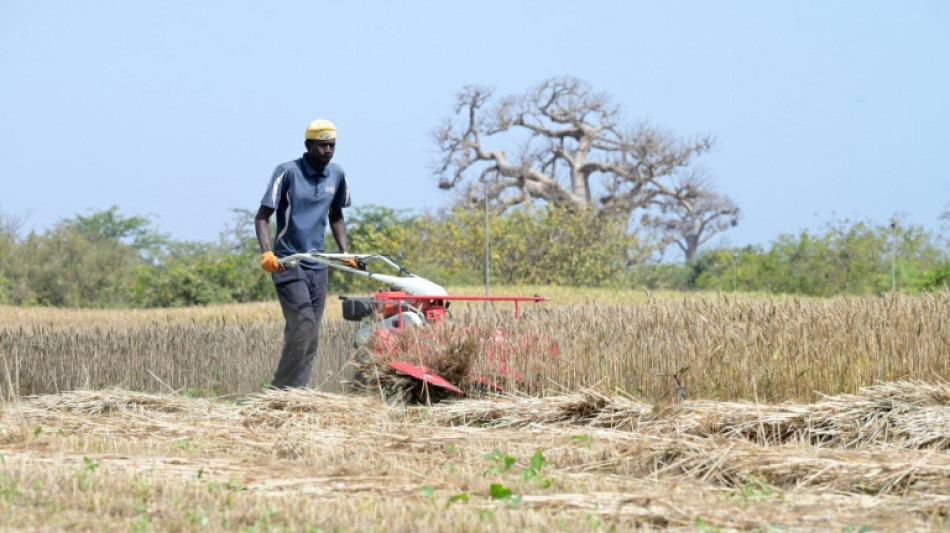
Senegal harvests first experimental homegrown wheat / Photo: SEYLLOU - AFP

 Best Pet Advent Calendars for Christmas 2026: Dog Treats and Cat Toys

 Grattan Institute Releases Blueprint to Target Specialists Over Excessive Fees

 Arizona Science Center Hosts Girls in STEM Astro Adventures for Students

 New Turkish Cafe, Japanese BBQ, and Korean Restaurants Open Across East Bay

 Knowle Move Four Points Clear at Top After Histon Victory

 Physicians Urge Arizona to Ban Medical Gag Clauses and Enable Private Lawsuits

 New Campaign Highlights Knowledge Gaps on Carbon Monoxide Safety Among Americans
With the whir of a mower, under a clear blue sky, Senegalese researchers have begun harvesting a crop of experimental homegrown wheat, the latest step in a years-long effort to reduce reliance on imports.
The second most consumed cereal after rice, wheat is an important staple in the bread-loving West African nation.
But Senegal, like many of its neighbours, depends entirely on foreign supplies.
It imports 800,000 tonnes of the grain per year.
Its tropical climate is not naturally suited to wheat but domestic trials have been underway for years.
Supply chain problems, rising grain prices and inflation caused by the war in Ukraine have added urgency to the country's efforts to achieve self-sufficiency.
Since late last week, researchers from the Senegalese Institute for Agricultural Research (ISRA), a public research institute, have been harvesting four varieties of wheat on a demonstration plot in Sangalkam, 35 kilometres (22 miles) from the capital Dakar.
Three of the varieties are Egyptianand the fourth was developed by the institute.
It operates five demonstration plots in total -- two near Dakar and three in the Senegal River Valley -- and has tested hundreds of wheat varieties, Amadou Tidiane Sall, one of the researchers, told AFP.
Many have proved unsuitable.
The Sangalkam crop, one of several successful experiments by the institute, was sown in early January and matured in three months during Senegal's cold season.
Agriculture Minister Aly Ngouille Ndiaye visited the plot earlier this month.
He said he had requested Egyptian seeds on a visit to the North African country for the United Nations' COP27 climate conference in November.
"We have significant potential," the minister said during his visit, promising the government would work with the private sector to expand trial plots.
He acknowledged that a lack of adequate water for irrigation posed a significant challenge.
Not everyone is convinced that wheat can be grown at scale in Senegal.
Amadou Gaye -- the president of the National Federation of Bakers of Senegal, who represents some 2,500 bakeries across the country -- told AFP he would prefer to see resources dedicated to producing local cereals such as millet, maize and sorghum.
G.Machado--PC

