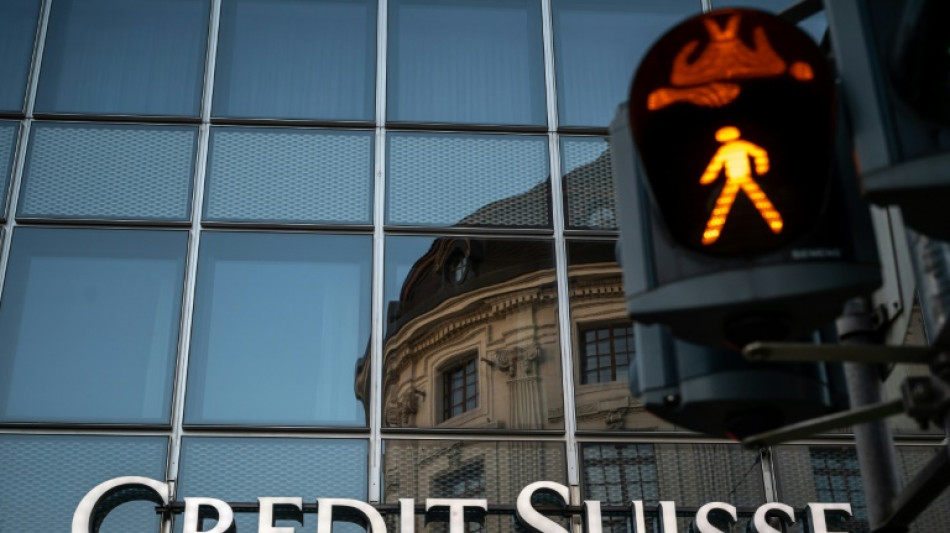
Bank takeover prevented Swiss economy collapse: minister / Photo: Fabrice COFFRINI - AFP/File

 Best Pet Advent Calendars for Christmas 2026: Dog Treats and Cat Toys

 Grattan Institute Releases Blueprint to Target Specialists Over Excessive Fees

 Arizona Science Center Hosts Girls in STEM Astro Adventures for Students

 New Turkish Cafe, Japanese BBQ, and Korean Restaurants Open Across East Bay

 Knowle Move Four Points Clear at Top After Histon Victory

 Physicians Urge Arizona to Ban Medical Gag Clauses and Enable Private Lawsuits

 New Campaign Highlights Knowledge Gaps on Carbon Monoxide Safety Among Americans
Swiss Finance Minister Karin Keller-Sutter said Switzerland's economy would probably have collapsed had Credit Suisse gone bankrupt, in an interview published Sunday.
Keller-Sutter told Le Temps newspaper that the government had acted in the country's best interests in swiftly arranging the takeover of Switzerland's second-biggest bank by its larger domestic rival UBS.
Amid fears of a global banking crisis last month, investor confidence in Credit Suisse collapsed on March 15, with the government then orchestrating a takeover during the weekend before the markets reopened on March 20.
Some 109 billion Swiss francs ($120 billion) have been put on the table between government guarantees and the liquidity made available by the Swiss central bank.
"Given the circumstances, we acted as best we could to minimise the burden for the state and the taxpayers," Keller-Sutter said.
"Without determined intervention by the authorities, the alternative would have been a bankruptcy of Credit Suisse on Monday morning, accompanied by a probable collapse of the Swiss economy."
Like UBS, Credit Suisse was among the 30 banks worldwide deemed of global importance to the international banking system and therefore too big to fail.
But it suffered a string of scandals in recent years, and after three US regional banks collapsed in March, it was left looking like the weakest link in the chain.
- Double-quick deal -
The takeover talks were hastily conducted at Keller-Sutter's finance ministry in Bern and the $3.25 billion deal was announced on the evening of March 19.
"The bank would have gone bankrupt on Monday, March 20. For what? Because over the years there has been a culture that seems to have created the wrong incentives. Because there have been many scandals," said Keller-Sutter.
As for whether any executives would be brought to justice, she said: "It's difficult and complex."
She said the government's priority was to complete the merger. UBS said Wednesday it should close the takeover within the coming months.
The finance minister said it was too soon to talk about the future structure of UBS, which will become a mega-bank with some $5 trillion in invested assets.
Keller-Sutter said the government would have to analyse what happened in full, and then adapt the regulations on banks considered too big to fail.
"But there are limits. Let's not forget that... confidence cannot be regulated."
M.Gameiro--PC