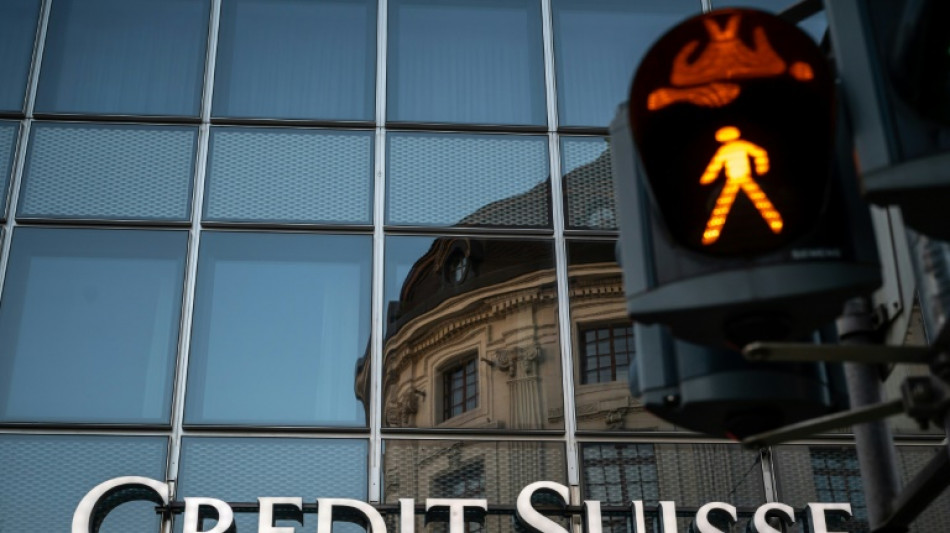
Swiss president to defend Credit Suisse takeover in parliament / Photo: Fabrice COFFRINI - AFP/File

 Best Pet Advent Calendars for Christmas 2026: Dog Treats and Cat Toys

 Grattan Institute Releases Blueprint to Target Specialists Over Excessive Fees

 Arizona Science Center Hosts Girls in STEM Astro Adventures for Students

 New Turkish Cafe, Japanese BBQ, and Korean Restaurants Open Across East Bay

 Knowle Move Four Points Clear at Top After Histon Victory

 Physicians Urge Arizona to Ban Medical Gag Clauses and Enable Private Lawsuits

 New Campaign Highlights Knowledge Gaps on Carbon Monoxide Safety Among Americans
Swiss President Alain Berset on Tuesday will defend the orchestrated takeover of Credit Suisse by UBS at an extraordinary session of parliament to debate the bank's collapse.
Berset's government played a leading role in arranging the merger of Switzerland's biggest banks -- a deal done in double-quick time behind closed doors on March 19.
The three-day session at the Federal Assembly in Bern was called after lawmakers found themselves before a fait accompli.
The takeover dramatically changes the financial landscape in the wealthy Alpine country, which stakes much of its national prestige on sound banking.
The merger triggered unease among the public and lawmakers alike, with the country's second-largest bank rapidly imploding after 167 years in which it helped finance Switzerland's industrial growth.
The extraordinary session opens at 11:15 am (0915 GMT) Tuesday with a statement from the government to the 46-member Council of States upper house.
The debate then shifts to the 200-seat National Council lower chamber from 5:15 pm (1515 GMT).
Berset will take the floor on Tuesday, a parliament spokeswoman told AFP.
- $120 bn in play -
Amid fears of contagion following the collapse of three US regional banks, Credit Suisse's share price plunged, despite reassurances from the central Swiss National Bank (SNB).
But that failed to restore investor confidence, and the government, the SNB and the FINMA financial regulators, fearing a bloodbath when the markets reopened on March 20, strongarmed UBS into a $3.25 billion takeover on March 19.
"The alternative would have been a bankruptcy of Credit Suisse... accompanied by a probable collapse of the Swiss economy," Finance Minister Karin Keller-Sutter told Saturday's Le Temps newspaper.
Some 109 billion Swiss francs ($120 billion) have been put on the table between government guarantees and the liquidity the SNB made available.
In the heat of the moment, parliament's finance delegation had to authorise the credit release without lawmakers having a chance to debate and scrutinise the arrangements.
The National Council wants to examine the guarantees granted to prop up the rescue, the possibility of legal action against Credit Suisse's governing bodies and the regulation of banks considered "too big to fail".
- All parties irked -
The takeover has ruffled parties of all stripes, especially so given that the state already had to prop up UBS during the 2008 financial crisis.
The right-wing populist Swiss People's Party wants tighter regulations on too-big-to-fail banks, and a commitment from the government to hold Credit Suisse executives to account as well as the reimbursement of unwarranted bonuses.
Centre-right party The Centre thinks the takeover was the least worst option, but it wants clarity on the risks involved in creating a superbank.
The Greens want an assessment on whether Credit Suisse executives should be brought to justice.
The government has calmed some of the anger by stripping Credit Suisse's executive board of their 2022 and 2023 bonuses.
- No repeat -
The government last week also promised lawmakers a full report within a year looking at the factors behind Suisse's downfall.
During this week's session, lawmakers will have to endorse the guarantees, but the vote is only symbolic, said Samuel Bendahan, a National Council member and an economics professor at the University of Lausanne's business school.
Parliament cannot cancel the government's decision taken under emergency law, and "the money has already been released anyway", the socialist lawmaker told AFP.
"Parliament can only give a signal to say that next time it will not happen this way," he said.
However, he hoped the session would make it possible "to vote on binding texts so that we do not find ourselves in this situation again in 10 years' time".
A.Silveira--PC

