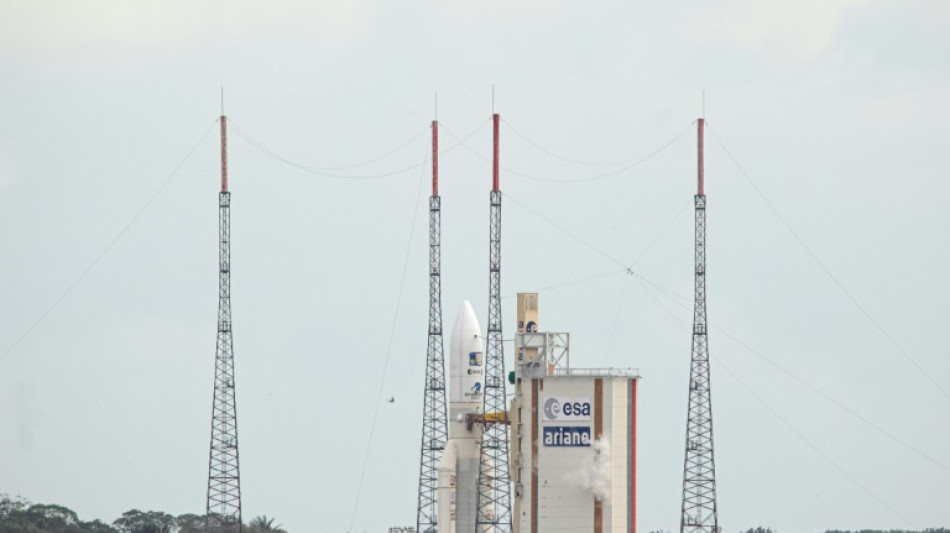
Europe's Jupiter moons mission launches on second attempt / Photo: Jody AMIET - AFP

 Aaron Donald ends retirement to rejoin Rams: team

 Niamey back to normal after soldiers' mutiny

 Niger mutiny suppressed, but questions remain over junta's cohesion

 Como spoil Allegri's Napoli home debut
 Cruz Beckham Performs at Leeds Festival Following Family Support at Reading

 Fernandes hat-trick inspires Man Utd rout of Ipswich

 Suzuki sends 'perfect' Freiburg past Bremen, Schalke lose

 Instagram offers three routes to two-factor authentication

 September smartphone calendar spans Apple, Poco, Vivo and Xiaomi

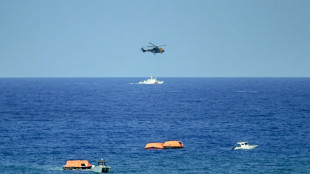
 Eight dead and 23 missing after ferry sinks off Cyprus

 Russell Hobbs dual air fryer discounted to £99

 British woman dies after stabbing at German station

 Beeston pub closes after office fire injures man

 South West Water ranks worst in environmental comparison
 CERN creates quark-gluon plasma with smaller atomic nuclei

 WIRED tests label makers for home organisation

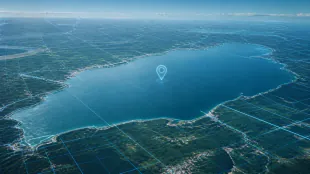 Google Maps adopts Lake America label for US users

 Bellingham, Mbappe fire as Real Madrid ease to Malaga win

 Mas wins Vuelta 9th stage to extend lead

 Robinson strikes as England close in on series win over Pakistan

 Chelsea beat Brighton in seven-goal thriller to extend Alonso's perfect start
 Zambia's opposition leader charged with treason

 Marc Marquez wins Aragon MotoGP Grand Prix

 Robinson rocks Pakistan again as England eye series win at Lord's

 Nepal rescuers advance towards trapped tunnel workers

The European Space Agency's JUICE space probe blasted off Friday on a mission to discover whether Jupiter's icy moons are capable of hosting extraterrestrial life in their vast, hidden oceans.
The launch on an Ariane 5 rocket from Europe's spaceport in Kourou, French Guiana came after a previous attempt on Thursday was called off due to the risk of lightning.
Despite cloudy skies, the rocket took off as planned at 09:14 am local time (1214 GMT), with teams on site saying it was on the correct trajectory.
A little under half an hour after lift-off, the uncrewed six-tonne spacecraft is scheduled to separate from the rocket at an altitude of 1,500 kilometres (930 miles). Only then can the launch be declared successful.
The Jupiter Icy Moons Explorer (JUICE) plans to take a long and winding path to the gas giant, which is 628 million kilometres (390 million miles) from Earth.
It will use several gravitational boosts along the way, first by doing a fly-by of Earth and the Moon, then by slingshotting around Venus in 2025 before swinging past Earth again in 2029.
When the probe finally enters Jupiter's orbit in July 2031, its 10 scientific instruments will analyse the Solar System's largest planet as well as its three icy moons Europa, Ganymede and Callisto.
- Liquid water -
The moons were first discovered by astronomer Galileo Galilei more than 400 years ago, but were long ignored as potential candidates for hosting life.
However, the discovery of huge oceans of liquid water -- the main ingredient for life as we know it -- kilometres beneath their icy shells has made Ganymede and Europa prime candidates to potentially host life in our celestial backyard.
JUICE will focus on Ganymede, the Solar System's largest moon and the only one that has its own magnetic field, which protects it from radiation.
In 2034, JUICE will slide into Ganymede's orbit, the first time a spacecraft will have done so around a moon other than our own.
NASA's Europa Clipper mission, which is scheduled to launch in October 2024, will focus on Ganymede's sibling Europa.
Neither mission will be able to directly detect the existence of alien life, but instead hope to establish whether the moons have the right conditions to harbour life.
Only a future mission which would land on -- and possibly drill into -- the surface could confirm whether life exists below.
- 'Extraordinary mission' -
If life is there, scientists theorise it would likely be primitive microbes like bacteria, which are capable of surviving on Earth in such extreme environments.
JUICE has 10 scientific instruments -- including an optical camera, ice-penetrating radar, spectrometer and magnetometer -- which will analyse the local weather, magnetic field, gravitational pull and other elements.
It also has a record 85 square metres of solar panels to collect as much energy as possible near Jupiter, where sunlight is 25 times weaker than on Earth.
The 1.6-billion-euro ($1.7 billion) mission will mark the first time Europe has sent a spacecraft into the outer Solar System, beyond Mars.
"This is an extraordinary mission that shows what Europe is capable of," said Philippe Baptiste, head of France's CNES space agency which manages the Guiana Space Centre.
Friday marked the second-last launch for the Ariane 5 rocket, before it is replaced by the next-generation Ariane 6.
Repeated delays for the Ariane 6, as well as Russia pulling its Soyuz rockets in response to sanctions over the war in Ukraine, have left Europe struggling to find launch its mission into space.
M.Gameiro--PC