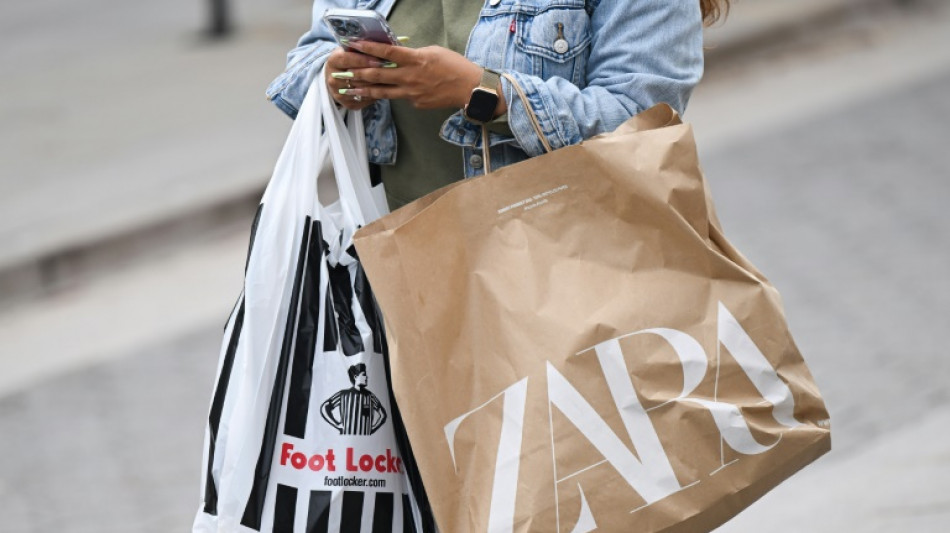
US retail sales post steeper fall than expected as consumer strength fades / Photo: Patrick T. Fallon - AFP/File

 Best Pet Advent Calendars for Christmas 2026: Dog Treats and Cat Toys

 Grattan Institute Releases Blueprint to Target Specialists Over Excessive Fees

 Arizona Science Center Hosts Girls in STEM Astro Adventures for Students

 New Turkish Cafe, Japanese BBQ, and Korean Restaurants Open Across East Bay

 Knowle Move Four Points Clear at Top After Histon Victory

 Physicians Urge Arizona to Ban Medical Gag Clauses and Enable Private Lawsuits

 New Campaign Highlights Knowledge Gaps on Carbon Monoxide Safety Among Americans
Retail sales in the United States slipped more than anticipated in March, according to government data released Friday, extending a downward trend that signals cooling in the economy.
The US central bank has raised interest rates steeply since early last year to lower demand and rein in high inflation, and there are signs that its policy is starting to bite.
Retail sales fell by one percent in March from a month prior, to $691.7 billion, said the Commerce Department, adding that February's contraction was revised to a smaller 0.2 percent as well.
But compared with the same period last year, retail sales were still 2.9 percent higher.
A separate report released Friday by the Federal Reserve showed industrial production rising 0.4 percent in March, boosted by a surge in utilities output on higher heating demand.
But manufacturing output contracted 0.5 percent.
- Fading consumer strength -
The retail sales slide in March came on the back of contractions seen in sales of motor vehicles and parts, electronics and appliances, as well as in general merchandise stores.
Sales at food and beverage stores, however, only shrank slightly, the data showed.
"The consumer started 2023 on a very strong note, but that has since faded," Oren Klachkin of Oxford Economics told AFP.
He noted that there have been softer job gains and weaker wage growth while excess savings are falling and inflation remains high -- and all this impacts consumer spending.
Klachkin also cautioned that the full impact of last month's "banking shock" is still to come, referring to the swift failures of Silicon Valley Bank and Signature Bank that sent shockwaves through the financial sector.
"The main impact will be basically that banks will tighten their lending standards," he said. "In turn, credit will flow less to households, which means they'll have less to go to a store with, to buy stuff, go out to eat."
Kieran Clancy of Pantheon Macroeconomics added in a note that "the March retail sales numbers confirm that the apparent strength at the start of the year was nothing more than a weather-driven fluke."
The retail data follows a trend of slowing price increases, with inflation cooling to 5.0 percent last month -- the smallest annual jump since May 2021.
But although the figures were cheered by policymakers, it will likely take more decisive numbers to persuade the Fed to pull back on its rate hikes.
X.M.Francisco--PC

