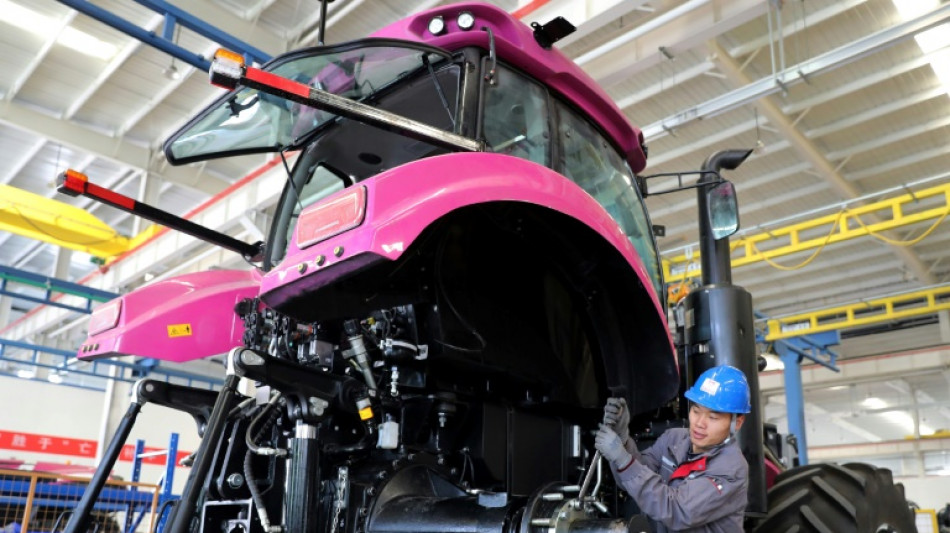
China factory activity cools in April as recovery challenges loom / Photo: STR - AFP/File

 Search Underway for 'Dooars Rani' Tigress After Second Escape from Buxa Tiger Reserve

 IIM Indore Announces IPMAT 2027 Exam Date for April 24

 The Dilemma of Recording Live Music: Preserving Memories vs. Being Present

 ANC’s Renewal Rhetoric Fades as Voters Reject Party in 2026 Local Elections

 Foreign Investors Return to Indian Markets After 10-Month Selloff

 Honda CR-V and Toyota RAV4 Lead Canada’s Most Stolen Vehicles List for 2025

 China Extends Tariff Suspension on US Imports to Stabilize Trade Ties
China's manufacturing activity contracted in April, official figures showed Sunday, due to slack global demand and a slow domestic recovery after lifting Covid-related curbs.
The official manufacturing purchasing managers' index (PMI) -- a key gauge of Chinese factory output -- fell to 49.2 in April from 51.9 in March, and below the 50-point mark that separates expansion and contraction in activity, data from the National Bureau of Statistics (NBS) showed.
Analysts polled by Bloomberg News had expected April factory activity to come at 51.4.
The drop comes after February recorded the highest reading in more than a decade as factories returned to normal following a surge in Covid cases.
China's economy grew 4.5 percent in the first three months of the year as the country reopened after dropping strict health controls that helped keep the coronavirus in check but battered businesses and supply chains.
But the world's second-largest economy is also beset by a series of other crises, from a debt-laden property sector to flagging consumer confidence, global inflation, the threat of recession elsewhere, and geopolitical tensions with the United States.
The official non-manufacturing PMI, which measures growth in the services and construction sectors, fell to 56.4 from 58.2 in March.
The March reading was the highest since May 2011, as the country saw a surge in demand for travel, entertainment and other leisure services that were curbed for nearly three years during the pandemic.
The government has set a comparatively modest growth target of around five percent this year, a goal Premier Li Qiang has warned could be hard to achieve.
B.Godinho--PC

