Airlines, unions in rare unity on US pilot diversity drive / Photo: Ed JONES - AFP

 Vietnamese coffee farmers ride China's durian wave

 Venezuela says retains 'sovereignty' in US oil deal
 NASA's Roman telescope set to launch on cosmic mapping mission
 Data center backlash scrambles US midterm politics

 Emotional Federer inducted into tennis Hall of Fame
 Hovland takes solo lead as McIlroy surges at Tour Championship
 Djokovic 'prepared' for US Open bid for history
 Atletico down Sevilla to go top of La Liga

 US deports right-wing provocateur Milo Yiannopoulos

 Niger junta says it is back in control after soldiers' mutiny

 Erasmus calls Rennie barbs over Springbok scrumming 'nonsense'

 Lawrence's fifty leaves Pakistan facing record chase to level England series
 Netanyahu condemns settler attack in flashpoint West Bank village
 Munoz saves Iraola in Liverpool draw, big-spending Spurs lose again

 Newcastle condemn dismal Spurs to second successive defeat

 James Cleverly leaves shadow cabinet to seek London mayoralty
 Baladi Map app turns Lebanon’s local problems into a public record

 Thirty-seven Mumbai pilgrims return after Nepal flood disruption

 Ankle ligament tear ends Neeraj Chopra’s 2026 season

 Five college football games that could shape the 2026 season

 New finds strengthen case for Bethsaida at Sea of Galilee site

 Felony assaults on older New Yorkers rise sharply, police data show

 Three Texas Tech softball players hurt in jet ski collision

 Tambaram civic groups seek action on eight long-pending issues

 Cyberabad civic body demolishes 19 unauthorised structures

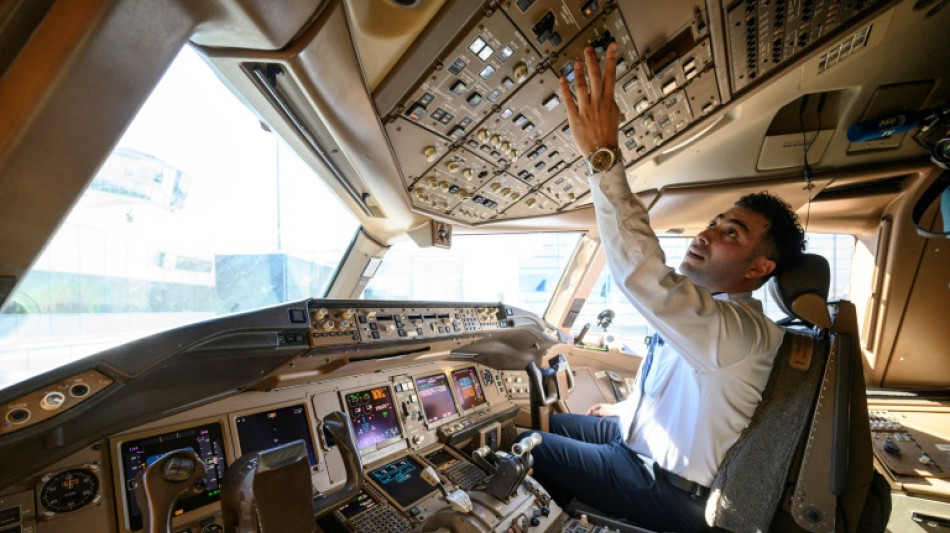
Airlines and unions disagree on many aspects relating to today's tight labor market, but concur on at least one thing: the need to diversify the pilot workforce pool.
At a recent congressional hearing, Regional Airline Association (RAA) President Faye Malarkey Black rued the "very limited diversity" within airline cockpits, echoing remarks from the Air Line Pilots Association's (ALPA) Jason Ambrosi who noted a dearth of pilots who are women and people of color, saying "that must change."
The alignment stood out because Ambrosi and Black disagreed about key elements in today's employment market, including whether a pilot shortage exists.
The population of US airline pilots and engineers is currently 95.7 percent white and 9.2 percent female, according to US data.
Tapping into underrepresented populations has emerged as a solution to the industry's workforce stresses from the surge in travel demand following the Covid-19 downturn, issues that have also affected other corners of aviation.
Over the last 18 months, there has been a scramble for seasoned pilots after thousands of pilots accepted early retirement while airlines cut costs during the pandemic.
Whereas major US airlines drew 50 percent of their pilots from the military in the year 2000, that share has dropped to just 15 percent due to the military's shift to unmanned aircraft. Today, three-quarters of major airline recruits come from regional airlines, according to consultancy Oliver Wyman.
Oliver Wyman currently forecasts a North American pilot shortfall of 17,000 in 2032 after an earlier projection pointed to an even bigger gap.
The moderation follows stepped-up industry efforts, such as United's Aviate Academy, which wants at least half its trainees to be women or people of color.
But the smaller forecasted shortage also reflects deep US air travel service cutbacks to rural markets and small cities, said Geoff Murray, a partner at Oliver Wyman.
European airlines do not face similar challenges today because of more generous pandemic employee maintenance programs. But Murray said the continent's pilot labor market is expected to encounter stresses in about three years, in part due to a full restoration of international travel service.
- Lifting pilot retirement age? -
At an April 19, congressional hearing, the RAA's Black said the country was suffering from an "air service collapse" following the exit of major carriers from 73 markets that have led to fewer flights in places like Erie, Pennsylvania and Pueblo, Colorado.
Saying the shortfall would worsen because of "a coming tsunami of pilot retirements," Black asked Congress to raise the mandatory retirement age to 67 from 65.
She also urged a reconsideration of the current US standard that requires pilots to have 1,500 hours of service before they can fly for a commercial carrier, arguing that modern training techniques prepare pilots for the cockpit with far fewer costly hours.
But ALPA’s Ambrosi objected to both of these recommendations, pointing to a European Union study that rejected raising the retirement age beyond 65 and calling a rethink of the 1,500-hour rule a safety risk after Congress lifted the standard in 2010 from 250 hours following a fatal plane crash.
"Since 2010, fatalities are down 99.8 percent," Ambrosi told the committee. "Responding to temporary post-Covid industry problems with permanent changes to pilot training and qualification requirements is ill-considered and dangerous."
Ambrosi also criticized the analysis by Oliver Wyman that the current labor market dynamics constitute a "shortage," saying the number of new FAA pilot certifications is more than sufficient to cover airline hiring needs, adding that the impact of Covid pilot retirements had been overstated.
"Airline decisions to leave communities are market-driven business choices and should not be conflated with pilot supply," Ambrosi said.
But both Black and Ambrosi agreed that more must be done to address the runaway costs of pilot training that price out underrepresented populations.
The cost to become a pilot can exceed $100,000 following extensive classroom study and years of training, certifications and trial flights.
A 2022 "Youth in Aviation" report by a federal task force urged more in-person awareness campaigns and after-school aviation activities for middle- and high-schools, as well as the establishment of a federal pilot scholarship and more generous federal education grants.
Congress is expected to consider these measures later this year during debate on the FAA reauthorization bill.
A.F.Rosado--PC