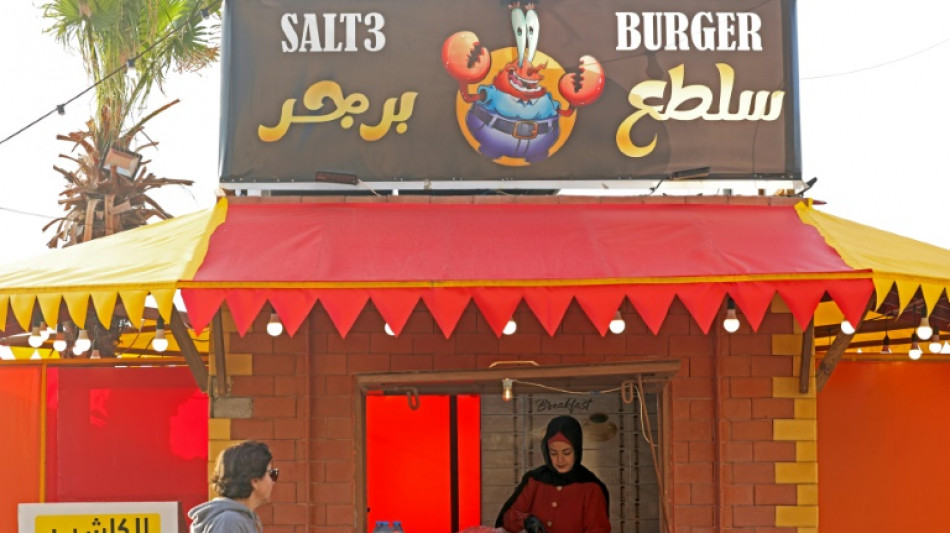
Resourceful Gazans create work to overcome dire prospects / Photo: MAHMUD HAMS - AFP

 Vietnamese coffee farmers ride China's durian wave

 Venezuela says retains 'sovereignty' in US oil deal
 NASA's Roman telescope set to launch on cosmic mapping mission

 Data center backlash scrambles US midterm politics

 Emotional Federer inducted into tennis Hall of Fame

 Hovland takes solo lead as McIlroy surges at Tour Championship
 Djokovic 'prepared' for US Open bid for history

 Atletico down Sevilla to go top of La Liga

 US deports right-wing provocateur Milo Yiannopoulos

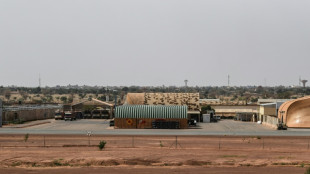 Niger junta says it is back in control after soldiers' mutiny

 Erasmus calls Rennie barbs over Springbok scrumming 'nonsense'

 Lawrence's fifty leaves Pakistan facing record chase to level England series
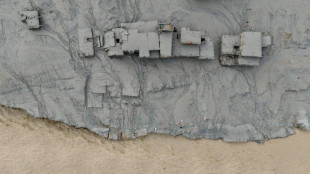
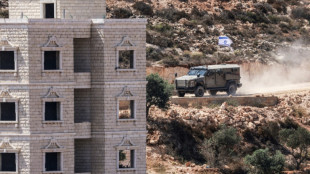 Netanyahu condemns settler attack in flashpoint West Bank village

 Munoz saves Iraola in Liverpool draw, big-spending Spurs lose again

 Newcastle condemn dismal Spurs to second successive defeat

 James Cleverly leaves shadow cabinet to seek London mayoralty

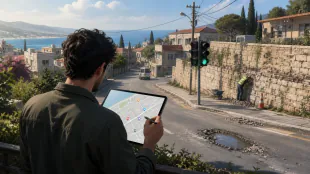 Baladi Map app turns Lebanon’s local problems into a public record

 Thirty-seven Mumbai pilgrims return after Nepal flood disruption

 Ankle ligament tear ends Neeraj Chopra’s 2026 season

 Five college football games that could shape the 2026 season

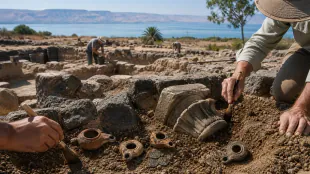 New finds strengthen case for Bethsaida at Sea of Galilee site

 Felony assaults on older New Yorkers rise sharply, police data show

 Three Texas Tech softball players hurt in jet ski collision
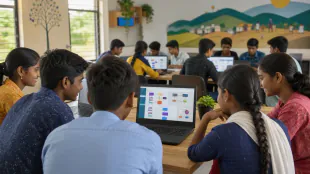
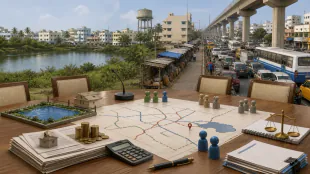 Tambaram civic groups seek action on eight long-pending issues

 Cyberabad civic body demolishes 19 unauthorised structures

Seeking a path out of the Gaza Strip's grinding poverty, Islam Abu Taima combs market alleyways for scraps of cardboard, hoping to transform the castoffs into sellable toys.
Poverty in the conflict-wracked Palestinian territory, a thin strip of land wedged between Israel, Egypt and the Mediterranean Sea, has hit a rate of 53 percent, according to the Palestinian Central Bureau of Statistics.
Work opportunities are scarce in Gaza, which has been under a crippling Israeli-led blockade since the Islamist movement Hamas took power in 2007, and Abu Taima, an English literature graduate, has struggled to find a job.
She lives with her husband Mohammed, who is also unemployed, in Al-Shati refugee camp where they began making toys for their five children because "the children keep asking" for them.
Abu Taima's husband "started making bicycles and a small car for them to play with".
"They were happy and we found them lovely," said the 39-year-old, whose home lacks running water or electricity.
She now sells their creations for five to 10 shekels ($1.40 to $2.80) a piece on pavements in central Gaza's more affluent areas.
Abu Taima and her husband also use their creative skills to make models and toys that would otherwise be unattainable to their family.
"My husband thought of making old planes and convertibles like the ones famous people drive. It helps him come out of his depression," she said.
For Abu Taima, scouring Gaza's markets for cardboard can be tough.
"I find it difficult when I walk on the street because people look at me with confusion and ask: 'Why do you collect cardboard?' I can't answer everyone," she said.
The couple makes one or two toys a day, but even if they sell all their wares the profit falls short of the 450 shekels needed to pay their monthly rent.
"The goal is to help my family live, and make my living on a daily basis, as simple as it is."
With the unemployment rate hitting 45 percent, according to the International Monetary Fund, many more Gazans are finding alternative ways to make a living.
- Soap start-up -
In Deir al-Balah in central Gaza, Alaa and Salama Badwan have transformed their rooftop into a small plant nursery.
"We use the roof because we lack space," said Salama, 40, between red and green-painted tyres serving as pots.
Alaa collects the sap from aloe vera plants, which Salama then uses to make soaps in a makeshift home workshop.
So far, they have yet to cover the start-up costs of the nascent project.
Alaa, 37, came up with the idea while researching natural cosmetics online, which have become fashionable in the coastal enclave.
They sell their produce to local pharmacies and have ambitions for it to become as popular as the famed olive oil soap from Nablus, a city in the occupied West Bank.
"The situation is difficult but people's attitudes are positive," said Alaa.
After returning to Gaza to help her family, 25-year-old graduate Amani Shaath failed to find work.
According to Palestinian figures, the unemployment rate for young graduates has hit a staggering 73.9 percent.
Shaath had worked for four years in fast-food outlets in Turkey, and in February took matters into her own hands by opening a kiosk on Gaza's seafront, selling hamburgers for 15 shekels each at the popular recreational spot.
Beachside food outlets have multiplied in recent years, but few are staffed by women.
"The first day, people looked at me with astonishment. That shocked me and I was scared that the project would fail," Shaath said.
"Then people started to come and they encouraged me, especially because I'm a girl."
G.M.Castelo--PC