Boom and bust: Quakes define legacy of Turkey's 'Erdonomics' / Photo: Adem ALTAN - AFP

 Vietnamese coffee farmers ride China's durian wave
 Venezuela says retains 'sovereignty' in US oil deal

 NASA's Roman telescope set to launch on cosmic mapping mission
 Data center backlash scrambles US midterm politics
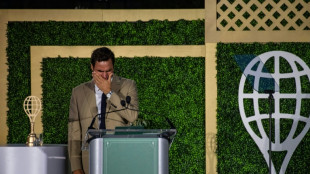 Emotional Federer inducted into tennis Hall of Fame

 Hovland takes solo lead as McIlroy surges at Tour Championship

 Djokovic 'prepared' for US Open bid for history
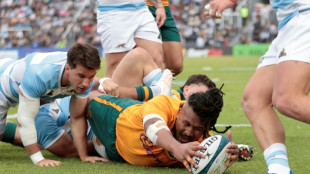
 Atletico down Sevilla to go top of La Liga

 US deports right-wing provocateur Milo Yiannopoulos

 Niger junta says it is back in control after soldiers' mutiny
 Erasmus calls Rennie barbs over Springbok scrumming 'nonsense'

 Lawrence's fifty leaves Pakistan facing record chase to level England series
 Netanyahu condemns settler attack in flashpoint West Bank village
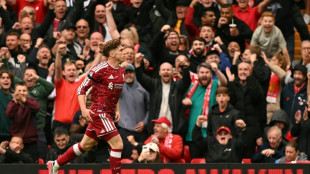 Munoz saves Iraola in Liverpool draw, big-spending Spurs lose again

 Newcastle condemn dismal Spurs to second successive defeat

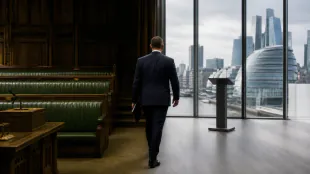 James Cleverly leaves shadow cabinet to seek London mayoralty
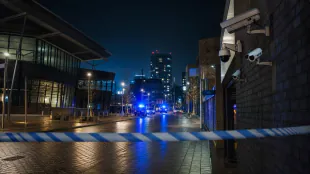
 Baladi Map app turns Lebanon’s local problems into a public record

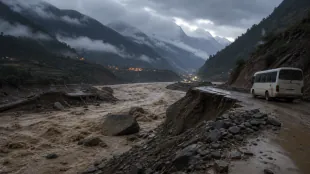
 Thirty-seven Mumbai pilgrims return after Nepal flood disruption

 Ankle ligament tear ends Neeraj Chopra’s 2026 season
 Five college football games that could shape the 2026 season

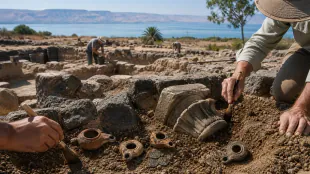 New finds strengthen case for Bethsaida at Sea of Galilee site

 Felony assaults on older New Yorkers rise sharply, police data show

 Three Texas Tech softball players hurt in jet ski collision

 Tambaram civic groups seek action on eight long-pending issues

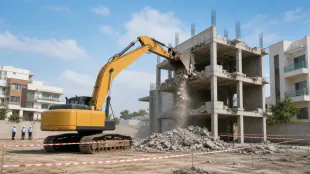 Cyberabad civic body demolishes 19 unauthorised structures
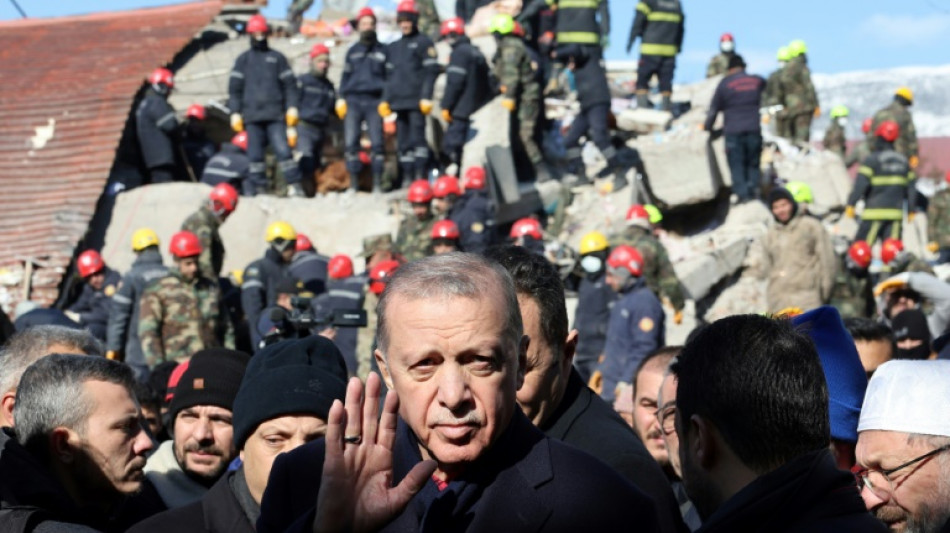
The earthquake's frightening rumble came deep in the night. Its ferocity killed thousands of people in their sleep and helped bring down a Turkish government.
Fury over the scale of the 1999 disaster fed into broader economic discontent that ultimately propelled Recep Tayyip Erdogan to power.
The Turkish leader now hopes a similar mix of economic despair and anguish over an even deadlier pre-dawn quake in February does not push him out in elections next Sunday.
"They came with an earthquake and they might leave with an earthquake," Ankara University assistant professor Melih Yesilbag said of Erdogan's Islamic-rooted party.
"The AKP took power after an earthquake. Modernising the infrastructure was one of its main promises from the start. And 20 years later you see this happen," he said.
The 1999 calamity killed more than 17,000 people and put the shoddiness of Turkey's buildings on soul-crushing display.
But it also made a more profound impact.
The AKP's election victory in 2002 and the rise of Erdogan a year later heralded a new economic model based on construction that changed the way Turkey worked.
The vast country entered a building frenzy that became central to a growth policy dubbed "Erdonomics".
Erdogan and a clique of construction companies that consolidated around his rule ended up erecting more than 10 million housing units over 20 years.
"This is an incredible amount," Yesilbag said. "This is more than half of all the EU countries combined over the same period."
Some of those houses toppled in the February quake that killed more than 50,000 people. The disaster exposed a flagrant disregard for beefed-up building standards for all to see.
- 'It really worked' -
Erdogan and constructors made a natural fit.
"The AKP's original base was small businesspeople. Anatolian businesspeople. These people were excellent in property development, property transactions and trade," said analyst Atilla Yesilada of the GlobalSource Partners consulting firm.
"It was only natural that Erdogan, who also had a business background, looked at the immense possibilities of land development in Turkey."
This boom accelerated when the global financial crisis of 2007-2008 prompted the United States and Europe to slash lending rates to zero.
It was manna for Turkey. The inflow of billions of dollars of nearly free loans allowed Erdogan's government to reshape city skylines and interconnect provinces with highways and airports.
The building frenzy plugged less educated Turks into the workforce and created a new base of political support.
"It really worked for Turkey," Yesilada said.
"It boosted wealth and created a new class of wealthy AKP supporters who became urban dwellers, joining the middle and upper class."
- 'Incestuous relationship' -
Turkey's economic growth exploded in the first decade of Erdogan's rule.
The World Bank estimates that per capita GDP grew from $3,640 the year the AKP came to power to $12,507 at its zenith in 2013.
Construction and the various industries connected to it made up nearly a third of that figure.
"The construction sector is labour intensive, so it generates employment for the masses in the short term," said urban planning professor Osman Balaban at the Middle East Technical University.
But it did not last.
A 2018 crisis in relations with Washington and a gradual rise of interest rates across the West set off a lira slide that made all those dollar loans expensive to pay off.
"The cost of construction became very high," Yesilbag said. This created a quandary that remains unresolved to this day.
Contractors continued supporting Erdogan's government in return for new projects whose economic returns did not add up.
"Eventually it turned into a sort of incestuous relationship where the construction companies felt obligated to support Erdogan's re-election campaign," said Yesilada.
"Over the years the system had a negative marginal return."
- Broken contract -
The parallels between this year's earthquake and economic crisis to those of 1999 are striking.
Turkey's annual inflation rate hit 85 percent last year -- the highest since 1998.
Analysts view it as a self-inflicted wound: Erdogan fought the economic slowdown by cutting the main interest rate far below that of inflation to help producers.
The lira crashed and Erdogan became dependent on short-term rescues from wealthy Gulf states.
Analysts widely agree that Erdogan's original social pact with his voters has been broken.
But they caution that Turkey's sharp polarisation among groups with deeply entrenched views may still keep opposition leader Kemal Kilicdaroglu from winning a tight race.
"The damage after the earthquake was huge and it overturned the welfare and development image that Erdogan and his party were imposing," Balaban said.
"So, unchecked construction may have an influence in the elections. But I am still not sure if it will be big enough to bring about his fall."
J.Oliveira--PC