
EU lawmakers eye ambitious AI regulation / Photo: Lionel BONAVENTURE - AFP/File

 Vietnamese coffee farmers ride China's durian wave

 Venezuela says retains 'sovereignty' in US oil deal

 NASA's Roman telescope set to launch on cosmic mapping mission

 Data center backlash scrambles US midterm politics

 Emotional Federer inducted into tennis Hall of Fame

 Hovland takes solo lead as McIlroy surges at Tour Championship

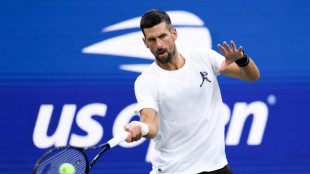 Djokovic 'prepared' for US Open bid for history

 Atletico down Sevilla to go top of La Liga

 US deports right-wing provocateur Milo Yiannopoulos

 Niger junta says it is back in control after soldiers' mutiny
 Erasmus calls Rennie barbs over Springbok scrumming 'nonsense'

 Lawrence's fifty leaves Pakistan facing record chase to level England series

 Netanyahu condemns settler attack in flashpoint West Bank village
 Munoz saves Iraola in Liverpool draw, big-spending Spurs lose again

 Newcastle condemn dismal Spurs to second successive defeat

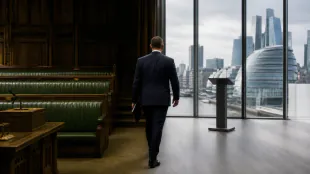 James Cleverly leaves shadow cabinet to seek London mayoralty

 Baladi Map app turns Lebanon’s local problems into a public record

 Thirty-seven Mumbai pilgrims return after Nepal flood disruption

 Ankle ligament tear ends Neeraj Chopra’s 2026 season

 Five college football games that could shape the 2026 season

 New finds strengthen case for Bethsaida at Sea of Galilee site

 Felony assaults on older New Yorkers rise sharply, police data show

 Three Texas Tech softball players hurt in jet ski collision

 Tambaram civic groups seek action on eight long-pending issues

 Cyberabad civic body demolishes 19 unauthorised structures

The sudden popularity of ChatGPT and other AI tools is injecting urgency into Europe's drive to regulate the sector, which this week gets rolling seriously with an ambitious text to be voted on by EU lawmakers.
The European Union aims to be the global pioneer in creating a comprehensive legal framework that would rein in possible online harm while still protecting innovation in the field of artificial intelligence.
The massive complexity of the systems, and their ability to produce text and images that at times mimic human output, is proving as fascinating as it is concerning.
Faced with the risk of AI being used to make dangerous content, manipulate opinion, conduct mass surveillance or other perils yet to emerge, even tech leaders such as Twitter boss Elon Musk have called for a pause in its development.
The burgeoning use of AI by the public and corporations is outstripping action by Brussels, which two years ago proposed initial draft legislation to tackle the issue.
EU member states only fixed their position in that process at the end of 2022 -- just as ChatGPT was taking off.
- Generative AI -
Now MEPs will set out their own stance in a committee vote on Thursday, after which the parliament, the commission and the member states will begin what promises to be thorny negotiations to reach agreement on a revised draft law.
"I really hope that we can have the first meeting of the political negotiation before summer so that we can end it this year," Commission Vice President Magrethe Vestager said.
One MEP, Dragos Tudorache, co-reporter on the parliament's position document stressed that "it's a complex text and we added a new regime covering generative AI".
Lawmakers are seeking to require AI companies to put in place protections against illegal content and to reveal what copyright-protected materials their systems are using to learn from.
Some experts believe that the risk posed by generative AI -- of which ChatGPT and the image-producing systems DALL-E and Midjourney are the best known -- don't need to be addressed separately.
"I don't see what the parliament's motive is. I don't get how the risks are any different from what was already set out," Pierre Larouche, said a specialist in digital rights at the University of Montreal and a researcher at the Centre on Regulation in Europe think tank.
The commission's proposal already calls for a framework around AI systems interacting with humans, notably informing the user that they are in contact with a machine, and requiring image-producing applications to state that their output was created artificially.
- 'High risk' -
The draft legislation is modelled on existing EU law on product safety that imposes checks and controls on manufacturers.
In it, outright bans are largely avoided, except where AI butts up against values dear to Europe, for example against a rating designation for citizens of mass surveillance as practised by China.
The EU parliament, though, wants to also add prohibitions on AI recognising emotions, and to get rid of exceptions that would allow remote biometric identification of people in public places by law enforcement.
They also want to prevent the mass ingestion of photos posted on the internet for learning algorithms unless the authorisation of the people concerned is obtained.
The core of the legislative outline is a list of rules that would apply to "high-risk" applications, according to criteria set out in the law.
The commission is suggesting that designation cover systems in sensitive domains such as critical infrastructure, education, human resources, public order and migration management.
Some of the proposed rule obligations would be to ensure human control over the AI, providing technical documentation, and a system of risk management, with a supervising authority in each EU member state in charge of activity on its territory.
MEPs however want stricter criteria around what constitutes "high risk" so that it only covers AI applications deemed to threaten safety, health or fundamental rights.
Ferreira--PC