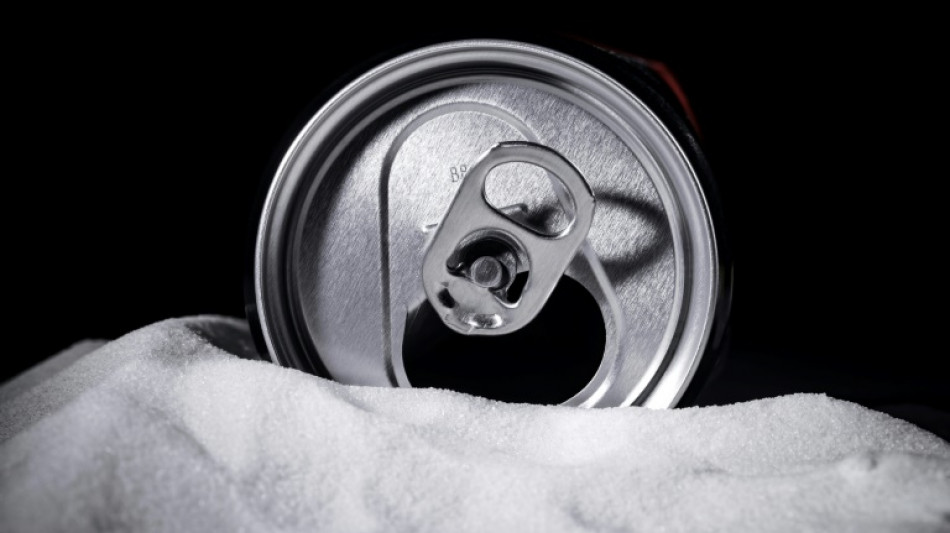
WHO warns against using artificial sweeteners / Photo: JOEL SAGET - AFP/File

 Gobena and Jepchirchir power to Sydney Marathon victories

 Iceland in suspense after close EU vote

 Wallabies hold on for victory in Argentina

 Juve notch second straight win, Fiorentina's centenary party falls flat

 Rybakina eases injury fears ahead of US Open

 Djokovic kicks off latest Grand Slam quest under US Open lights

 'Sorry' De Zerbi won't panic after Spurs shambles

 UN, Nepal warn of climate threat after deadly floods

 USTA boss says structure of new player council not yet set

 Tiny Elversberg stun Leverkusen on Bundesliga debut, Dortmund beat Hamburg

 Court orders JIPMER assessment of Durai Dayanidhi before money-laundering trial

 Police appeal for footage after life-threatening Stratford assault

 Family searches for Boston engineer missing after Nepal-Tibet floods

 Dolly Parton’s Imagination Library leaves global children’s reading legacy

 BMC rejects negligence claims in three Rajawadi Hospital maternity cases

 Chembur man held over alleged poisoning of woman’s soft drink

 Andhra Pradesh Speaker seeks stronger sports quota and school facilities

 Kolkata police register new FIR against Mamata Banerjee over rally timing

 India and China have not named two new border meeting sites

 Five college football games that could shape the 2026 season

 New finds strengthen case for Bethsaida at Sea of Galilee site

 Felony assaults on older New Yorkers rise sharply, police data show

 Tamil Nadu goalball team’s national silver highlights need for wider support

 Chennai councillors unite across parties to demand ward development funds

 Rural Tamil Nadu students present 64 technology projects at IIT-M research park

Artificial sweeteners, used to replace sugar in a vast range of products, do not help in losing weight and can have serious health effects, according to the World Health Organization.
The United Nations' health agency released new guidelines on Monday advising against using so-called non-sugar sweeteners or NSS.
A systematic review of available evidence "suggests that use of NSS does not confer any long-term benefit in reducing body fat in adults or children", the WHO said.
In addition, results from the review "suggest that there may be potential undesirable effects from long-term use of NSS, such as an increased risk of type 2 diabetes, cardiovascular diseases and mortality in adults".
Sweeteners are consumed by millions of people every day in products like diet soda or to sweeten coffee, partly as a way to avoid weight gain from sugar. But how healthy these substitutes are has long been a matter of controversy.
The WHO's director for nutrition and food safety, Francesco Branca, stressed that replacing ordinary sugar with artificial sweeteners "does not help with weight control in the long term".
"People need to consider other ways to reduce free sugars intake, such as consuming food with naturally occurring sugars, like fruit or unsweetened food and beverages," he said.
"NSS are not essential dietary factors and have no nutritional value. People should reduce the sweetness of the diet altogether, starting early in life, to improve their health."
The WHO said its new recommendation applied to everyone except individuals with pre-existing diabetes.
It includes all synthetic and naturally occurring or modified sweeteners not classified as sugars found in manufactured foods and beverages or sold on their own to be added to products by consumers.
- Likely to 'cause confusion' -
Among the most widely used sweeteners are acesulfame K, aspartame, advantame, cyclamates, neotame, saccharin, sucralose, stevia and stevia derivatives, it said.
Meanwhile, the UN health agency emphasised that its guidelines were considered conditional since it remained difficult to draw firm conclusions due to the diversity of participants and complexity of NSS-use seen in the studies it had examined.
Some nutrition experts pointed out limitations in the WHO report, which was largely based on observational studies that cannot directly establish a causal link between sweeteners and weight or disease.
Nita Forouhi, a nutrition and epidemiology specialist at Cambridge University in the UK, emphasised that "using sweeteners can be part of interventions to manage weight in the short term".
"The key takeaway is that for longer-term weight management and for chronic health conditions such as the development of future type 2 diabetes and cardiovascular disease, the use of NSS is not advisable," she told the Science Media Centre.
Tom Sanders, professor emeritus of nutrition and dietetics at King's College London, said the review did not consider the impact of replacing sugary drinks with artificially sweetened drinks.
Sanders said he thought the advice would "likely cause a lot of confusion in the public health arena", particularly in the UK, where a tax on sugar has led to drink manufacturers replacing sugar with artificial sweeteners.
He added that the quality of evidence for any link between sweeteners and disease was rated as "low".
F.Carias--PC