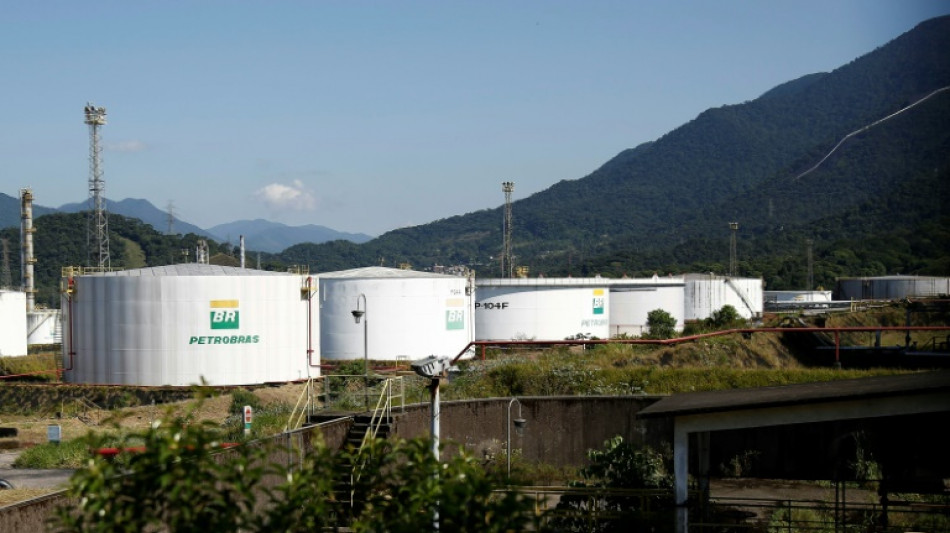
Brazil's Petrobras scraps international price peg / Photo: Miguel SCHINCARIOL - AFP/File

 Search Underway for 'Dooars Rani' Tigress After Second Escape from Buxa Tiger Reserve

 IIM Indore Announces IPMAT 2027 Exam Date for April 24

 The Dilemma of Recording Live Music: Preserving Memories vs. Being Present

 ANC’s Renewal Rhetoric Fades as Voters Reject Party in 2026 Local Elections

 Foreign Investors Return to Indian Markets After 10-Month Selloff

 Honda CR-V and Toyota RAV4 Lead Canada’s Most Stolen Vehicles List for 2025

Brazilian state-run oil company Petrobras said Tuesday it has ended its policy of pegging fuel prices to the international market, an overhaul promised by President Luiz Inacio Lula da Silva that had initially triggered investor jitters.
Petrobras, whose prices essentially determine how much Brazilians pay at the pump, said it would still set them using "market references."
But it said in a statement that the announcement "puts an end to the mandatory subordination (of prices) to the import parity price" in US dollars.
Veteran leftist Lula, who took office for a third term in January, had vowed during his election campaign to "Brazilianize" the company's pricing policy, saying Brazilians' fuel prices should not soar every time the dollar strengthens against the real.
But Petrobras investors had resisted changes to the policy, which helped Brazil's biggest company deliver record profits of $36 billion last year thanks to the global surge in fuel prices.
Petrobras followed up the policy change by announcing hefty price cuts almost immediately, of 12.6 percent for gasoline, 12.7 percent for diesel and 21.4 percent for cooking gas.
"With this commercial strategy, Petrobras will be more efficient and competitive," the company's chief executive Jean Paul Prates said in the statement.
"We will continue to be the market reference, without abdicating the competitive advantages of being a company with tremendous production capacity, infrastructure... and nationwide transportation," added Prates, a former senator named to the post by Lula in January.
Markets welcomed the announcement, with analysts saying investors had feared a more radical overhaul of the international price peg policy, which had been in place since 2016.
Petrobras shares rose more than four percent on the Sao Paulo stock exchange before settling back to gains of around three percent.
"The market was expecting something much worse, a direct intervention" by the government in price-setting, said oil industry analyst Israel Rodrigues, of Genial Investimentos.
Brazilians have suffered recently as the Ukraine war drove international oil prices to multi-year highs, triggering painful inflation that became a central issue in Lula's election battle last year against far-right incumbent Jair Bolsonaro.
S.Caetano--PC


