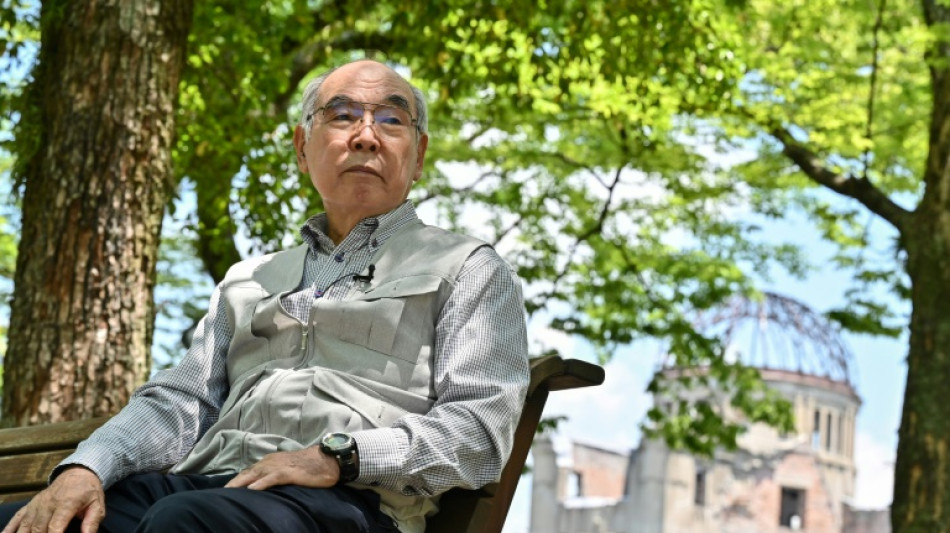
'Could be your city': a Hiroshima atomic bomb survivor's warning / Photo: Richard A. Brooks - AFP

 Gobena and Jepchirchir power to Sydney Marathon victories

 Iceland in suspense after close EU vote
 Wallabies hold on for victory in Argentina

 Juve notch second straight win, Fiorentina's centenary party falls flat
 Rybakina eases injury fears ahead of US Open
 Djokovic kicks off latest Grand Slam quest under US Open lights

 'Sorry' De Zerbi won't panic after Spurs shambles
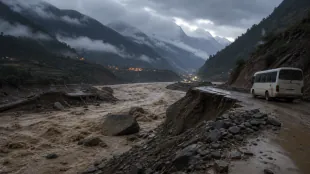
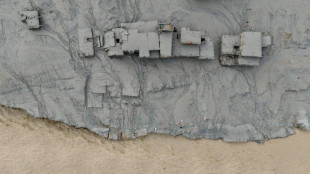 UN, Nepal warn of climate threat after deadly floods
 USTA boss says structure of new player council not yet set

 Tiny Elversberg stun Leverkusen on Bundesliga debut, Dortmund beat Hamburg

 Court orders JIPMER assessment of Durai Dayanidhi before money-laundering trial
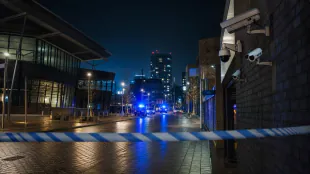 Police appeal for footage after life-threatening Stratford assault
 Family searches for Boston engineer missing after Nepal-Tibet floods
 Dolly Parton’s Imagination Library leaves global children’s reading legacy

 BMC rejects negligence claims in three Rajawadi Hospital maternity cases
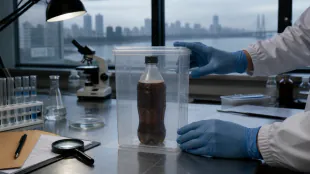 Chembur man held over alleged poisoning of woman’s soft drink
 Andhra Pradesh Speaker seeks stronger sports quota and school facilities
 Kolkata police register new FIR against Mamata Banerjee over rally timing

 India and China have not named two new border meeting sites

 Five college football games that could shape the 2026 season
 New finds strengthen case for Bethsaida at Sea of Galilee site

 Felony assaults on older New Yorkers rise sharply, police data show

 Tamil Nadu goalball team’s national silver highlights need for wider support

 Chennai councillors unite across parties to demand ward development funds
 Rural Tamil Nadu students present 64 technology projects at IIT-M research park
On August 6, 1945, four-year-old Masao Ito was riding a tricycle near his home in Hiroshima when a bomb fell from the sky and changed his life forever.
He survived the US nuclear attack and made it home to his mother, but the horror was just beginning.
His father, at work closer to the centre of the western Japanese city, searched the post-apocalyptic landscape for Ito's 12-year-old brother.
When he found the boy, he was so badly burned that Ito's parents refused to let their four-year-old see his brother, who died several days later at home.
Ito's 10-year-old sister had been at a relative's house, which was destroyed without a trace.
"People escaping the hypocentre headed towards the outskirts, where our house was. They had terrible burns and could hardly walk," the 82-year-old told AFP.
His parents invited the survivors to rest in their home. "But they died, one after another."
In the August heat, the bodies had to be moved, but there was no cemetery to take them to.
"They were moved to an open space, not even in caskets but placed one on top of another. Kerosene was poured over them to burn them," Ito said.
The scene is one he doesn't talk about often, but it remains visceral more than seven decades later.
"It was just horrible, a horrible smell," he said.
"It's a scene I really wish I could forget."
- 'Better not to have them' -
A retired bank employee, Ito has worked for almost two decades as a volunteer guide for the peace memorials and museum in Hiroshima, and as an anti-nuclear campaigner.
He is one of a dwindling number of hibakusha, survivors of the atomic bombings in the last year of World War II that killed around 140,000 people in Hiroshima and 74,000 in Nagasaki.
This week, leaders of the G7 developed economies will meet in Hiroshima, and are expected to visit the Peace Memorial Park and speak to hibakusha.
He said he would warn them: "If you have nuclear weapons, you may be tempted to use them, and accidents can happen."
"It's simply better not to have them," added Ito, who wears large glasses and a pin depicting a bent missile with an anti-nuclear symbol over it.
He acknowledges that a world without nuclear weapons might seem impossibly idealistic, particularly as Russia makes thinly veiled threats about using the weapons, and North Korea continues missile tests.
But he believes holding the summit in Hiroshima can send world leaders a powerful message.
"As long as there are nuclear weapons in the world, there is a possibility that your city could become like Hiroshima."
"Is that really something you are willing to accept?"
- 'It's your turn now' -
Ito's childhood was shattered by the bomb: his father died of radiation poisoning, and the family business collapsed into bankruptcy.
He and his mother fled Hiroshima to escape their debts, and he contracted tuberculosis, spending over a year in a sanitorium, where he received a US care package containing medicine and a Bible.
He read it, but when he encountered the line beseeching Christians to "love your enemies", he was so angry he threw the book against a wall.
"My enemy was the Americans... Why in the world should I love America?" he recalled thinking.
Ito would later convert to Christianity but his anger did not fade.
When he began offering peace tours, he felt discomfort with the inscription on the Hiroshima cenotaph: "Let all the souls here rest in peace, for we shall not repeat the evil."
"I felt I should promise to avenge the souls of those who died so they could find peace."
With time though, and especially as he met Americans who were devastated by what they learned in Hiroshima, his feelings changed and he "started to understand finally" what the Bible phrase meant.
His tour groups include school children, who he feels have a particularly important role.
"I can't continue forever. I tell students, it's your turn now to... achieve a world free of nuclear weapons."
A.Silveira--PC