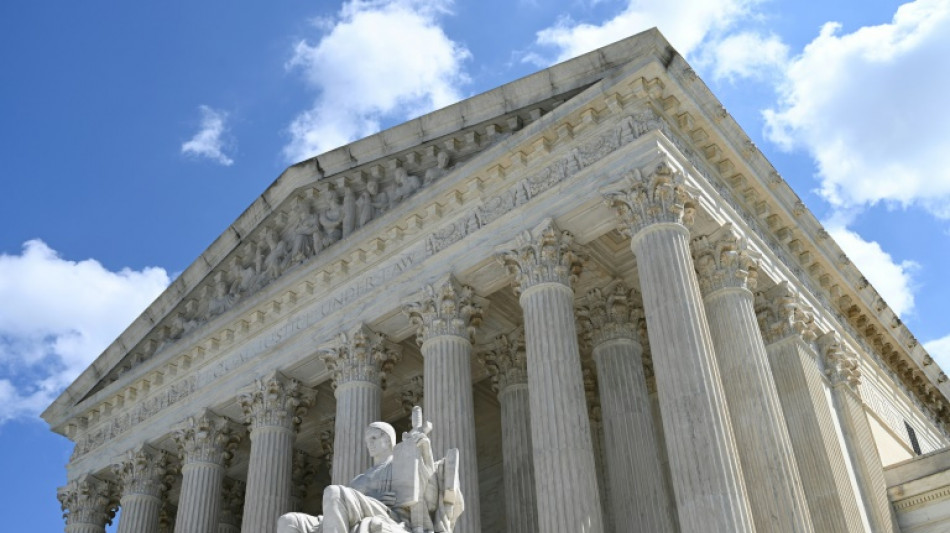
US top court back Big Tech in terror cases / Photo: Daniel SLIM - AFP

 Iceland in suspense after close EU vote
 Wallabies hold on for victory in Argentina

 Juve notch second straight win, Fiorentina's centenary party falls flat

 Rybakina eases injury fears ahead of US Open

 Djokovic kicks off latest Grand Slam quest under US Open lights

 'Sorry' De Zerbi won't panic after Spurs shambles
 UN, Nepal warn of climate threat after deadly floods

 USTA boss says structure of new player council not yet set

 Tiny Elversberg stun Leverkusen on Bundesliga debut, Dortmund beat Hamburg

 Tamil Nadu and NUS agree to expand postgraduate and research links
 Police appeal for footage after life-threatening Stratford assault

 Family searches for Boston engineer missing after Nepal-Tibet floods

 Dolly Parton’s Imagination Library leaves global children’s reading legacy

 BMC rejects negligence claims in three Rajawadi Hospital maternity cases

 Chembur man held over alleged poisoning of woman’s soft drink

 Andhra Pradesh Speaker seeks stronger sports quota and school facilities

 Kolkata police register new FIR against Mamata Banerjee over rally timing

 India and China have not named two new border meeting sites

 Chennai councillors unite across parties to demand ward development funds

 Tambaram civic groups seek action on eight long-pending issues

 Three Texas Tech softball players hurt in jet ski collision

 Felony assaults on older New Yorkers rise sharply, police data show

 New finds strengthen case for Bethsaida at Sea of Galilee site
 Five college football games that could shape the 2026 season

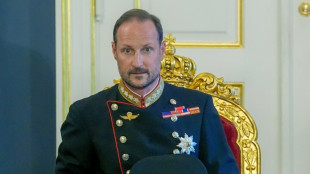 Norway's King Haakon VIII pays tribute to late father in first speech

The US Supreme Court handed a victory to Twitter, Facebook and Google on Thursday, saying the social media giants could not be held liable by victims of terrorist attacks for postings that endorsed the Islamic State group.
Crucially, the cases that targeted Google-owned YouTube and Twitter were seen as potential challenges to decades-old legal protections for tech companies. And the justices declined to wade into the debate.
In their decision, the justices indicated that the cases were not fit to address the law, because the platforms did not in any case "aid and abet" IS terror attacks by hosting postings supportive of the extremist group.
A law known as Section 230 gives internet platforms blanket immunity from the fallout of content that comes from a third party, even if it is pushed out as a recommendation by the website.
Section 230, which became law in 1996, is credited with allowing the no-holds-barred expansion of the internet but has increasingly been seen as helping cause the harmful effects of social media on society.
Without it, websites would potentially be open to lawsuits for content posted by users, making the free-wheeling discussions seen on social media subject to much closer moderation.
A bitterly divided US congress has failed to update the rules, and many US states are passing their own laws to make platforms such as Facebook, Instagram and Tiktok more responsible for content.
The justices of the Supreme Court largely evaded the question. They said that the allegations against YouTube and Twitter did not amount to a liable infraction and therefore the debate over section 230 was not pertinent.
"We therefore decline to address the application of Section 230 (in a case) that appears to state little, if any, plausible claim for relief," they said.
The justices however gave no indication on how they could potentially address the immunity issue in the future, nor were their stances on the matter made clear at hearings in February.
- 'Fight another day' -
"With this decision, free speech online lives to fight another day," said Patrick Toomey, deputy director of ACLU, which advocates for free speech.
The first of the two cases involved a US victim of the 2015 Paris attacks, claimed by the IS group.
The other case was brought by the family of a victim of a 2017 attack by the group on an Istanbul nightclub.
The family alleged that Twitter's failure to take down and stop recommending IS tweets constituted aiding an act of terror.
Google and Facebook's owner Meta did not immediately reply to a request for comment, but an association representing US tech companies said the decision was good news.
"The Court correctly recognized the narrow posture of these cases and declined to rewrite a key tenet of US Internet law, preserving free expression online and a thriving digital economy,” said Matt Schruers, head of the Computer & Communications Industry Association.
The Supreme Court declines to hear the vast majority of the cases that come its way, and experts had predicted that by opting to decide on this one, there could be a willingness to modify the increasingly contested landmark law.
But in the hearings, the justices largely expressed doubts that the case would be fit to begin a debate about reworking Section 230.
E.Borba--PC