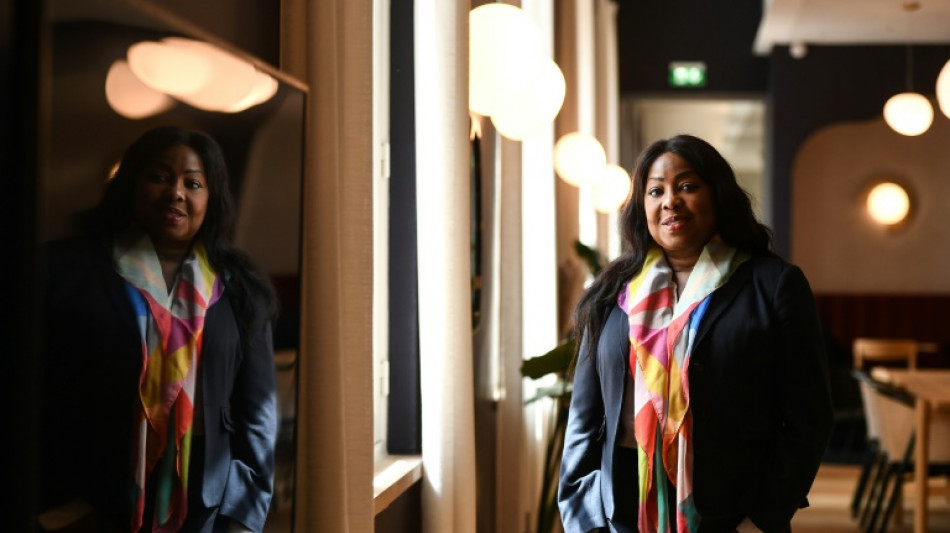
FIFA's Samoura urges TV companies to up offers to avoid Women's World Cup blackout

 Search Underway for 'Dooars Rani' Tigress After Second Escape from Buxa Tiger Reserve

 IIM Indore Announces IPMAT 2027 Exam Date for April 24

 The Dilemma of Recording Live Music: Preserving Memories vs. Being Present

 ANC’s Renewal Rhetoric Fades as Voters Reject Party in 2026 Local Elections

 Foreign Investors Return to Indian Markets After 10-Month Selloff

 Honda CR-V and Toyota RAV4 Lead Canada’s Most Stolen Vehicles List for 2025

FIFA Secretary General Fatma Samoura has called on broadcasters to return to the negotiating table with increased offers to avoid a TV blackout of this year's Women's World Cup in major European countries.
"Discussions are ongoing, but I cannot see a country like France, which staged this same World Cup four years ago, not broadcasting it," Samoura told AFP in an interview in Paris on Sunday.
The Women's World Cup will be staged in Australia and New Zealand from July 20 to August 20 and will be the first to feature 32 teams.
FIFA president Gianni Infantino raised the prospect of a blackout when he admitted earlier this month that offers from broadcasters, "mainly in the 'Big Five' European countries, are still very disappointing".
It is understood that Infantino was referring to the United Kingdom, France, Germany, Italy and Spain.
"The offer we have received did not meet FIFA's expectations, as the president clearly said," Samoura added in reference to France.
The French are ranked fifth in the world and are among the nations hoping to prevent holders the United States from retaining the trophy.
Fourth-ranked England, the reigning European champions, are another of the tournament favourites.
"We have a good product, the very best of women's sport," Samoura added.
"Everyone is talking about equality. We would like these words to be transformed into actions. The simplest action is to value the World Cup at a fair price. That is all we are asking for."
- Time difference -
Infantino has accused broadcasters of only offering between $1 million and $10 million to show the Women's World Cup, compared to the $100-200 million they pay for the men's version.
One stumbling block in Europe is the time difference, which means that games will often be played in what is the early morning on the continent.
The final will take place on Sunday, August 20 at 8:00 pm in Sydney, which is 11:00 am in London and midday in Paris.
"France's three (group) games are scheduled at midday French time in summer, when everyone will be on holiday," Samoura remarked.
"I don't see the problem. It is a non-argument. The TV companies need to put a bit more money on the table and accept to come back to the negotiating table, with prices that properly reflect the passion for the most popular sport in Europe."
Broadcast deals have so far been agreed with 155 countries.
Securing deals for the remaining countries is of paramount importance to FIFA, as world football's governing body plans to reinvest all revenue generated from media rights into the development of the women's game.
"Now is the time to turn the spotlight on women's football and show that it is just as important as the men's game," Samoura said.
"For a long time, the broadcasters have been used to paying a symbolic fee to buy women's competitions and (among FIFA competitions) only the men's World Cup was fairly valued.
"Sponsors and broadcasters play a crucial role in the development of women's football and I would like to see them provide actual, major backing."
V.Fontes--PC


