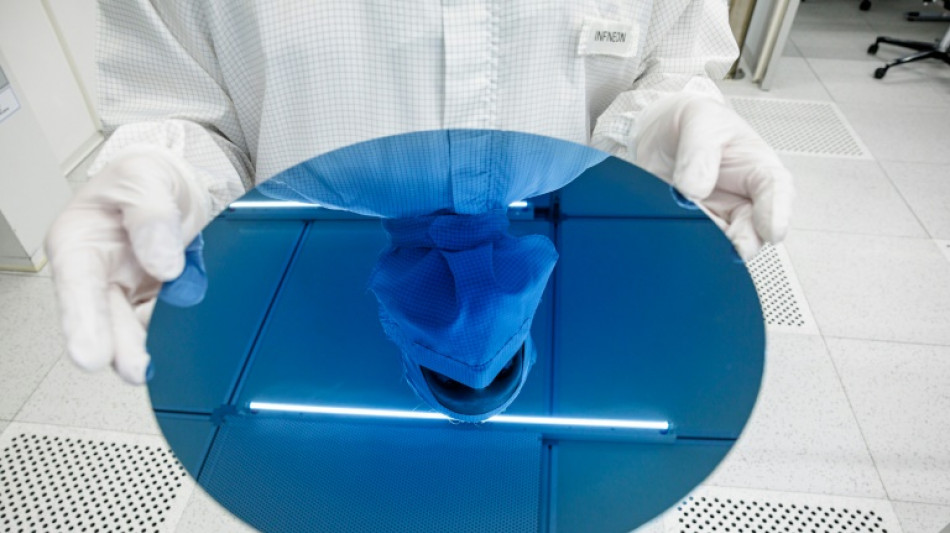
German chip charge could short-circuit on myriad challenges / Photo: JENS SCHLUETER - AFP

 Niger junta says it is back in control after soldiers' mutiny

 Erasmus calls Rennie barbs over Springbok scrumming 'nonsense'

 Lawrence's fifty leaves Pakistan facing record chase to level England series
 Netanyahu condemns settler attack in flashpoint West Bank village
 Munoz saves Iraola in Liverpool draw, big-spending Spurs lose again

 Newcastle condemn dismal Spurs to second successive defeat

 James Cleverly leaves shadow cabinet to seek London mayoralty

 Baladi Map app turns Lebanon’s local problems into a public record

 Thirty-seven Mumbai pilgrims return after Nepal flood disruption

 Ankle ligament tear ends Neeraj Chopra’s 2026 season

 Chinchpoklicha Chintamani begins 2026 arrival procession in Parel

 Cyberabad civic body demolishes 19 unauthorised structures

 About 50 Karnataka travellers return from Nepal as 24 remain missing

 French campaign sharpens as far right accuses left over civil disobedience calls
 Court orders JIPMER assessment of Durai Dayanidhi before money-laundering trial

 Chennai councillors unite across parties to demand ward development funds

 Tambaram civic groups seek action on eight long-pending issues
 Matt Leinart assesses Arch Manning and the leading names in college football

 Los Angeles triplets weigh 19.3 pounds in unusually heavy birth

 Editorial questions Letitia James’ record as New York attorney general

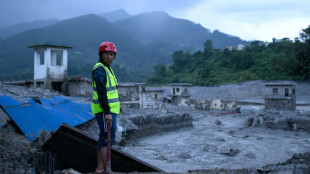 In London, son's agonising wait for news of parents missing in Nepal-Tibet floods
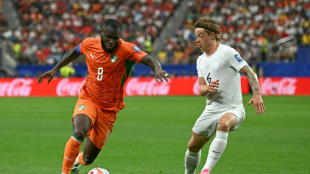 Ivory Coast captain Kessie snubs Juventus to rejoin Atalanta

 Strasbourg fight back to beat Lens in Ligue 1

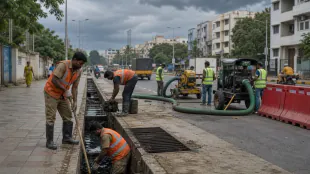 Chennai Sets ₹100 Crore Flood-Readiness Plan for Vulnerable Areas

 Bryan Kohberger Seeks Judge’s Removal From Post-Conviction Case

Germany is seeking to lead a European charge to boost chip production with a series of mega-investments but the drive faces challenges ranging from high energy prices to subsidy rows and worker shortages.
When the pandemic sent semiconductor demand surging and snarled global supply chains, Western nations long reliant on Asia to produce their chips cheaply got a nasty shock as they faced sudden shortages.
The European Union was jolted into action, and is rolling out a plan to double the bloc's share of global chip production to 20 percent by 2030, and mobilise billions of euros in investment.
Industrial powerhouse Germany -- whose carmakers were among firms hit hard by the shortages -- is hoping to lead the European renaissance, with major investments announced in recent times, including from Intel, Infineon, Bosch and Wolfspeed.
Taiwanese tech giant TSMC, one of the world's leading chip companies, is also considering to build its first European plant in the eastern city of Dresden.
At the groundbreaking this month for a new Infineon chip factory in Dresden, Chancellor Olaf Scholz said semiconductors were "often referred to as the petroleum of the 21st century".
Chips, used to power everything from smartphones to fighter jets, were the one component "on which almost everything else depends," he added.
Infineon plans to invest about five billion euros ($5.4 billion) in the plant. It is due to open in 2026, and create up to 1,000 jobs in Dresden, the state capital of Saxony, already home to a dense network of chip companies.
- Soaring costs -
Not every project has been running so smoothly, however.
Intel announced with great fanfare in March last year plans to build a massive chip plant in the city of Magdeburg, with initial investment of 17 billion euros, the centrepiece of the US firm's European investment drive.
But after inflation surged following Russia's invasion of Ukraine, the project has been delayed, with construction -- originally supposed to start in the first half of 2023 -- not yet under way.
The company is reportedly pushing for higher government subsidies to cover the impact of higher costs.
Asked about the reports, Intel said that "much has changed" since the project was announced.
"Geopolitical challenges have become greater, semiconductor demand has declined, and disruptions in the global economy have resulted in increased costs, from construction materials to energy," the company said in a statement.
Germany's economy ministry said the government was currently discussing measures to "close the cost gap of the planned project, which has increased significantly in recent months".
For Germany's chip ecosystem, another major challenge is finding enough workers.
In occupations that are particularly key for the chip industry, there is currently a shortage of 62,000 skilled workers, according to a study from the German Economic Institute in December.
Europe's "Chips Act", agreed on by the European Parliament and EU member states last month, aims to mobilise more than 43 billion euros in public and private investments.
As well as Germany, investments have been announced elsewhere in the bloc, including a new plant in France built by French-Italian chipmaker STMicroelectronics and US-based GlobalFoundries.
- 'No self-sufficiency' -
The continent has much lost ground to make up -- its share of global chip manufacturing capacity fell from 44 percent in 1990 to nine percent in 2020, according to a study from the US-based Semiconductor Industry Association and Boston Consulting Group.
Europe also faces competition from the United States, which is shelling out large sums to promote domestic production, while Japan and South Korea have vowed to spend billions on developing production.
However, some fear that spending billions of euros in public money on chip production is misguided, given Europe is likely to remain heavily dependent on semiconductors produced elsewhere.
"If we enter into a subsidy race, then we end up paying a lot of money and are not necessarily any safer," Clemens Fuest, president of Germany's Ifo institute, recently said on broadcaster ARD.
And industry players believe the semiconductor supply chain -- which involves many different companies, providing different services -- is destined to remain globalised.
"All big economies are trying to strengthen the semiconductor industry in their territories," Infineon CEO Jochen Hanebeck told reporters on an earnings call this month.
While dependencies can be dialled back, there will be "no self-sufficiency for any countries or regions," he added.
H.Portela--PC