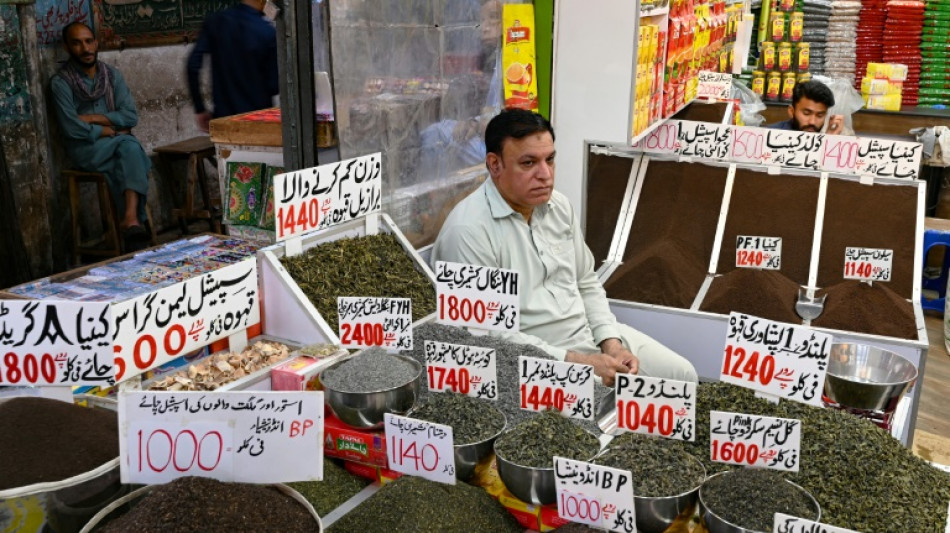
Pakistan inflation rockets to record 37.97 percent / Photo: Farooq NAEEM - AFP

 Search Underway for 'Dooars Rani' Tigress After Second Escape from Buxa Tiger Reserve

 IIM Indore Announces IPMAT 2027 Exam Date for April 24

 The Dilemma of Recording Live Music: Preserving Memories vs. Being Present

 ANC’s Renewal Rhetoric Fades as Voters Reject Party in 2026 Local Elections

 Foreign Investors Return to Indian Markets After 10-Month Selloff

 Honda CR-V and Toyota RAV4 Lead Canada’s Most Stolen Vehicles List for 2025

Pakistan's year-on-year inflation hit a record 37.97 percent in May, official data revealed Thursday, with the nation on the brink of economic collapse and crucial bailout talks stalled.
Non-perishable foods and transport costs climbed more than 50 percent over May 2022, while average inflation for the past 12 months was 29.16 percent, the latest Pakistan Bureau of Statistics data showed.
"This level of inflation badly affects poor and middle-class families of the country, whose income is evaporating with each percentage point," said Mohammad Sohail, a financier in Karachi.
Years of financial mismanagement have pushed Pakistan's economy to the limit, exacerbated by a global energy crisis and devastating floods that submerged a third of the country in 2022.
A political crisis has added another layer of uncertainty -- with opposition leader Imran Khan's brief arrest last month sparking deadly street violence and a days-long state-ordered mobile internet blackout.
In the background, negotiations to unlock a crucial tranche of a $6.5 billion loan deal agreed with the International Monetary Fund have been deadlocked for months.
Pakistan needs billions of dollars in financing to service staggering levels of external debt, and foreign exchange reserves have dwindled to just $4.2 billion, barely enough for a month of imports.
Elections are due no later than October, and the government has already bowed to IMF demands to end popular subsidies on gas and electricity which cushioned the cost-of-living crisis.
"Everyone is worried," said 42-year-old Muhammad Safeer in an Islamabad bazaar. "Where will we get the money from? Personal debt can only go up."
Prime Minister Shehbaz Sharif's government is due to present its annual budget next week, and the nation has already downgraded its growth forecast for the year ending June 30 from five percent to 0.3 percent.
G.M.Castelo--PC


