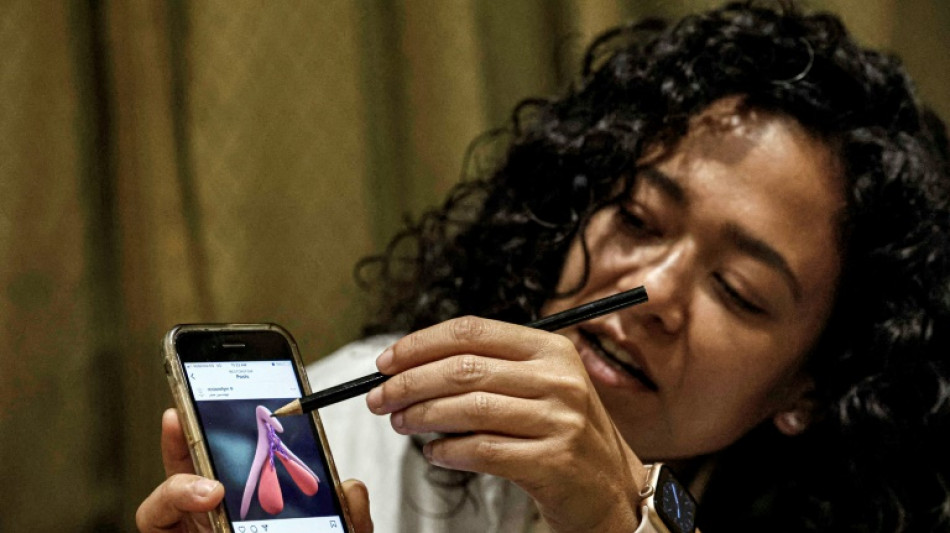
Egypt clinic helps women reclaim bodies scarred by genital mutilation / Photo: Khaled DESOUKI - AFP

 Manchester Airports Group Cyberattack: 8.7 Million Customer Records Exposed

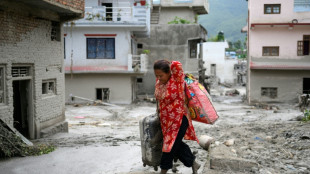
 Nepal floods leave trail of destruction, aid challenge

 Experts outline sustainable ways to declutter Australian homes

 Bulk book purchases feed AI training through destructive scanning

 George and Amal Clooney attend Lake Como event after France evacuation

 Michelle Obama describes relief and adjustment after daughters leave home

 Very strong El Niño forecast to peak during southern African summer
 SAFA opens tender for dressing rooms, ablutions and grandstands

 TEEKS brings Māori-rooted soul and a new view of masculinity to South Africa

 Saudi customs seize 1.95 million amphetamine pills in lentil shipment

 Trump says Russia will not attack NATO as CIA chief visits Moscow

 British Museum schedules new Bayeux Tapestry ticket release

 From forced labour to living heritage: Sao Tome's colonial plantations

 Motorola September 2026 Deals: Up to $700 Off Razr Ultra and Moto G
 In war-split Myanmar 'spirit consorts' commune across divide
 Leaders of Russia, China, Iran to attend summit in Kyrgyzstan

 Hovland and Gerard share lead at Tour Championship

 Maresca salutes 'unbelievable' Cherki after Man City star sinks Palace

 Marquinhos rescues last-gasp draw for PSG at Lille in Ligue 1

 ICE detains British far-right activist Milo Yiannopoulos in Louisiana

 Milo Yiannopoulos held by ICE after missing immigration hearing

 Six Flags closes X2 rollercoaster after reports of severe brain injuries

 Jury ends second day without verdict in Lindsay Clancy murder trial

 Artist says criticised Ronnie O'Sullivan mural is unfinished

 UAE grants Starlink 10-year satellite broadband licence

Intissar was only 10 years old when she was forced to undergo genital mutilation, but 30 years later, one clinic is offering help for some of the millions of Egyptian women affected by the still-rampant practice.
Intissar, a journalist who like other women cited here spoke under a pseudonym to protect her identity, recalls having spent 30 years "completely deprived of pleasure, without any connection to my body".
Her story closely resembles that of millions of Egyptian women and girls who have gone through female genital mutilation (FGM) at a young age, despite state-sponsored efforts seeking to curtail the practice.
But for three years, one clinic has sought to change the reality of many of these women.
In 2020, surgeons Reham Awwad and Amr Seifeldin became the first to offer clitoral reconstruction surgery in Egypt through their clinic, Restore FGM.
Surgery is "the last resort", Awwad told AFP in her Cairo clinic.
A common first step in the clinic's treatment is psychosexual counselling coupled with plasma injections, which Awwad said "can reduce the need for surgery by 50 percent".
The plasma injections allow for the regeneration of damaged tissue without subjecting women to new, invasive procedures.
Nourhan, also using a pseudonym, described chronic pain and a severed sense of pleasure in the two decades since she underwent genital mutilation at 11.
Now in her 30s, the suffering has given way to "completely new sensations", Nourhan told AFP eight months after going under the knife again for reconstruction surgery.
But more than the physical effects, Nourhan said she finally felt "in charge of my body again".
- Holiday peak –
Intissar recounted the day that her grandmother took her -- with the consent of her parents, a doctor and a principal -- to perform the harmful practice.
When she cried, her grandmother "would tell me this was for my own good, that I was better this way", she told AFP.
Under the grandmother's care, she spent her summer vacation recovering.
Now aged 40, the prospect of undergoing reconstructive surgery offers her renewed hope.
Lobna Darwish, gender officer at the Egyptian Initiative for Personal Rights, urged "prevention campaigns in schools right before the holidays", citing seasonal peaks of FGM during those periods to allow time for recovery after the procedure.
In Egypt, the Arab world's most populous country with a largely conservative society, 86 percent of ever-married women aged 15 to 49 have undergone FGM, according to the latest official figures from 2021.
Most commonly, they are subjected to the partial or total removal of the clitoris and the labia minora, which according to the World Health Organization can cause pain, bleeding, infections, painful sexual intercourse and complications during childbirth.
The practice -- misguidedly meant to reduce libido and preserve women's chastity -- has been illegal in Egypt since 2008, and is regularly condemned by both Muslim and Christian religious authorities.
Yet it remains widespread, not only in Egypt but in multiple other African countries and beyond, often cutting across social classes.
Egypt marks its national day for the elimination of FGM on June 14, and every year, government-sponsored TV advertisements list its dangers.
While experts say the awareness campaigns have largely scared off parents from what they were told was a dangerous procedure performed by suspect midwives in rural backrooms, a rebranding has kept FGM alive.
Parents began opting for what seemed like a safer option, with official figures now showing three-quarters of procedures in Egypt are done by doctors.
Intissar, who has studied the practice, said it was being promoted for its "aesthetic" value.
When Nourhan and her then eight-year-old sister were recovering, she recalled how the women in their family praised not just the religious and moral virtues of FGM, but how "it was better and cleaner".
In reality, Intissar said, FGM aims "to disconnect women from their bodies and their pleasure".
- Self-discovery -
Egypt has regularly toughened penalties on both doctors and parents over FGM, but both Darwish and Awwad described an uphill battle against ignorance.
"We need proper sex education in schools, and to raise awareness of the dedicated hotline" created in 2017, Darwish said.
Awwad noted that "at no point... do doctors learn about reconstructive surgery".
And women are scarcely given the chance to get to know their own bodies. At every first consultation, the surgeon gives her patients a mirror so they can look at their genitals -- often for the first time.
Intissar was shocked and furious.
"Up until that point, I thought they had only removed a small piece of skin. But then I found out they had taken the entire labia and part of the clitoris," she said, recalling how right then she had decided to reclaim her agency.
But the decision takes time and money.
Nourhan fundraised for a year to be able to afford the surgery, which costs 40,000 Egyptian pounds (around $1,300) -- 10 times the country's average monthly salary.
"Authorities need to... offer reconstructive surgery in public hospitals," she argued.
In the meantime, Nourhan managed another personal victory: banding together with her mother to save her two nieces from undergoing FGM.
H.Portela--PC