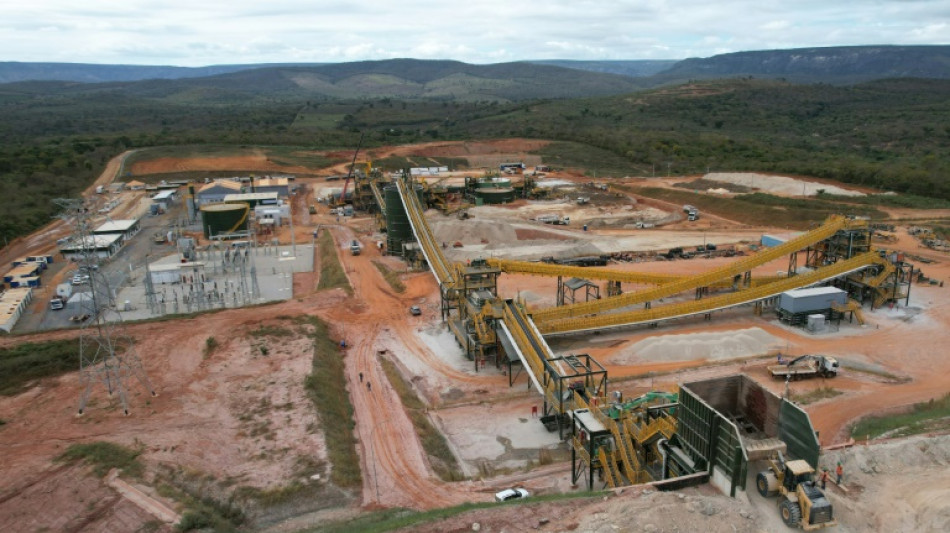
Lithium boom comes to Brazil's 'misery valley' / Photo: Douglas Magno - AFP

 Manchester Airports Group Cyberattack: 8.7 Million Customer Records Exposed
 Nepal floods leave trail of destruction, aid challenge
 Experts outline sustainable ways to declutter Australian homes
 Bulk book purchases feed AI training through destructive scanning

 George and Amal Clooney attend Lake Como event after France evacuation
 Michelle Obama describes relief and adjustment after daughters leave home

 Very strong El Niño forecast to peak during southern African summer

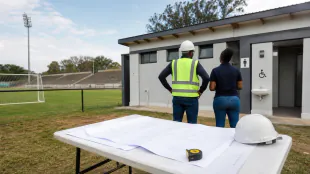 SAFA opens tender for dressing rooms, ablutions and grandstands
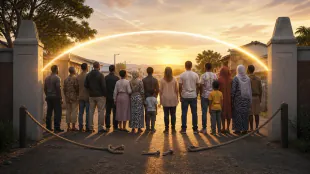
 TEEKS brings Māori-rooted soul and a new view of masculinity to South Africa
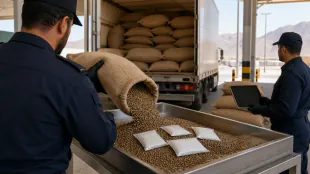 Saudi customs seize 1.95 million amphetamine pills in lentil shipment

 Trump says Russia will not attack NATO as CIA chief visits Moscow

 British Museum schedules new Bayeux Tapestry ticket release
 From forced labour to living heritage: Sao Tome's colonial plantations
 Motorola September 2026 Deals: Up to $700 Off Razr Ultra and Moto G
 In war-split Myanmar 'spirit consorts' commune across divide
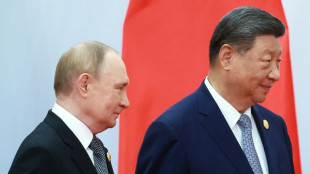 Leaders of Russia, China, Iran to attend summit in Kyrgyzstan

 Hovland and Gerard share lead at Tour Championship

 Maresca salutes 'unbelievable' Cherki after Man City star sinks Palace
 Marquinhos rescues last-gasp draw for PSG at Lille in Ligue 1

 ICE detains British far-right activist Milo Yiannopoulos in Louisiana

 Milo Yiannopoulos held by ICE after missing immigration hearing

 Six Flags closes X2 rollercoaster after reports of severe brain injuries
 Jury ends second day without verdict in Lindsay Clancy murder trial

 Artist says criticised Ronnie O'Sullivan mural is unfinished
 UAE grants Starlink 10-year satellite broadband licence
In a cloud of gray dust, a heavy-duty excavator loads a truck with stone blocks containing lithium, the "white gold" of the clean-energy revolution, which some hope will transform this parched, impoverished region of Brazil.
Sun-scorched and drought-prone, the Jequitinhonha valley, in the southeastern state of Minas Gerais, is one of the poorest places in the country.
But the region, nicknamed "misery valley," is on the cusp of a boom: it is home to around 85 percent of the lithium reserves in Brazil, the world's fifth-biggest producer of the metal, an essential ingredient in electric vehicle batteries.
Authorities in the region are eager to tap the potential of the silvery-white metal.
Last month they threw a fanfare-filled event at the Nasdaq stock exchange's headquarters in New York, where they launched an initiative to attract investment to what they are calling "Lithium Valley."
Not everyone is thrilled at the idea, however.
Some residents in the region of around one million people complain about the environmental impact of lithium mining, others that local communities are not being included.
"This is the Jequitinhonha valley... They want to call it 'Lithium Valley.' But let's not put mining interests before our people's identity," says Aline Gomes Vilas, 45, a local activist in the town of Aracuai.
- 'Green lithium' -
Ana Cabral-Gardner, chief executive of Canadian mining firm Sigma Lithium, is keen to respond to such criticism.
Her company, which started mining in the valley in April, is among the first to tap its lithium reserves.
Its goal is to produce more than 600,000 vehicle batteries' worth of the metal in its first year, eventually scaling up to three times that amount.
Sigma calls itself a "green lithium" miner, and emphasizes its social and environmental credentials.
Lithium mining is notoriously water-intensive, a problem given that the metal is typically found in water-poor regions.
Cabral-Gardner, who is Brazilian, says her company reuses 90 percent of its water supplies, protects the local stream and uses no chemicals in the mining process.
"Our entire operation is built around finding a balance between sustainability and mining," she tells AFP.
"I've been called the 'hippie CEO.'"
- Just another gold rush? -
In Aracuai, which sits near Sigma's mine, Gomes Vilas says it is already having a negative impact, including damage to people's homes from explosions used in the mining process.
"This was a peaceful rural area. Now there's a constant racket. There are already houses with cracks in the walls from the explosions," she says.
"The whole house shakes every time there's an explosion," adds Luiz Gonzaga, a 71-year-old farm worker who lives next to the mine.
"They're digging pretty far from me for now, and the dust is already bothering us. Imagine what it will be like when they start digging closer."
Brazil, a country with a history of rapacious resource booms and busts, needs to ensure communities like this benefit from lithium mining, advocates say.
"The Jequitinhonha valley has been through a gold rush, a diamond rush, and it never brought development," says Ilan Zugman, Latin America director for environmental group 350.org.
"We obviously believe the clean-energy transition needs to happen, but it should be fair and inclusive for local communities."
So far, the lithium mined in Brazil is almost entirely exported -- not a good sign, warns Elaine Santos, a researcher at Sao Paulo University.
"Look at Europe and the United States: they have a strategy to develop the entire value chain of electric cars, from mining to vehicle production," she says.
"Brazil's policy is still very limited... Brazil risks deepening its dependency as a country that just exports raw materials, with little added value."
Brazil overhauled its lithium industry last year, when former far-right president Jair Bolsonaro's government issued a decree that made it more attractive to foreign investors, notably by lifting export restrictions.
His left-wing successor, Luiz Inacio Lula da Silva, has not broken with that policy so far. In fact, his administration sent an envoy to the recent "Lithium Valley" event in New York.
Brazil's stance differs from that of Chile, for example, where President Gabriel Boric recently announced plans to nationalize the lithium industry -- the world's second-biggest, after Australia's.
G.Teles--PC